Nick Cave: the transcendent power of music

By Martin Vogel

bad seeds

The most memorable and moving cultural event I experienced this year was seeing Nick Cave and the Bad Seeds perform at the London Arena in September. In fact, I could say that in any year I see the band in concert. But this year was especially poignant.

Rock music has acquired roughly the position in our culture that jazz had when I was growing up: the breakthrough art form of an earlier generation, kept on life support by an ageing cohort of afficionados. Nick Cave has been in the business a long time and manages to observe the boundaries of the form while keeping it fresh and innovative. He surrounds himself with musicians of the highest calibre and inventiveness and produces music that spans the spectrum from hard-edged, dark, aggression to the most heart-wrenching and romantic ballads. Nick Cave himself is a consumate performer: he strides the stage with visceral energy and has an electric relationship with his audience.

Read More »

Who will lead democratic renewal from the left?

By Martin Vogel

Labour was founded as a party when its first MPs were elected in 1906.

Opposition politics in the UK are in a sorry state. The Labour Party is in the grip of a far-left cult which is not much interested in parliamentary democracy. Since the General Election, those in the Labour Party who don’t favour Jeremy Corbyn’s leadership have gone quiet – perhaps buying into the myth that by not losing the election as disastrously as everyone expected, he somehow won it instead. Because the moderates expressed their lack of confidence in Corbyn on the grounds of his unelectability, they are now shouted down by those who crow about Corbyn’s apparent popularity. What has been lacking is a principled critique of what he stands for.

Read More »

Remembering Cindy Cooper

By Martin Vogel

London’s community of mindfulness practitioners lost a guiding light this year with the death in March of Cindy Cooper. Cindy was my teacher and sometime supervisor for about ten years. During that time, I frequently reflected on my good fortune to have encountered her. She combined the integrity and wisdom evident among the best practitioners in her field, with a warmth which made people feel they had a deep connection with her. In this, she embodied the value we gain from working with a teacher and learning in groups. She helped generate a depth of understanding that could never arise simply by practising alone. Read More »

The politics of being apolitical

By Martin Vogel

Some years ago, I attended a meeting on whether executive coaching could help make society better. I mentioned a Marxist critique of the crisis in capitalism that I had recently read. Before I even managed to share any insights that I’d found relevant, one of my associates brushed aside my contribution – asserting something along the lines that we didn’t want the Stasi in the UK (a sentiment with which I naturally concur). He seemed to want to restrict the conversation to the role of business in promoting environmental sustainability. The episode defined for me a sensibility in working life that holds to faux-apoliticism as a badge of professionalism. In this view of the world, there’s a safe agenda of social change, which allows a degree of corporate virtue signalling around our shared interest in planetary survival, but forbids the potentially more divisive discussion of wealth and power and the role of organisations in sustaining them.

This distinction is increasingly hard to sustain. The backlash against a capitalism that consigns whole communities to the backwaters is recognised as a factor in both Brexit and the election of Donald Trump. This year, the Grenfell Tower fire gave us a grotesque demonstration of where apolitical collusion with the apparently natural workings of the economy can lead. Not just the circumstances that led to the fire but the local authority’s inability to respond to the disaster revealed a hollowed out state, in which an over-financialised approach to management overwhelms the ability of organisations to meet basic human needs.

Read More »

Effort more than talent is the key to achievement

By Martin Vogel

growth bw

In conventional thinking, the people who get on in life are those who are brainy or talented. But this apparent truth was overturned by the Stanford University psychologist, Carol Dweck. Through many years of research, she found that being labelled as talented could quickly become an obstacle to achievement. It turns out that effort is much more important than talent.

This simple but important finding is presented in Carol Dweck’s book Mindset. The key insight it contains is that people learn and develop best when they adopt a “growth mindset” – open to learning as a challenge, relishing setbacks as an opportunity to learn – and flounder when they adopt a “fixed mindset” – defensive of their identity, frightened to take risks in case they fail. The fixed mindset values innate talent over cultivating potential.

Read More »

England: the nation with a special place in Europe

By Martin Vogel

The English and Their History by Robert Tombs is a monumental book covering the story of England from the 7th Century to the present day. Published in 2014, it’s a pertinent insight into our national identity. While the whole of the UK is leaving the EU, it is English nationalism that is a driving force behind it.

Tombs shows that an English nation was established well before 1066 using the language of old English which was suppressed by the Normans but revived in the fourteenth century. A long history of conflict with Scotland overhangs much of the story prior to the Acts of Union. The union is sometimes portrayed in the nationalist perspective as something close to England’s annexation of Scotland. But the union also meant England was subsumed into Britain. Scotland retained a national identity, England less so. And Tombs’ history becomes more blurry after union: it’s hard to pick out England’s story from that of the broader UK.

Read More »

Jasper Johns shows us what mastery means

By Martin Vogel

flag

I was somewhat nonplussed by the Royal Academy’s Jasper Johns exhibition, which ends this weekend. His renowned work is undoubtedly pleasing. Partly this a function of his portrayal of the familiar – flags, numbers, targets – which he renders unfamiliar through multiple repetitions and subtle variations. But more, it’s to do with how his repetition strips out meaning and defies interpretation. So you’re drawn into his artistry: the texture of his paintings of the flags, the attractive form of his numbers.

Read More »

Leading is about creating a shared sense of home

By Martin Vogel

Why do I write so much about politics? Because there’s an inescapable link between our political situation and the way organisations are led. It’s a moot point whether organisations align with the prevailing political discourse or whether politics is shaped by the interests of organisations. At the moment, it’s politics that’s making the running. There’s a broad consensus across the political spectrum that, whatever path Britain takes in relation to Brexit, it needs to become more inclusive. There’s not much agreement (nor even much in the way of ideas) about how this is to be achieved. But I fear many organisations don’t yet grasp the demands it will place on them to overcome the alienation and social fracturing that blight large parts of the country.

Read More »

Brexit complexity

By Martin Vogel

uk ireland eu

Brexit is shaping up to be the object lesson par excellence in how not to lead in complexity. First this week we have seen the Government’s negotiating strategy (if one can call it that) for getting to Phase 2 of the Brexit talks blown to pieces by its negligence of the Irish border issue. Then the Brexit Secretary, David Davis, admitted that the Government had made no assessment of the impact of Brexit on the various sectors of the economy, despite having previously insisted on several occasions that such assessments were in hand. So the Government is navigating what is the biggest peacetime challenge that the UK has faced in generations, not just with no real understanding of what its impact will be but no attempt to understand. It’s almost as if the truth would be too frightening for ministers to know.

Read More »

Deep work is the key to doing anything useful in the knowledge economy

By Martin Vogel

The premise of Cal Newport’s Deep Work is that deep work is what creates value in the knowledge economy but our culture encourages people towards distraction. Therefore opportunities exist for those who can prioritise depth. The book outlines strategies for doing so.

Newport defines deep work as:

“Professional activities performed in a state of distraction-free concentration that push your cognitive capabilities to their limit. These efforts create new value, improve your skill, and are hard to replicate.”

Its antithesis, shallow work, is:

“Noncognitively demanding, logistical-style tasks, often performed while distracted. These efforts tend not to create much new value in the world and are easy to replicate.”

If the thought of a life of concentration sounds exhausting, the good news is that it is not necessary – in fact, would be counter-producive – to try to spend all one’s working time in deep work. Newport says the aim should be to minimise the shallow and get the most out of the time this frees up by committing three to four hours a day to deep work. A certain amount of idleness is necessary to make sure the time spent in deep work is productive and creative.

Read More »

The modest antidote to fanaticism

By Martin Vogel

The New York Times columnist, David Brooks, wrote a series of columns this year on the subject of moderation. He was responding to the increasing prevalence of fanaticism in the United States, which stretches from Trump’s “conspiracy mongering” to the neo-Nazis. We have our own problems with fanaticism in the UK, ranging from the hard-line Brexiteers who will have no compromise with reality to the misogynistic and anti-semitic left.

The problem with fanaticism is that it provokes righteous anger in those who oppose it. So a perfect storm of rage encompasses civic life. The last sentence of my previous paragraph might even have contributed to it.

Read More »

On being the best you can be given the circumstances

By Martin Vogel

Here’s a passage from The Compassionate Mind by Paul Gilbert:

“When I was younger and training to become a therapist, trying to help people who were very distressed, I used to say to my supervisor that my patients would be so much better off having somebody with far more experience than I had. To some extent, that was clearly true. However, my supervisor, who was a wise and gentle older lady, pointed out that this was the essence of life. We can live life in the ‘if only’ lane or make the best of it and appreciate where we are right now. So the question for me was not ‘How can I have 20 years’ experience on Day 1?’ because that wasn’t possible. Everyone has to walk exactly the same road as I was walking, from being inexperienced to experienced. There is no other way. Rather the question she wanted me to ask myself was ‘How can I be the best young, inexperienced therapist I can be, given my limitations?’ Because that was all there was for these individuals – there was no one else. It was a harsh lesson in some ways but it helped me confront the reality of my limitations: I could only be what I could be.”

One of the best things I’ve done this year is to help convene a group of coaches who share an interest in mindfulness. I needed to take to the group a reading that we could reflect on together and alighted on this passage. For some years, it has informed my thinking not just about who I am as a practitioner but who my clients might think they are as leaders.

Read More »

Don’t let the urgent crowd out what’s important

By Martin Vogel

Dwight
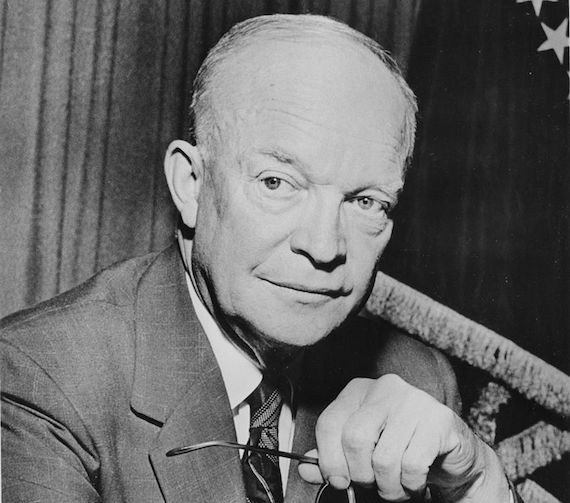
Dwight Eisenhower, focussing on what’s important

It’s a given in most management roles that there is more work to be done than there is time available to do it. But it’s with increasing frequency that clients are talking to me about their difficulties in deciding what to prioritise in their unrealistically demanding workloads. In such conversations, I reach for the urgent and important matrix. This is an approach to time management popularised by Stephen Covey in The 7 Habits of Highly Effective People and inspired by the former US President, Dwight Eisenhower.

In a lecture in 1954, Eisenhower said, “I have two kinds of problems, the urgent and the important. The urgent are not important, and the important are never urgent.”

Read More »

Networked populism: the defining leadership style of our era

By Martin Vogel

New model leaders?
New model leaders?

If, as I wondered in my earlier post, eco-leader is not the defining leadership discourse of our age, then what is?

If you look at the actually existing leadership narratives that are currently to the fore, you might label the dominant discourse networked-populist rather than eco-leader.

Trump and Farage are its most eloquent symbols. Both worked outside established structures, with seemingly outlandish agendas which, against the odds, they brought to fruition using networks of influence. (Jeremy Corbyn shows similar characteristics – though, in his case, the mastery of networks that brought him to prominence seemed to be his backers’ rather than his own.)

Read More »

The cultural influences that shape how we lead (and follow)

By Martin Vogel

messiah therapist
Messiah and therapist.

Leadership is often viewed as a static or neutral concept – perhaps rooted in the traits of a particularly capable individual, or determined by the situation in which leadership is required. In fact, how we lead is profoundly influenced by our culture and it changes over time. The best evidence for this that I know comes in Simon Western’s Leadership: A Critical Text – a survey of the concept and practice leadership from the early 20th Century on.

Simon identifies four discourses of leadership that have been influential over the period: controller, therapist, messiah and eco-leader.

Read More »

Survival is insufficient: lessons for leadership from Station Eleven

By Martin Vogel

survival

Station Eleven, a novel by Emily St. John Mandel, depicts the collapse of modern civilisation when a flu pandemic sweeps across the world and (twenty years later) the dystopian society that is established by small clusters of survivors. I read it on the recommendation of the Financial Times’ business books podcast – although I refrained from listening to the episode until I’d completed the book. I enjoy it when novels appear on lists of business books, something that happens too infrequently. In truth, insofar as fiction provides insight into the human condition, almost any novel is more rewarding of a leader’s time than a business book, most of which are mediocre. But I can see why Station Eleven caught the FT’s attention.

The novel portrays how utterly dependent we are on organisations and the technology we manage, and how fragile is the fabric they weave. The virus that initiates the story originates in the Republic of Georgia but spreads rapidly in two respects: those infected develop symptoms within hours and are dead within two days; and, in an interconnected world, it is transmitted around the globe before most people are even aware that this disease in a distant land threatens their country. In Toronto, where the novel is initially set, chaos breaks out in the first 24 hours as hospitals are overwhelmed, parents fail to return home to their children and the mobile phone networks become congested. Within a few days, the familiar presenters on the television news networks disappear, to be replaced by whoever is still able to staff the office. Within a fortnight, the networks are off air. In short order, the electricity grid collapses as the staff needed to operate it die off; with it goes the internet, eliminating at a stroke the world’s knowledge. Motor transport becomes impossible and, before long, the surviving population settles in whatever locations they had reached when the plague took hold (for one group, a provincial airport to which their plane had been diverted) or to which they can travel on foot.

Read More »

Vogel Wakefield: the movie

We often get asked, “What’s it like to work with you?” So we’ve attempted to answer that question in this video, showcasing our work in universities.

Thanks to contributors Professor Frank Finlay, Dean of Arts and Humanities at the University of Leeds, and Katherine Bond, Director of the Cultural Institute at King’s College London. And to our friends at the production company, Impact Video.

The oblique path to a better way

By Martin Vogel

scapegoat

This is the third of a three-part series on the consequences of Brexit for leaders. Part 2 discussed the challenge of self-leadership to preserve ones values and imagine a better future.

In imagining a future that is better than demagoguery and despotism, we need to be patient with ourselves. The Brexiteers and the Trumpistas offer beguilingly simple plans. Our reticence is founded on the realisation that things are more complex. It is not a sign of ignorance but wisdom that the way out of this mess is not immediately apparent. We will reach the higher ground through persistent but adaptive intent – or, as John Kay would have it, by taking the path of obliquity:

“In obliquity, there are no predictable connections between intentions and outcomes. Oblique problem solvers do not evaluate all available alternatives: they make successive choices from a narrow range of options. Effective decision makers are distinguished not so much by the superior extent of their knowledge as by their recognition of its limitations. Problem solving is iterative and adaptive, rather than direct.”

Read More »

Navigating dark times

By Martin Vogel

This is the second of a three-part series on the consequences of Brexit for leaders. Part 1 explored the anxiety that political upheaval can evoke.

I am not in denial about Brexit. I am an enthusiast for the intent of the European Union, to work together to overcome nationalism and avoid war, but not for its sclerotic inability to reform itself. I accept that, for now, the Government is obliged to try to make Brexit happen. I could see some opportunity in this if Britain and its European partners were able to enter into negotiations fully engaged in understanding what the Brexit vote has to say to both sides.

But I am alarmed that leaders in public office are conniving with the populist mood to shut down collaborative enquiry as to what Brexit could be. Instead of bringing the nation together in common endeavour, the Prime Minister aligns with those who shout down any expression of scepticism and who inflame fears that the referendum result might be subverted.

I have no illusions about the shortcomings of the status quo ante. It’s long been our contention here at Vogel Wakefield that the socio-economic settlement of the past three or four decades has broken down and we are in the midst of an inter-regnum. The existing order suffered a collapse of trust after the financial collapse. Not just the banks but organisations of all descriptions and across sectors were revealed to be dysfunctional and self-serving. The system as a whole was seen to have been reconfigured around the interests of crony capitalism.

Read More »