Dark times ahead?

By Martin Vogel

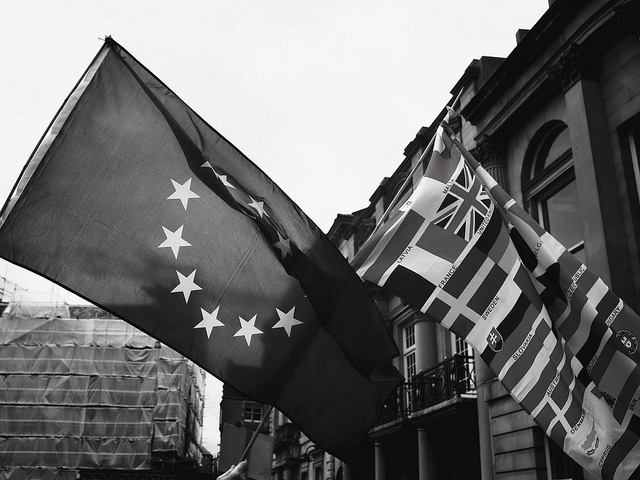
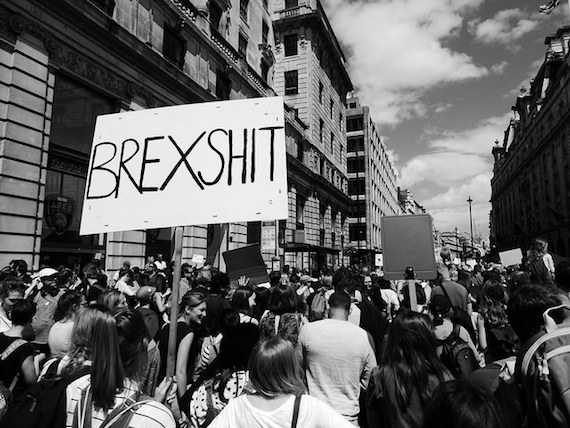
Brexshit

Since the result of the Brexit referendum, nearly six months ago, I have found it hard to write. I spend too much time reading about developments and not enough time ordering my thoughts. As a consequence, this blog post covers a lot of ground and will be split into three parts.

But there’s a more subtle reason for my writer’s block: my mood swings. This month, watching the Supreme Court display Britain’s constitution working properly, I’ve been able to think that we might find a way through the challenges ahead with good sense and collegiality. But having seen – amid the broader global context of political upheaval – the intolerant and hysterical reaction to the earlier High Court ruling on Article 50, I experience a foreboding about what the Brexit vote might unleash.

I don’t think I’m alone. The foreboding extends beyond the cosmopolitan bubble I inhabit in London. I see it the eyes of visitors from northern cities. I heard it amid the chat of scores of More United supporters who turned up from far afield to campaign in the Richmond Park by-election for openness and tolerance.

Read More »

Universities and public value

By Martin Vogel

test card
BBC Test Card image.

Higher education’s status as a not-for-profit public service operating in a globally competitive market is unusual. There are not many comparable institutions – and this can make HE’s travails, as it contemplates regulatory change, seem like a lonely struggle. But HE is not alone. An analogous institution is the BBC. There are affinities in terms of cultural role, independence and longevity. But the most striking is the exposure to competition while pursuing public purposes. This creates a tendency towards managerialism and instrumentalism that can be counter-productive. To keep this tendency in check, and retain public support, the BBC turned to the concept of public value. Universities are now exploring the same avenue, as they try to regain public connection, revealed by the Brexit vote to be threadbare. Read More »

Leading mindfully is a radical challenge to corporate orthodoxy

By Martin Vogel

meditating

Book review: Leading Mindfully by Amanda Sinclair

I sometimes wonder whether we have reached peak mindfulness in the corporate world. So widely discussed – apparently embraced by banks, Google, the US Army – yet so hard to integrate into organisational culture. Leading Mindfully by Amanda Sinclair at first looks like a contribution to the bandwagon. But it is, in fact, a profoundly subversive exposition of the philosophy of leadership. It takes us to places that aren’t routinely part of the discourse of management theory: the role of the senses, the pursuit of happiness, the erotic dimension of leadership. In its evocative depiction of what leading with integrity looks like, it highlights the malpractice inherent in leadership as we know it in most organisational contexts. Reading it before and after the Brexit referendum, I also found in the book insights on how Britain finds its way through the chaos and uncertainty that lies ahead.

Read More »

How to lead in chaos

By Martin Vogel

york against brexit
York against Brexit rally.

Two weeks on and we’d better get used to the sense of bewilderment and drift. Unless the Conservative Party revises its plans, there’ll be no political leadership in this country till September. The vacuum in opposition politics could well outlast Labour’s leadership contest. Even once we have functioning political parties, the work will only just be beginning. Unraveling the implications of the Brexit vote will last years. Building new strategies, negotiating new trade dispensations, embedding new institutional arrangements, tackling social justice: these projects will last many years. Uncertainty – more than that, unknowability – is the environment in which all organisations now operate.

For those working in organisations, an urgent question is how to lead in this chaos. There’s a lot to play for. Those who can shake off despondency and find their ground, without succumbing to false certainty, can play an important role in shaping a positive outcome. As I said in my previous post, this is a time for distributed leadership: for individuals to step up to influence their colleagues. But what does this mean in practice?

Read More »

Who will lead us from this chaos?

By Martin Vogel

YourCountryNeedsYou

My blog post last week, on the social fracturing that led to Brexit, has resonated with many readers. On every day since it was published, the piece has attracted more traffic to the site than we would normally see in a week. It speaks, I think, not just to the anxiety about what the vote has revealed about our nation but also to another anxiety about the contribution to that state of affairs made by the organisations of which we are part.

Read More »

David Hockney at the Royal Academy

By Martin Vogel

hockney

David Hockney’s Royal Academy exhibition, 82 Portraits and 1 Still-life, is a welcome respite from the bewilderment and despondency of Brexit-Britain.

The exhibition consists of a series of portraits that Hockney began on returning to Los Angeles after the untimely death of one of his studio assistants. In his grief, he lost his purpose and motivation. The series charts, therefore, his turning back to life and a gradual healing. The first portrait is of another of his studio staff, head down in anguish. He appears again towards the end of the series – two years later – more open, engaged and accepting. The series as a whole has a similar trajectory. Hockney begins with busyness and disharmony in the backgrounds but these give way to calmer backdrops, the better to study the people before him.

Read More »

Morbid symptoms that precipitated Brexit

By Martin Vogel

gramsci
Antonio Gramsci

Britain’s vote to leave the European Union is easily the most cataclysmic political development of my lifetime. I have spent the last days stunned and despondent; absorbing the news more than making sense of it.

Although I count myself thoroughly European, it was not a foregone conclusion that I would vote Remain. It is self-evident that the EU, as an institution, is ossified and dysfunctional, incapable of addressing the seismic challenges it faces with the Euro or of mustering an effective humanitarian response to the refugees arriving at its borders. Conceived to heal division, the EU has become a wrecker of social democracy that has engendered extreme right-wing politics across the continent.

Such concerns did not persuade me, though, of the prospectus for leaving. That Britain’s economic interests lie in being part of the EU is a no-brainer. A bigger consideration for me was the case for staying engaged in Europe’s conversation, trying to keep it’s project for co-operation on the road. As the referendum campaign unfolded, the xenophobia and hatred stirred up by the Brexiteers dispelled any notion that there might be a decent argument for leaving.

Read More »

Camus and the wisdom of not knowing

By Martin Vogel

camus

“Democracy, said Camus, is the system that relies on the wisdom of people who know that they don’t know everything.” This observation, by Philip Collins in The Times (£) this morning sent me scuttling to consult Camus’ reflections in more depth.

Collins was giving a very measured response to the day of infamy which saw the murder of the Labour MP, Jo Cox. I hadn’t heard of Jo Cox before yesterday. But in our age of political disenchantment, it seems especially poignant that she appears to have been – as my friend, Simon, who broke the news to me, put it – a fabulous advert for everything we all want: an engaged, democratic, local, committed politician.

Read More »

Cut ego down to size in leadership

By Martin Vogel

audrelorde
How can we presume to lead until we understand from where we’ve come?

Book review: Leadership for the Disillusioned by Amanda Sinclair

Amanda Sinclair published Leadership for the Disillusioned in 2007, shortly before the financial crisis that has done more than anything in my lifetime to undermine public trust in corporate leadership. It’s telling that the most resonant example she cites of leadership that chips away at our illusions is the collapse in 2001 of the energy company, Enron. The most resonant corporate scandal of its time, the Enron affair could nonetheless be explained away at the time as an isolated if grand case of fraud that didn’t call into question the contemporary view of corporate leadership as a largely benign practice that broadly benefits society. Since the banking crash, our social system has become more widely perceived as governed by an ideology of corporate self-interest that nearly brought society to its knees and continues to serve the enrichment of a tiny minority. Throw in (to name a few UK examples) the phone hacking scandal, the Mid-Staffs Hospital scandal and the Jimmy Savile scandal and, if there were grounds for disillusion in 2007, there is widespread acceptance now that leadership as traditionally construed faces a crisis of legitimacy.

Sinclair’s book brings home the extent to which corporate thinking shapes how we view leadership. We’re culturally attuned to a managerialist model that construes leadership as invested in figures of formal authority at the apex of hierarchies. Leaders are action-oriented and ego-driven, their self-regard pumped up by status or absurdly inflated remuneration. The trend towards authenticity in leadership is of a piece with such ego-massaging, encouraging managers to identify themselves with their work role and self-actualise by bending others to their agenda.

Read More »

Leading in complexity

By Martin Vogel

busy street

I’m not a great one for introducing theoretical models in my work with clients, however much my practice may be informed by theory. One that I frequently reference, though, is the leader’s framework for decision making devised by David Snowden and Mary Boone. This is the clearest and most usable articulation I know of what it means to lead in complex situations.

Snowden and Boone argue that leaders often come unstuck because they misconstrue the nature of the scenario they are dealing with. Typically, often without realising it, they are informed by an ideology of management that likens organisations to machines. So they fall in with expectations that most problems can be subject to linear solutions of command and control. Unfortunately, they are likely to be putting unreasonable pressure on themselves and, ultimately, setting themselves up for failure.

Read More »

Tim Cook: public leadership in action

By Martin Vogel

Tim Cook
Tim Cook: public leader

Apple’s showdown with the Obama administration over the latter’s demand that it decrypt the phone of one of the San Bernadine terrorists is a test case in public leadership. The dispute counter-poses the social goods of national security and citizen privacy. The FBI wants the former to trump the latter. Apple is arguing for the two to be held in a more considered balance. What’s interesting from a public leadership perspective is that Apple is taking a considerable risk; it’s by no means clear that things will play out in its favour. This is no mere PR stunt.

Read More »

Higher education round-up

art and tech

Here’s a round-up of our series on higher education. People were asking us, “What’s it like to work with you?” So we wrote this series to provide an answer. In the posts below, we explore what we’ve learned from working in the sector and what our counter-consultancy approach has to offer universities and those who work in them:

Image courtesy University of Salford.

Reconnecting universities to their public purposes

By Martin Vogel

obu

This is the final post in our series looking at how our counter-consultancy approach meets the needs of higher education institutions. Here we explore how interdisciplinarity and external collaboration can revitalise the public value of universities.

Interdisciplinarity and external partnerships provide a foundation for universities to renew their public value. This is because they grow out of the genuine and distinct strengths of a particular institution and point to how it can make a unique contribution to addressing society’s challenges. But this contribution can be realised only if there is clarity about the institution’s public purposes: the generic ones it shares with other higher education establishments and the distinct one that arise out of its own particular circumstances.

Read More »

What has trauma to do with work?

By Martin Vogel

stress

Book review: The Trauma of Everyday Life by Mark Epstein

I read The Trauma of Everyday Life to inform my thinking for an event I am helping to organise on trauma in coaching. I hadn’t appreciated before I read the book just how much of a Buddhist take on the subject it would represent. It turns out Mark Epstein, a New York-based psychiatrist, is an established writer on Buddhism and its intersection with psychotherapy. He provides here a psychotherapeutic biography of the Buddha: how the Buddha’s own traumas informed his enlightenment and how this, in turn, shines a light on how best we can cope with difficulty in our lives. This is perhaps more interesting to me than a straight psychotherapeutic discussion. Though no Buddhist, I practice mindfulness. As a matter of philosophical disposition, I find the possibilities it holds out for caring for oneself more appealing than the path that working with an expert therapist offers.

Epstein adopts a broader and looser interpretation of trauma than one normally encounters in psychotherapeutic discussion. He distinguishes between the conventional view of trauma, as confronting a death or serious injury, and developmental trauma, when emotional pain cannot be held. Sometimes, these might converge – for example, Epstein refers to the Buddha’s own developmental emotional pain resulting from the death in his infancy of his mother. But Epstein also views the common difficulties of life through the lens of trauma and refers to the pre-traumatic stress with which we experience the inevitability of death.

Read More »

The emergent route to fostering interdisciplinary collaboration in higher education

By Martin Vogel

networking

This is the third in our series looking at how our counter-consultancy approach meets the needs of higher education institutions. Here we explore the complex nature of university cultures and how we use conversation and reflection to mobilise distributed leadership.

Interdisciplinarity can address a university’s need for funds and a distinctive marketing proposition but also the individual academic’s need for compelling research opportunities. If each university has unique research strengths, these can be synthesised into interdisciplinary ventures which pursue approaches to research excellence that can’t be replicated easily elsewhere. This creates compelling reasons for funds, students and academics to gravitate to particular institutions. It counters a view of higher education as a largely undifferentiated, instrumental business with one which construes it as comprising diverse institutions each with intrinsic value and distinctive contributions to make to the world’s knowledge.

Read More »

Interdisciplinarity and external partnerships: components of revenue generation and public value in higher education

By Martin Vogel

library

Over recent years, we have developed a focus on supporting academics and managers in universities who are trying to foster greater interdisciplinary working and greater engagement with external partners. This series of blog posts reviews our learning in this area and explores how our counter-consultancy approach is especially suited to resolving challenges that higher education institutions encounter in pursuing interdisciplinary objectives.

Interdisciplinarity and external partnerships are distinct but closely related areas for universities. While disciplines represent communities of practice that transcend the boundaries of any one university, the idea of disciplines also serves as an institutional heuristic that facilitates internal ways of organising. But in their pursuit of research outcomes that deliver tangible value to society, universities are finding that questions that range across disciplinary distinctions are increasingly salient. This is largely driven by the complexity and pace of change of the modern world. Governments and other funders of research are searching for solutions to big global challenges that are best approached through joined-up interdisciplinary enquiries. Funding is increasingly focussed around themes such as demographic change and wellbeing, food security or climate change. External partners too, caught up in this complexity, are bringing research questions that range across disciplinary distinctions.

Read More »

Trust is not a message, it’s an outcome: the lesson for leaders from a defector from PR

By Martin Vogel

Trust
Trust is an outcome.

In Trust Me, PR is Dead, Robert Phillips has ostensibly written a book on the bankruptcy of public relations. It’s more interesting, though, as an insider’s guide to the bankruptcy of much corporate leadership – and, more importantly, a cogent call to arms for leadership that can inspire trust. I say “call to arms” since this is not a manual for leaders of the kind that sells at airport bookstands. It’s more a citizens’ manifesto – stirring us from neoliberal slumber so that we may realise our distributed leadership and haul conventional corporate leaders into the service of a fairer form of capitalism. It’s a foretaste of how leadership must surely evolve to meet the challenges of our more transparent, networked society and the expectations of the Millennial generation who will soon inherit the workforce.

Read More »

After the General Election, the forthcoming politics of organisation

By Martin Vogel

strike
Politics of organisation: hopefully, not like this, this time round.

Earlier this year, I attended a talk at the RSA by Frederic Laloux, author of Reinventing Organizations. Laloux was every bit as inspiring as I had hoped after reading his book. But what has stayed with me also was a throwaway comment by Matthew Taylor, chairman of the RSA and former advisor to Tony Blair when he was Prime Minister. Reflecting on the paucity of organisational life, Matthew observed that we need a politics of organisation. Yes, I thought, this is exactly what we need and, at last, people are beginning to get it.

The politics of organisation was, of course, one of many absences in the General Election campaign. One of the successes of three decades of neo-liberalism is that what happens inside organisations has been ruled out of court for politicians. But at the same time, organisations – particularly private corporations – have become increasingly central to how our society is, well, organised. Most of us work in large organisations to earn our living and, with the hollowing out of the state, depend on them for the delivery of our public services. And what is left of life is increasingly mediated by the likes of banks that are too big to fail, food retailers whose chains extend from the convenience shop to the out-of-town megastore, and global internet businesses such as Google, Amazon and Facebook. How we experience them as employees and consumers and how they impact on society in general are among the most significant influences on our lives.

Read More »

Apple Watch: how the quantification of life assists managerialism

By Martin Vogel

Apple Watch blackSimon Western has ruined my eager anticipation of the Apple Watch (launching late next month, pre-orders from 10th April). In a profound and reflective piece, he discusses how the Watch (as opposed to the humble watch) represents the latest and most decisive step towards the creation of a neurotic age.

Key to this argument is the insight that technology is not simply an appendage to human life but changes what it is to be human. As Simon Western says, we are so affectively attached to the brands and products of the technology companies that they become a part of our emotional, physical and cognitive being. Apple is foremost in facilitating this attachment – with its celebrated competence in combining the disciplines of arts, humanities, science and technology in the service of the development of products to die for. But it is far from alone, as exemplified by the signal obssessions of our day: monitoring of Facebook, Twitter, Instagram or email; the pre-eminence of collecting selfies above experiencing life; or the quantifying of one’s lifestyle.

Read More »

Living in truth: Havel’s anti-totalitarian philosophy that remains relevant

By Martin Vogel

Havel

Book review: Havel: A Life, by Michael Žantovský

Michael Žantovský’s biography of Václav Havel is a striking portrait of moral leadership, compromised by office, but all the more admirable for that. Havel was the Czech dissident and suppressed playwright who led his country through one of the world’s few peaceful revolutions to become its first democratic president after the fall of Communism.

I’ve long been interested in Havel, one of the most significant political leaders of my lifetime. But there’s much to sustain the interest of the general reader: not least, the insider account of how the dissheveled, self-effacing Havel and his coterie of artists and intellectuals took office and toured the world, bewitching the likes of Mikhail Gorbachev and Bill Clinton.

Read More »