Coaching: a vocation for our times

By Martin Vogel

Coaches follow in the tradition of shamans.

Book review: Coaching and Mentoring: A Critical Text, by Simon Western

Simon Western seeks to challenge and expand our view about what constitutes coaching but, in so doing, he also challenges and expands received wisdom on what it means to be a leader in today’s complex and fast-moving organisations.

Coaching is a young practice, scarcely a profession. On the one hand, it has an inferiority complex in relation to other helping professions, particularly psychotherapy from which it takes much of its sense of good practice. On the other, it is rapidly being colonised by big management consultancies and business schools who recognise coaching’s threat to their turf. Talk of codifying what coaching should be through accreditation and even regulation is a sure sign of vested interests attempting to appropriate ground for themselves.

Western’s book, Coaching and Mentoring: A Critical Text, investigates coaching as it is practised rather than how it is conceptualised in the literature. The strength of this approach is that it resists the tendency to reduce and constrain how coaching is defined. Instead, Western celebrates its diversity – from new age influenced life coaching through to corporate coaching interventions with their solutions-focussed processes and returns on investment.

Read More »

A fresh perspective on contemporary capitalism

By Martin Vogel

Karl Marx at Highgate Cemetery.

Book review: Seventeen Contradictions and the End of Capitalism, by David Harvey.

When I mentioned to people that I was reading a compelling Marxist take on the crisis in capitalism, I was not greeted with the warm curiosity that normally follows the mention of an interesting new book. In fact, most people looked at me as if I had ventured beyond the pale. Stalinism has much to answer for: not least, the blight it has put on open-minded critique of the conditions that prevail in liberal democratic capitalism.

I find this puzzling. Like many, I was sheep-dipped in Marxist analysis at university. Though I flirted with radical left wing politics as a student, having grown up with Czech heritage, I was all too aware of the failures and tyranny of life under what was termed “actually existing Communism”. Long before the European revolutions of 1989, I made my peace with the market economy. But I have retained a lifelong appreciation of the value of critique.

Seventeen Contradictions and the End of Capitalism by David Harvey exemplifies the insight that Marxist critique can still generate. A geographer by background, Harvey appropriates Marxist thinking and makes it his own, bringing a freshness that cuts through the common sense that our marketised, financialised society is the natural order of things.

Read More »

Mindfulness plus narrative awareness equals critique

By Martin Vogel

mindful revolution
Time for a mindful revolution?

This is the third and final part in my series on being and doing in coaching. In Part 1, I explained how I draw on mindfulness and narrative awareness in my work. In Part 2, I discussed the symbiotic link between being and doing, and the challenge to bring more of a sense of being to our doing.

Regular readers of this blog will be familiar with the critique of organisations that we have developed here: the idea that organisations could be less toxic places to work and could play a more positive role in addressing society’s problems. I don’t want to rehearse those arguments again but instead look at how they come out of the approach to coaching that I have been describing in this series. If coaching is, as I maintain, a way of facilitating unfamiliarity, it follows that it is potentially disruptive of the received wisdom in organisations – the things that are so taken for granted that it’s otherwise almost impossible to question them. By putting a premium on connecting with our embodied wisdom, our gut instincts and nagging doubts, it creates space to acknowledge the ways in which the things organisations ask of us might make us uneasy.

Where does received wisdom come from? Narrative theory tells us that it is shaped by the dominant culture of the age. In our age, the common sense is defined by neoliberalism: the idea that the market is the natural way to do things and, if we live with the consequences of the market, this will be better for everyone in the long run. More than that – and more pertinent to this conversation – it’s a common sense characterised by hyper-rationality in which the insights that comes from emotion, values and embodied wisdom count for little.

Read More »

Being and doing are not mutually exclusive

By Martin Vogel

Day's work
A day’s work is never done

This is the second in a series of posts based on a talk I gave on being versus doing in coaching. Part one of the series looked at the influences of narrative and mindfulness on how I work as a coach. This post explores the tension between being and doing.

Being versus doing is an increasingly important question for our culture. We live in an era when time is at a premium. Time is money and we’re all under pressure to give as much as we can in the time when we contract our labour to others.

This doesn’t always equate to greater efficiency. In the years since our rubbish collections were contracted out to private management, there has been a clear shift in focus from quality of service to minimising inputs (both time and people). The bin men’s job was never pleasant but now they have to do it as if competing in a macabre version of It’s a Knockout. The rubbish gets collected, but much is strewn all over the place and the bins are left lying in random places – so neighbourhoods are left, in some respects, in a worse mess than before the bin men arrive.

Because this pressure on time can lead to a poor quality of working life, we come to put much more emphasis on our getting the most from our personal lives. So even away from work we don’t escape the pressure to get things done. Films to catch, rooms to decorate, walks to be done in inspiring places – not to mention routine essentials like laundry, shopping and cooking. We really need times of stillness and quiet: opportunities to calm the agitation and connect with ourselves and how we’re feeling about what’s going on.

Read More »

An encounter with the spirit

By Martin Vogel

Portrait of the soul

This is the first in a series of posts which has grown out of a talk I gave at the weekend. I was invited by a spiritual group, the Brahma Kumaris, to participate in a panel of coaches presenting to the BKs’ Spirit of Coaching programme. This didn’t seem an obvious platform for an atheist like me. But, as the theme of the afternoon was being versus doing and because I try to reach out wherever people find resonance in what I’m doing, I accepted the invitation. And what an interesting journey it turned out to be.

The BKs’ programme is premised on exploring the connections between spiritual practice and coaching development. They’ve created a space in which people of diverse backgrounds – spiritual, professional, non-professional, multicultural – can come together to learn about different approaches to supporting the soul. Not only did I have delightful encounters with people engaging deeply with what it is to be in the world and make it better, but the invitation to discuss my own orientation to the question To be or not to be? provided a space for me to push at the boundaries of what I consider myself to be trying to do when I coach. In particular, it clarified my thinking about how my coaching is informed by mindfulness. This is not something I write about much. I regard mindfulness meditation as a personal practice and I am by no means a coach who is proffering mindfulness as part of a toolkit of techniques for how I work with my clients. But over the years mindfulness has come to define my deeper orientation as a coach. It feels valuable to explore this here, not least so that prospective clients may get some sense of what it may feel like to work with me. But also as a contribution to the profession.

Read More »

How all organisations tend to the dysfunctional in their own way

By Martin Vogel

Taylorism: not without its ethical claims.

Book review: A Very Short, Fairly Interesting and Reasonably Cheap Book about Studying Organizations by Chris Grey.

A Very Short, Fairly Interesting and Reasonably Cheap Book about Studying Organizations by Chris Grey took me back to my roots in sociology. It was a welcome, if disconcerting, journey which made me question whether, even from my critical perspective, I’m too complicit with the orthodoxy of our age.

The book deconstructs the managerialist consensus that construes organisations as being somehow apart from society, and amenable to direction in whatever way managers consider to be “efficient”. Efficiency, in this worldview, turns out to be the right of senior managers/shareholders to optimise the running of the organisation in their own interest. It does not lack an ethical claim. Taylorism, for example, freed factory workers from the tyranny of the gang leader and offered a fair day’s pay for a fair day’s work. But it led to a perverted extreme by which, to quote one of Grey’s contemporary examples, it can seem rational and legitimate to require machine operators to urinate on the spot in their clothes on the grounds that allowing lavatory breaks is too costly.

Read More »

Judging non-judgment

By Martin Vogel

non-judgment day

All through my professional life, I have cultivated the quality of non-judgment. It’s a foundation of my work as a coach. Yet – as my increasingly trenchant views on this blog attest – I also appreciate space in which to exercise judgment and I facilitate others to do the same. Is it possible to value judgment and non-judgment simultaneously? I think so.

Read More »

The paradigm shift in action

By Martin Vogel

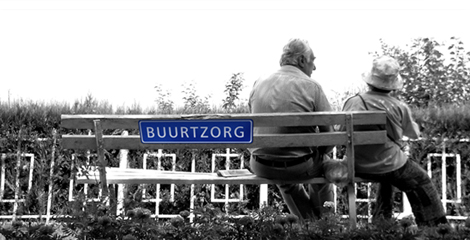
buurtzorg
Buurtzorg, a higher level of consciousness in organisational form

Book review: Reinventing Organizations by Frederic Laloux.

In the years since the financial crisis, we’ve honed a conviction here at Vogel Wakefield that the way most businesses and organisations are run is bust. Public distrust has been engendered not just by the financial crash but scandals in sectors as diverse as the health service, the media, supermarkets, the police and Parliament. Such is the depth of distrust that we envisage society eventually breaking decisively with the economic settlement of the past three decades. What the shape of the new consensus will be, who can tell? But the future surely entails profound changes for the way organisations are run. The public wants businesses to exercise greater stewardship of community assets and to operate in a more socially-oriented way.

If this vision sounds nebulous and, frankly, utopian, the exciting thing about Frederic Laloux’s book, Reinventing Organizations, is the detailed portrayal it presents of successful companies that are making real today the model of tomorrow. His view of the forces of change is broader than ours. Where we envisage this as a paradigm shift in contemporary capitalism, akin to that from social democracy to neo-liberalism thirty years ago, Laloux sees a fundamental shift in human development, the kind of shift that occurs as human consciousness develops. In this, he draws on the work of Piaget, Robert Kegan and, especially, Ken Wilber.

Read More »

Coaching in a messed-up world

By Martin Vogel

The Universe: its future may depend on you

Last night, I attended a stirring call on the coaching profession to wake up and recast its responsibilities in relation to a world that is messed up and in crisis. The call was made by Aboodi Shabi, who one might reasonably describe as a leader of the coaching profession in the UK. Courtesy of a platform with the London Coaching Group, he extemporised on themes I have advocated myself, most recently in my presentation to APECS. But Aboodi made the case with a passion and bluntness that challenged me to stand up for this agenda with much greater clarity. A theme of the evening was how coaching could “come out” as a profession that engages with society’s problems. Aboodi’s message resonated with a good proportion of his audience, although it also provoked fear and dismissal among a vociferous minority.

Read More »

Your first session with a coach

How to work with a coach, part 6

By Martin Vogel

6 iStock_000003102856Small

When you begin work with a coach, the first session can have a significant influence on the how the coaching programme as a whole plays out. It is the coach’s responsibility to facilitate a constructive session. But, for a client, it can by useful to understand the potential dynamics of your first session. This can help you both to evaluate how your coach is doing and to optimise your contribution to making the coaching a success.

For many coaches, their main objective in the first session is to establish rapport with the client and the foundation of a relationship based on mutual trust and respect. You might be forgiven for bringing a little scepticism to such aspirations. Is there any kind of professional who wouldn’t claim to aspire to trust and rapport with their clients? Coaching is different, though. Professions such as lawyers, doctors, architects even many kinds of therapist, are trading on the expertise that they can apply to fixing a client’s problem. This implies a degree of inherent disrespect for their clients – that is to say, a conviction that the client lacks resources to address their issue. Coaches’ expertise is not applied to solving a client’s problem but to helping the client find their own strategy or solution to whatever challenge they face. In short, they trust the client’s resourcefulness, the client’s expertise in their own situation.

Read More »

Corporations as a force for good? Could do better.

By Martin Vogel

Supplying a force for good?

“Corporations as a force for good” was the optimistic title of a talk given by the London Business School academic, Lynda Gratton, at the Royal Society of Arts today. Her thesis was more a paean to than a critique of corporations. On the evidence she presented, I found her optimism a little premature. Corporations can be great conduits for the creativity and fulfilment of employees and the fulfilment of societal needs at massive scale. But they are vessels for trapping employees in alienating conditions, exploiting their consumers and society at large and they often ask too few questions about their supply chains. “Could do better” would be a more appropriate assessment of the current contribution of corporations.

Read More »

The hard path of the whistleblower: apropos An Officer and a Spy, by Robert Harris

By Martin Vogel

Whistelblowers past and present: George Picquart, French Army, and Julie Bailey, Cure the NHS

Robert Harris’s novel An Officer and a Spy is not only a cracking read but a psychological study in the gathering courage of a whistleblower in an organisation gone to bad.

It tells the story of the Dreyfus affair – the wrongful conviction and incarceration for spying of a Jewish officer in the French army at the end of the 19th Century. It is told through the eyes of Georges Picquart, a spy chief who is both a party to the downfall of Dreyfus and a prime mover in the uncovering of Dreyfus’s framing by the military establishment.

Much of the power of the narrative derives from the fact that Picquart is a reluctant whistleblower. The youngest colonel in the army, he has a great career ahead of him. Moreover, he shares the casual anti-semitism of his age and has no great sympathy for Dreyfus. Nonetheless, when he discovers evidence that implicates a different officer, Esterhazy, in the spying for which Dreyfus was blamed, he cannot ignore the injustice and assumes his senior officers will think likewise.

Read More »

How should executive coaches respond when the role of business in society is contested?

By Martin Vogel

Indignant, in any language.

I’m looking forward to the APECS symposium on the future for executive coaching on 18th June. As part of a group working on the social and business context for coaching, I’ve submitted a discussion paper. I found it a useful opportunity to pull together the themes I’ve been developing at this blog over the past few years. I’ve been receiving a number of requests to access the paper even ahead of the symposium, so I’m posting it here with the following caveat: my thinking on this is a work in progress rather than my last word. Feedback, critical or otherwise, most welcome.

Anglo-Saxon capitalism is experiencing a shift in the socio-economic paradigm by which we organise ourselves. In the period after the Second World War, a consensus was established around social democracy, with its emphasis on welfare, corporatism and mitigating inequality. As this became dysfunctional, it was replaced by a consensus around free markets, managerialism and shareholder value which, itself, is now being called into question by systemic failure. What replaces it will be contested. It could be a more benign form of capitalism in which organisations accept responsibility for greater stewardship of the public realm or it could be something much closer to fascism or something else again. What role, if any, should coaches play in helping executives both to recognise the shift and to play a role in shaping a constructive outcome?

Read More »

Different kinds of truth in health care

By Martin Vogel

University Hospital of Wales, Cardiff

The unharmonious sound of an establishment closing ranks could be heard last week when an NHS hospital attempted to discredit the account by the MP, Anne Clwyd, of the death of her husband while in its care. While conceding that Ms Clwyd’s husband, Owen Roberts, died of hospital-acquired pneumonia, the University Hospital of Wales said it had no evidence to support Ms Clwyd’s assertion that Mr Roberts had died “like a battery hen.”

Cardiff and Vale University Health Board released a summary of an independent inquiry into Ms Clwyd’s allegations but declined to release the full report. So it’s impossible to assess what evidence it evaluated before reaching a view that Mr Roberts didn’t die like a battery hen.

Read More »

The malaise of busyness and a 30-second antidote

By Martin Vogel

sunspot stopwatch

People are busy talking about being busy.

Take, for example, Oliver Burkeman, who has identified a new social malaise of busy-bragging. This seems to be a function of people’s need to derive status from how hard they are working.

I always try to bring scepticism to the idea of busyness as a status symbol. In my experience, when people complain of being too busy, they really don’t like it. But Lucy Kellaway has unearthed data that suggests we’re all busy overestimating how hard we work and it is precisely those who occupy high-status positions who are most prone to bigging up their busyness:

Read More »

Miscellany: narcissism, storytelling and more

By Martin Vogel

Narcissus
Narcissus by Caravaggio

An unrelated assortment of pieces could each have prompted a blog post. But since it’s been a busy week, I’ll note them in passing.


Corporate purpose and organisational form

John Kay, apropos the Co-op debacle, provides a timely back to basics primer on who should be held to account and how when things go wrong in organisations:

“The public company has become the dominant form of business organisation because it seems to offer clear answers to these questions. Shareholders put up the money and control the executives. True, the reality often falls short. Shareholders are often diffuse and disengaged. The cost of bad business decisions may fall instead on employees, creditors and taxpayers. But, on balance, the corporate form works tolerably well.”

But that’s not the end of the argument because John Kay makes the good point that there are many hybrid organisations – such as privatised utilities, hospitals and universities – that need to develop distinctive frameworks of control because they combine trading and social purposes.

Read More »

From Valoro to Vogel Wakefield


Vogel and Wakefield
Vogel and Wakefield, looking up

From today, Valoro becomes Vogel Wakefield, the counter-consultancy. We see this as more than a change of name. We’ve been in business for nearly three years now and we have a much better appreciation than when we started of how we add value for our clients.

When we founded the business, we were spent some considerable time defining our company and our distinctive approach. In retrospect, this was more useful to us as partners than it was to customers. It helped us clarify the common ground that enabled us to work together. But all our clients wanted to know was who we were.

In fact, one executive, demonstrating refreshing plain-speaking, told us the Valoro thing wasn’t making much sense. “You’re Mark and Martin, aren’t you?” he said.

Read More »

The Co-op, revolution and public leadership

By Martin Vogel

99 per centThe tragic mistake that the Co-op keeps making is to try to accommodate itself to the era of unrestrained, crony capitalism just as we need it to prove that its 19th Century mutual values are a plausible alternative to corporate excess.

Euan Sutherland – who resigned this week after the leak of his £3.5m pay package – demonstrated not only a poor fit with the Co-op’s mutual ethos, but a complete lack of the leadership values that will turn round public disaffection with business.

It may have been lame of Sutherland to declare the Co-op “ungovernable” before he’d even attempted to reform it, but this was consistent with an executive whose leadership style had demonstrated – as Will Hutton put it – no understanding of his organisation’s core challenge:

“That challenge is to marry Co-op values with a new and better functioning business model. What is astounding is that it occurred to nobody, not the executives themselves, that by being offered and accepting sums this large the management were trashing the very values they were on a mission to rebuild.”

Read More »

The limits of leadership

By Martin Vogel

Mandela: too exceptional to be a leadership role model?

It may seem perverse in the week that we have commemorated the impact on the world of one man, Nelson Mandela, but I feel the need to cast a sceptical look at our obsession with leadership.

We live in an age which has made a fetish of leaders. As you squeeze into a rush hour Tube train, consider that probably 50 per cent of the people packed around you consider themselves to be on some kind of leadership mission at work. The other half are most likely being harangued by their organisations to step up more forcefully to the leadership plate.

Like the self-help books that offer the promise that you can achieve whatever you dream, the idea of leadership holds out the possibility that there’s no problem in organisations that can’t be resolved by a visionary and driven individual. Yet we’re regaled routinely with stories of mediocrity, organisational failure and leadership shortcomings. Ours is a tired post-industrial culture, in which the complexity of organisations and the myopia of short-term perspectives conspire to frustrate the realisation of visionary outcomes. The veneration of Mandela is testimony to the fact that, as a leadership role model, he was exceptional.

Read More »

Co-operative values: missing in action

By Martin Vogel

Spinning in their graves? The Rochdale Pioneers, founders of the Co-operative Movement

Last week, I ended a 30-year customer relationship with the Co-operative Bank. The move was precipitated initially by financial caution as a gaping hole was revealed in the bank’s balance sheet but cemented by dismay at the catalogue of mismanagement revealed in recent weeks.

While I feel a litte sad as a customer, I’m also discomforted professionally as the collapse of the Co-op Bank raises questions about my advocacy of values-driven leadership. I believe the problems of the self-styled “ethical bank” stem not from an excessively values-driven approach but from a disconnection from its values. But – and here’s the sting – the complacency generated by its intent as an ethical business may have played a role in the bank’s undoing.

Read More »