A restoration begins

By Martin Vogel

Sometimes, when you watch an event, it is only when you sleep on it that its significance lands. Last week, I watched with shock but not surprise as America’s Capitol was invaded by seditionists. Even as I watched, and despite the delay in police and security forces containing the uprising, the insurrection looked unlikely to succeed. But, the next morning, the deeper significance sunk in. This was an event that shouldn’t have happened in a mature democracy. Given the connivance of an uncomfortably large number of elected representatives in Congress, with a more competent seditionist than Donald Trump in office, the coup might have prevailed. America, and the cause of democracy around the world, was stained by the insurrection but also saved by an ethos that held when tested.

Yesterday, as Joe Biden took office, the rituals of inauguration seemed familiar but their significance was overwhelming. The words of the presidential oath carried unusual meaning as Biden, with evident decency and determination, promised to uphold the constitution. After dealing with the urgent crisis of Covid, this is his most important task. It’s not yet clear whether the mediation of differences in the United States can be contained within democratic norms. But everything about the inauguration signalled that an attempted restoration is under way.

Read More »

Undeveloping Britain

By Martin Vogel

Back in January 2019, Matt Bishop and Tony Payne at Sheffield University’s Political Economy Research Institute (SPERI) posed the question of whether Britain might be the world’s first example of an undeveloping state. By this they meant that the characteristics that sustained the UK’s development over four hundred years as a pioneer of capitalism and industrialisation may have turned into pathologies that hold it back in the modern global political economy:

“Britain could again be first, albeit in a league table not of its choice! It could be the first of the ‘early developers’ to be forced to grapple with the implications of sustained ‘undevelopment’. This is defined here straightforwardly as the dismantling, rather than the building, of a viable, functioning political economy that satisfactorily serves its people.”

The Covid-19 pandemic has brought this thesis visibly to life. Britons have spent 2020 discovering that the securities they have for decades taken for granted are in fact very fragile. I won’t rehearse the catalogue of incompetence that has characterised the British Government’s approach to the coronavirus. But, lest it becomes too normalised, I commend keeping to hand the excellent Sunday Times investigations whose titles say it all: 38 days when Britain sleepwalked into disaster and 22 days of delay and dither on coronavirus that cost thousands of British lives.

Read More »

How to heal polarisation

By Martin Vogel

As part of my recent research into how coaches are engaging with the political sphere, I interviewed a US-based coach, John Schuster, who teaches on coach training programmes at Columbia University and the Hudson Institute. The interview didn’t make the final cut of the published article because the editors wanted to focus on the discussion of coaching and climate change. But John’s work highlights a very different way that coaches can contribute to addressing some of society’s big challenges. John is tackling polarisation: using his coaching skills to bring together people across the Republican-Democrat divide.

A Democrat-supporter, he teamed up in 2016 with a coach who had voted for Donald Trump. They organised a conversation to which each invited three friends from their own side.

Read More »

A country gone wrong

By Martin Vogel

The Britain that leaves the European Union tonight is not the same country that voted to leave on 23rd June 2016. The result was a shock, but it was still possible then to imagine that the Government would help the country process it in a mature way and facilitate the emergence of a consensus about how to discharge the mandate. Indeed, in that alarming period when we were a hair’s breadth from the Conservative Party giving us Andrea Leadsom as prime minister, such appeal as Theresa May held was chiefly that she might approach Brexit in a way that could elicit losers’ consent. These hopes were soon dispelled by her speeches to the Conservative conference disparaging “citizens of nowhere” speech and charting a course to a uncompromisingly hard Brexit (a course, it subsequently emerged, she did not understand she was embarking on).

“No state in the modern era has committed such a senseless act of self-harm,” The Irish Times opined yesterday. It spoke of Britain becoming poorer, diminished on the international stage and its citizens’ freedoms curtailed.

All true. But we have lost more than our participation in the European Union and the benefits that flow from that. We have abandoned the norms and etiquette of respectful disagreement, evolved over centuries, which gave substance to our sense of ourselves as a society founded on democracy and the rule of law. From the hasty rush to start the Article 50 countdown with no clear destination in mind, to the demonisation of the judges as “enemies of the people”, the suspension of Parliament and the intimidation of MPs (which began, let us remember, with the murder of one of their number in the days before the Referendum), this has felt like a country recklessly flirting with the darkest of forces.

Read More »

Britain’s shame: projections and substance regarding Boris Johnson

By Martin Vogel

On Tuesday afternoon, a friend in Boston emailed to acknowledge that my country was now officially more embarrassing than his. This had been a bone of contention between us: him cringing at how Trump was eviscerating the reputation of the United States; me pointing to Brexit. But the elevation of Alexander Boris de Pfeffel Johnson to Prime Minister of the UK had tipped the scales in our favour. Thus was my attempted sabbatical from political engagement brought to an unwelcome end.

On Wednesday, I had a disturbed night. I kept waking to the anxious residues of Johnson’s first day in office, as I absorbed the seizure of government by a clique of “nepotists, chancers, fools, flunkeys, flatterers, hypocrites, braggarts and whiners“ – as Nick Cohen put it, with uncharacteristic understatement.

Read More »

Dare to hope

By Martin Vogel

The hounding out of the Labour Party of a pregnant, Jewish MP is both upsetting and unsettling. Who can contradict the despair experienced by Daniel Finkelstein on witnessing the episode?

“When I watched Luciana Berger deliver her speech resigning from the Labour Party I cried because of its integrity and bravery and grace. And I cried because in my entire adult life what happened yesterday is the one of the lowest, most dispiriting political moments for British Jews. I cried because I despair at what has happened. I cried because I don’t think it is over.”

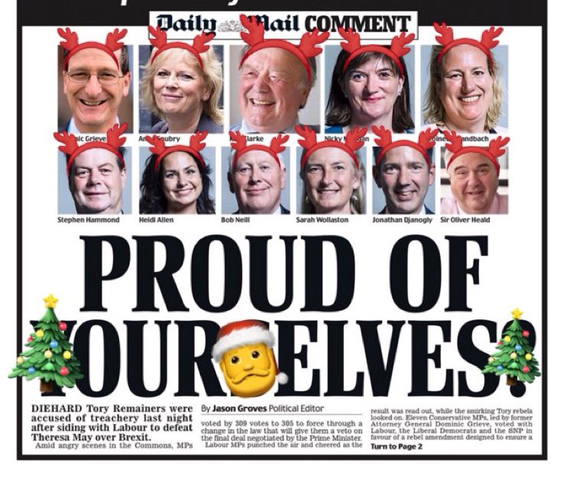
That the formation of The Independent Group of MPs has elicited a doubling down by Corbyn supporters on their intolerant and antisemitic bile only underlines how precarious is democracy’s reliance on the civil resolution of difference. We may not have reached the nadir. Anna Soubry’s denunciation of entryism and tyranny among the Conservatives shows that both main parties are infected. Yet, in the courage of the eleven MPs who have now quit the two main parties, lie grounds for cautious optimism. They are calling time on the violent discourses that have overcome politics.

Read More »

We’re better than this

By Martin Vogel

So the Government’s plans for the end of free movement are revealed. Sajid Javid speaks of Britain being open for business. But, in an angry thread on Twitter, Ian Dunt nails the true significance of the measure:

And of Labour’s complicity with Government policy, he says:

I find the anti-immigrant sentiment depressing, the more so when dressed up in liberal rhetoric. Britain doesn’t have to be this way. There’s a positive story of our experience of immigration. If politicians won’t speak up for it, we still have The Proclaimers. https://www.youtube.com/watch?v=y67ZTTRzqVk

The leaders we create

By Martin Vogel

It’s a cliché of politics to say that we get the leaders we deserve. If that’s true, it begs the question: what have we done to deserve the myopic and divisive leadership that has taken us to the precipice of chaos? A clutch of articles looking at Britain from the outside provide some answers. The Economist considers how Britain’s European allies are looking on with bemusement at its collective nervous breakdown. For them, it’s not just that they are losing a close partner but also grieving the loss of an idea of what Britain represents. No longer sensible and reliable but a country revealed to be as chaotic and headstrong as any other:

“The biggest worry is not that the world’s view of Britain is changing. It is that this darker view of Britain is more realistic than the previous one. The Brexit vote could almost have been designed to reveal long-festering problems with the country: an elite educational system that puts too much emphasis on confidence and bluff and not enough on expertise; a political system that selects its leaders from a self-involved Oxbridge clique; a London-focused society that habitually ignores the worries of the vast mass of British people; and a Conservative Party that promotes so many pompous mediocrities. The reason Brexit is doing so much damage is not just that it is a mistake. It is a reckoning.”


Read More »

A moderate proposal

By Martin Vogel

Matthew Parris is worried that the UK is heading for a no-deal Brexit because the moderate majority in Parliament doesn’t know how to face down the Brexit extremists (£). A former MP himself, he thinks it imperative that scared centrists among the Conservatives and Labour find a way to break ranks with tribal party loyalties to make common cause. He has a proposal that would both break the stalemate and allow Theresa May to relinquish her loathed deal with good grace:

“Don’t whip the vote. Declare this decision to be so important, so epoch-making, that only a free vote by MPs could honestly legitimise it. The public will like the sound of this, and there’s a chance Labour might be embarrassed into lifting their whip too. The government is still likely to lose but the defeat then would be far from a ‘confidence’ issue. For May, the can is kicked a little further down the road, which seems anyway to be as far as she wants to lift her eyes.”

The appeal of this proposal is not only that it might create new momentum in the Brexit process but also that it could create a new dynamic in the wider political culture:

“When Remainer Tories walk through the voting lobbies alongside Labour MPs they’ll see opponents who have become co-campaigners, kindred spirits, perhaps even friends. Who can say what might result, but I think that in purely human terms, something might shift within that ghastly Victorian prison they call Westminster. As MPs shuffle past the tellers together, momentarily unattached from party, and in a flurry of shared glances, something might be born.”

I think this is the most likely way that we will eventually overcome polarised politics. For all the talk of a new party, the hunger for new ideas, and the waiting for a political saviour, the most plausible impetus for change will be when people of shared values link hands across traditional divides and begin exploring the possibilities that emerge.

Image courtesy Sandra Ahn Mode.

England’s shame

By Martin Vogel

If you do one thing today, find a way to read Daniel Finkelstein’s column in The Times (alas behind a paywall) explaining why Britain seems to be heading inexorably to a no-deal exit from the EU:

“There is a widespread view that the chance of having no deal is pretty low because such an outcome would be calamitous and, anyway, there is no majority for it. It’s surely too stupid a thing to allow actually to happen? That view is wrong. It is incredibly complacent. Mrs May has returned with the only deal we are going to be offered and parliament won’t pass it. This by itself means that the chances of no deal are very high indeed. Looked at another way, the things we have to do now to secure a deal are looking forbiddingly difficult.”

Incredibly, there are MPs who – even now – do not grasp that no deal means no transition agreement. Britain would crash out of the EU wholly unprepared. And, as The Times revealed last month, the Government’s contingency plans for this – such as they are – include troops on the streets (£) to keep public order.

We have a Government and Parliament that for nearly three years has been leading the UK to a destiny they find contrary to the national interest. Conflicted between the mandate of the referendum and the mandate of representative democracy, they have left it much too late to find a responsible strategy. If Daniel Finkelstein proves right, they will have capitulated to chaos.

No wonder he concludes his piece, “What a disaster. What a disgrace.”

Image courtesy Duncan Hull.

Shaping disaffection is the way to mend broken politics

By Martin Vogel

Kenan Malik has an insightful critique of the failure of moderate politicians to provide an answer to populism:

“It’s not populist disaffection that is unreasonable, but the policies and institutions that have created that disaffection. Policies that have driven up inequality and driven down living standards. Institutions that have excluded people from the process of decision-making. There has been much talk of ‘out of touch’ politicians. Little expresses that out-of-touchness more than the fact that for almost a decade politicians have spent more energy worrying about populism than about the policies that have nurtured disaffection.”

That there is widespread demand for politics that addresses the disaffection is underlined by a YouGov opinion poll in The Sunday Times which suggests that nearly half of people think politics is broken. Only one in seven think the Conservatives and Labour represent the views of the public. Two thoughtful pieces during the year gave shape to the kind of thinking that could rejuvenate the two main parties.

Read More »

Messages from history for Brexit Britain

By Martin Vogel

What are we to make of the chaos and uncertainty facing Britain this weekend as Parliament prepares to approve or vote down Theresa May’s deal on Brexit? Two contrasting views are on offer from writers who, curiously, both reference the Sex Pistols’ song God Save the Queen. Johnny Rotten’s punk anthem from the 1970s is a message from an era of division and chaos that ultimately led to the Winter of Discontent. Are we on the brink of returning to the abyss?

Read More »

The benefits of dual nationality

By Martin Vogel

Daniel Finkelstein writes in The Times about why he won’t be joining the rush for dual nationality (£) among those Britons who fear for their country’s future. Like me, he is the son of a refugee from the Nazis and perhaps this explains why he is able to define clearly, while not sharing them, the motivations of those – like me – who are exercising their right to another nationality:

“Their application is a sort of protest against Brexit and an insurance policy in case Brexit presages a less tolerant Britain or a calamitously poor one. And there are also some Jews who worry about a Corbyn government.”

He recalls in his childhood reading with his mother about the kings and queens of England:

“Only as an adult have I reflected that when the Tudor monarchs reigned, or even the Georgians, my family wasn’t here. We lived under distant emperors. But still, I reflect, we chose these great Britons and they chose us. Their countrymen gave us a home and our liberty and peace. And I’m never going to be part of something else.”

I can certainly relate to this sentiment. My father recalls his arrival at Dover in 1939 when he was eleven years old and had escaped with his parents from Czechoslovakia after it was occupied by the Nazis:

“There were no inquisitions into whether we had any rights to be entering Britain, or the type of unwelcoming unpleasantness present-day refugees and immigrants have to experience. There was no waiting about while officials decided whether we were to be allowed to enter the country. Quite simply: we were welcomed and that was that, and we were very, very grateful to be in England.”

That gratitude to the UK has stuck with him to this day and certainly informs my own attachment to this country.

Read More »

The insurgency of decency

By Martin Vogel

The march for a people’s vote on Brexit was a heartwarming occasion with 100,000 radical moderates quietly expressing their outrage with characteristic British understatement, self-deprecation and civility. Unlike the demonstrations of my younger years, there wasn’t a Trotskyist in sight to subvert the decency of protestors to their own ends. For a brief, glorious summer afternoon, it was possible to believe that Britain could find a way through the chaos it has brought upon itself and heal its wounds. People speculated whether the movement would be sufficient to bring about a change in course. I suspect not, at least not in the time left before Brexit is effected as a matter of law.

But in any case, there can be no going back to the world before 23 June 2016. Britain is already changed by the referendum, divided against itself and with the disinvestment plans of major employers at an advanced stage. More pertinently, there are other players in this drama. The EU shows every sign of wanting to cauterise its Brexit wound so that it can turn its attention to more pressing concerns. And the wider outlook for democracy and international solidarity has never looked so precarious in my lifetime. The Brexit referendum result, it turns out, was by no means an outlier but a precursor of a nationalistic and populist impulse which has swept through Western countries. Were we to decide against glorious isolation after all, and advocate once again for the rules-based order, it’s by no means clear that the world would want to listen.

Read More »

Political renewal needs more than bland centrism

By Martin Vogel

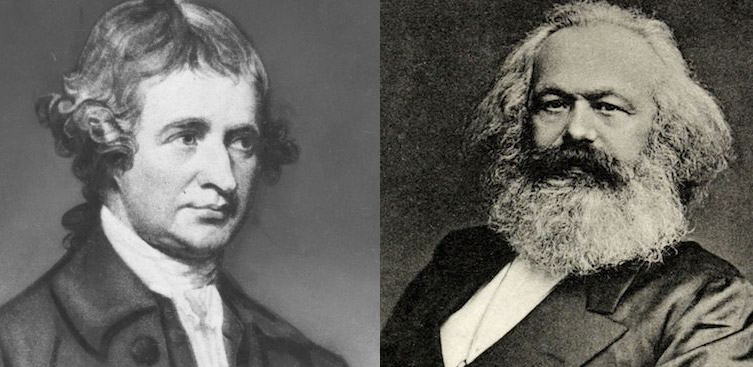
Burke ‘n’ Marx.

What kind of politics do we need? Between left and right populism, it’s perplexing that there’s nothing inspiring emerging from the middle ground.

Is part of the problem that current hopes of an alternative are invested in something called centrism? There’s nothing to lift the spirits in that term. It suggests a bland splitting of the difference between the extremes or, worse, nostalgia for the discredited status quo ante.

Read More »

Who will lead democratic renewal from the left?

By Martin Vogel

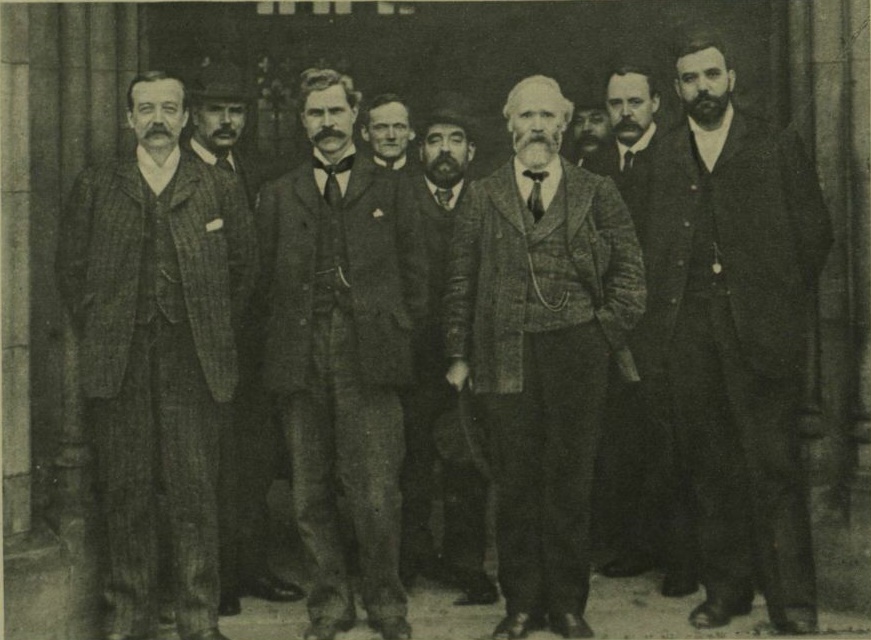
Labour was founded as a party when its first MPs were elected in 1906.

Opposition politics in the UK are in a sorry state. The Labour Party is in the grip of a far-left cult which is not much interested in parliamentary democracy. Since the General Election, those in the Labour Party who don’t favour Jeremy Corbyn’s leadership have gone quiet – perhaps buying into the myth that by not losing the election as disastrously as everyone expected, he somehow won it instead. Because the moderates expressed their lack of confidence in Corbyn on the grounds of his unelectability, they are now shouted down by those who crow about Corbyn’s apparent popularity. What has been lacking is a principled critique of what he stands for.

Read More »

Leading is about creating a shared sense of home

By Martin Vogel

Why do I write so much about politics? Because there’s an inescapable link between our political situation and the way organisations are led. It’s a moot point whether organisations align with the prevailing political discourse or whether politics is shaped by the interests of organisations. At the moment, it’s politics that’s making the running. There’s a broad consensus across the political spectrum that, whatever path Britain takes in relation to Brexit, it needs to become more inclusive. There’s not much agreement (nor even much in the way of ideas) about how this is to be achieved. But I fear many organisations don’t yet grasp the demands it will place on them to overcome the alienation and social fracturing that blight large parts of the country.

Read More »

Brexit complexity

By Martin Vogel

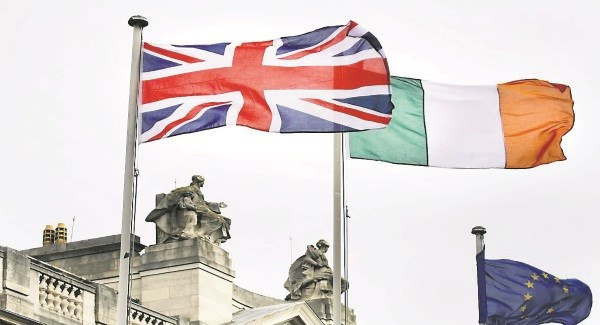
uk ireland eu

Brexit is shaping up to be the object lesson par excellence in how not to lead in complexity. First this week we have seen the Government’s negotiating strategy (if one can call it that) for getting to Phase 2 of the Brexit talks blown to pieces by its negligence of the Irish border issue. Then the Brexit Secretary, David Davis, admitted that the Government had made no assessment of the impact of Brexit on the various sectors of the economy, despite having previously insisted on several occasions that such assessments were in hand. So the Government is navigating what is the biggest peacetime challenge that the UK has faced in generations, not just with no real understanding of what its impact will be but no attempt to understand. It’s almost as if the truth would be too frightening for ministers to know.

Read More »