Time for a break

By Martin Vogel

Another Advent Calendar of blogposts comes to an end. Thank you for following. I hope you’ve found something worth reading here over the past 24 days. I’ve tried to leaven my tendency to the dyspeptic with more constructive fare. The Nick Cave post has been the most popular of the series. He has a discerning fan base who seem to find their way to Nick Cave related corners of the internet quite quickly. Unplanned, the series began and ended with reflections on accessing one’s whole self. Significant, perhaps, that I didn’t get round to writing about my own experience with this until the end of the run. I’m taking a break from blogging now to make my overdue contribution to the festive preparations. I will resume posting in the new year, but not on a daily basis. Have an enjoyable break. Happy Christmas, happy holidays, however and whatever you celebrate.

Advent Calendar blogposts

  1. On bringing your whole self to work
  2. The benefits of dual nationality
  3. The serious business of playing the fool
  4. From toolkits to relationships: getting real about what happens in coaching
  5. Feeback without tears
  6. Nick Cave as coach
  7. Embrace boredom
  8. Messages from history for Brexit Britain
  9. Shaping disaffection is the way to mend broken politics
  10. Taking the pulse of an organisation
  11. Why write?
  12. England’s shame
  13. Beyond codes of ethics to ethical maturity
  14. Generating expansive conversations with open space
  15. A moderate proposal
  16. The leaders we create
  17. Tracking down Conquest’s law on organisations
  18. The thoughtlessness behind organisational perversity
  19. We’re better than this
  20. Britain’s duff leadership culture
  21. Grounds for optimism
  22. On getting it wrong
  23. Exploring voice
  24. Time for a break

Image courtesy Marilylle Soveran .

Why write?

By Martin Vogel

What’s the point of writing? Amid the torrent of tweets, snaps and status updates, the verbiage of fake news and the dreck of junk mail, why would we need more words in the world? And yet we do. We constantly need to write the world afresh. For all that some authors, such as Jane Austin, endure, mostly the great writing names of an age fade away. Who now reads Graham Greene or Kingsley Amis? Even Martin Amis? The Neapolitan Novels are today’s Dance to the Music of Time.

Writing is an act of engagement with our world in the here and now. Note, this is so even of historical fiction or sci fi: it normally reflects contemporary concerns. How could it not do since it is shaped much more by the filters and perceptions of the age and culture in which it is formed not that which it is about? But writing need not necessarily be a public act. Writing as engagement with the world is an act we can all get in on.

Read More »

Embrace boredom

By Martin Vogel

I’ve been re-engaging with deep work by listening to an old podcast by Cal Newport introducing his ideas on the subject.

In order to create more focus in one’s work, it’s not necessary to transform one’s life to achieve black belt status in the art of concentration. Adopting three simple maxims can shift the dial:

  • Plan each week to do just five hours of deep work
  • Embrace boredom
  • Eliminate unnecessary social media and news browsing

Actually, maxims two and three are variants of each other. Many of us convince ourselves that there is a productive justification for engaging in social media. But social media usage soon becomes a habit for filling ones idle moments with cognitive stimulation – that is to say, staving off boredom. Just look around you on any rush-hour train. Most people who are travelling alone will occupy the time staring at their phones. And a good many of those travelling with someone else will do so too.

I’m increasingly convinced that there isn’t enough boredom in life. Absence of stimulation has become an anxiety-provoking state: almost as if we have assume we have an existential right not to be bored.

Read More »

On bringing your whole self to work

By Martin Vogel

wholeperson

Pilita Clark seems to have taken up a role in the FT, previously occupied by Lucy Kellaway, debunking fashionable corporate nonsense. Her latest piece takes issue with the trend to encourage employees to “bring your whole self to work”:

“This fatuous phrase has blossomed into ever wider use in offices around the world, where it masterfully suggests a company … is so anxious to please its workers it is happy to have them behave at work as they would at home. This is patently untrue. Companies want workers who are industrious and easy to manage. Workers, for that matter, are generally looking for companionable, civil colleagues who get on with the job at hand.”

Part of the problem that Pilita identifies is that nobody really know what bringing your whole self to work means: it covers everything from sharing your personal life with colleagues to bringing your dog into work. If her interpretation is true, it suggests that the notion of bringing your whole self to work has become so devalued through overuse as to be worthless.

This would be a shame since it has honourable roots in the human potential movement.

Read More »

I, Tonya shows the role of power in achievements

By Martin Vogel

triple axel

Before Christmas, I wrote a blog post with the title Effort more than talent is the key to achievement. True enough. But how could I have forgotten to mention another critical determinant: power?

Craig Gillespie’s film I, Tonya – starring Margot Robbie as the American figure skater, Tonya Harding – shows us how power, or the lack of it, can frustrate even the most promising blend of effort and talent.

Tonya Harding had both in spades. She was famously the first American woman to achieve the phenomenally difficult triple axel jump in competition (and only the second in the world). Her skating career came to an end after she was implicated in an attack on her fellow competitor Nancy Kerrigan. But, as portrayed in the film, this incident arose out of a wider nexus of class and gender relations that had held her back from the outset.

Read More »

Here ends the Vogel Wakefield Advent Calendar

By Martin Vogel

It was only in the last week of November that I conceived the idea of writing a blog post every day in the lead-up to Christmas. I was inspired by my email provider, Fastmail, whose Advent calendar blogs I have enjoyed over recent years.

For various reasons, I’ve written very few blog posts over the past couple of years. In part, this has been because I’ve felt the world to be moving too fast for me to fashion my thoughts into timely and relevant written pieces. I wondered if giving myself a commitment to publish every day might break the logjam. I made the commitment semi-public by telling folk about it and announcing my intention just once on Twitter. This created enough expectations of me to be motivating; but not so many that the stakes would be inhibiting.

Read More »

In praise of philosophers and other experts

By Martin Vogel

philosophers

I haven’t much time for the anti-expert sentiment that came out of the referendum campaign. But the Brexiteer blogger, Pete North, has made an articulation of the case against expertise that makes sense to me. He takes issue with the the narrow economistic perspective advocated by the corporate sector and he rightly points out that other considerations are at play in Brexit:

“There seems to be a quest to seek out a perfect answer to a complex question. But there is no perfect answer because you have to hold this Brexit crystal up to the light and see the many reflections it casts. It is entirely a matter of perspective and it extends beyond the realms of economics and into the domain of identity, culture, heritage, class and a myriad of rational and irrational concerns, all of which have equal standing. So diverse are the views that there is only really one way to settle it. Democracy. Imperfect though it may be, it is at least fair.”

Much as I agree with the sentiments expressed, this doesn’t amount to a convincing case against expertise. Rather, it underlines that what we take to be expertise in public debate is much too narrow.

Read More »

England: the nation with a special place in Europe

By Martin Vogel

The English and Their History by Robert Tombs is a monumental book covering the story of England from the 7th Century to the present day. Published in 2014, it’s a pertinent insight into our national identity. While the whole of the UK is leaving the EU, it is English nationalism that is a driving force behind it.

Tombs shows that an English nation was established well before 1066 using the language of old English which was suppressed by the Normans but revived in the fourteenth century. A long history of conflict with Scotland overhangs much of the story prior to the Acts of Union. The union is sometimes portrayed in the nationalist perspective as something close to England’s annexation of Scotland. But the union also meant England was subsumed into Britain. Scotland retained a national identity, England less so. And Tombs’ history becomes more blurry after union: it’s hard to pick out England’s story from that of the broader UK.

Read More »

Don’t let the urgent crowd out what’s important

By Martin Vogel

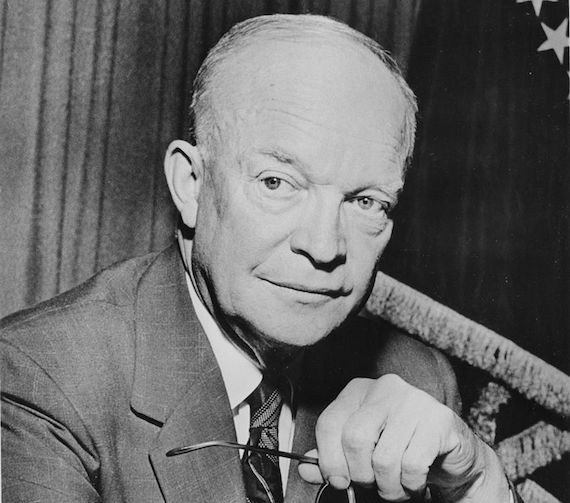
Dwight
Dwight Eisenhower, focussing on what’s important

It’s a given in most management roles that there is more work to be done than there is time available to do it. But it’s with increasing frequency that clients are talking to me about their difficulties in deciding what to prioritise in their unrealistically demanding workloads. In such conversations, I reach for the urgent and important matrix. This is an approach to time management popularised by Stephen Covey in The 7 Habits of Highly Effective People and inspired by the former US President, Dwight Eisenhower.

In a lecture in 1954, Eisenhower said, “I have two kinds of problems, the urgent and the important. The urgent are not important, and the important are never urgent.”

Read More »

Survival is insufficient: lessons for leadership from Station Eleven

By Martin Vogel

survival

Station Eleven, a novel by Emily St. John Mandel, depicts the collapse of modern civilisation when a flu pandemic sweeps across the world and (twenty years later) the dystopian society that is established by small clusters of survivors. I read it on the recommendation of the Financial Times’ business books podcast – although I refrained from listening to the episode until I’d completed the book. I enjoy it when novels appear on lists of business books, something that happens too infrequently. In truth, insofar as fiction provides insight into the human condition, almost any novel is more rewarding of a leader’s time than a business book, most of which are mediocre. But I can see why Station Eleven caught the FT’s attention.

The novel portrays how utterly dependent we are on organisations and the technology we manage, and how fragile is the fabric they weave. The virus that initiates the story originates in the Republic of Georgia but spreads rapidly in two respects: those infected develop symptoms within hours and are dead within two days; and, in an interconnected world, it is transmitted around the globe before most people are even aware that this disease in a distant land threatens their country. In Toronto, where the novel is initially set, chaos breaks out in the first 24 hours as hospitals are overwhelmed, parents fail to return home to their children and the mobile phone networks become congested. Within a few days, the familiar presenters on the television news networks disappear, to be replaced by whoever is still able to staff the office. Within a fortnight, the networks are off air. In short order, the electricity grid collapses as the staff needed to operate it die off; with it goes the internet, eliminating at a stroke the world’s knowledge. Motor transport becomes impossible and, before long, the surviving population settles in whatever locations they had reached when the plague took hold (for one group, a provincial airport to which their plane had been diverted) or to which they can travel on foot.

Read More »

Universities and public value

By Martin Vogel

test card
BBC Test Card image.

Higher education’s status as a not-for-profit public service operating in a globally competitive market is unusual. There are not many comparable institutions – and this can make HE’s travails, as it contemplates regulatory change, seem like a lonely struggle. But HE is not alone. An analogous institution is the BBC. There are affinities in terms of cultural role, independence and longevity. But the most striking is the exposure to competition while pursuing public purposes. This creates a tendency towards managerialism and instrumentalism that can be counter-productive. To keep this tendency in check, and retain public support, the BBC turned to the concept of public value. Universities are now exploring the same avenue, as they try to regain public connection, revealed by the Brexit vote to be threadbare. Read More »

What has trauma to do with work?

By Martin Vogel

stress

Book review: The Trauma of Everyday Life by Mark Epstein

I read The Trauma of Everyday Life to inform my thinking for an event I am helping to organise on trauma in coaching. I hadn’t appreciated before I read the book just how much of a Buddhist take on the subject it would represent. It turns out Mark Epstein, a New York-based psychiatrist, is an established writer on Buddhism and its intersection with psychotherapy. He provides here a psychotherapeutic biography of the Buddha: how the Buddha’s own traumas informed his enlightenment and how this, in turn, shines a light on how best we can cope with difficulty in our lives. This is perhaps more interesting to me than a straight psychotherapeutic discussion. Though no Buddhist, I practice mindfulness. As a matter of philosophical disposition, I find the possibilities it holds out for caring for oneself more appealing than the path that working with an expert therapist offers.

Epstein adopts a broader and looser interpretation of trauma than one normally encounters in psychotherapeutic discussion. He distinguishes between the conventional view of trauma, as confronting a death or serious injury, and developmental trauma, when emotional pain cannot be held. Sometimes, these might converge – for example, Epstein refers to the Buddha’s own developmental emotional pain resulting from the death in his infancy of his mother. But Epstein also views the common difficulties of life through the lens of trauma and refers to the pre-traumatic stress with which we experience the inevitability of death.

Read More »

After the General Election, the forthcoming politics of organisation

By Martin Vogel

strike
Politics of organisation: hopefully, not like this, this time round.

Earlier this year, I attended a talk at the RSA by Frederic Laloux, author of Reinventing Organizations. Laloux was every bit as inspiring as I had hoped after reading his book. But what has stayed with me also was a throwaway comment by Matthew Taylor, chairman of the RSA and former advisor to Tony Blair when he was Prime Minister. Reflecting on the paucity of organisational life, Matthew observed that we need a politics of organisation. Yes, I thought, this is exactly what we need and, at last, people are beginning to get it.

The politics of organisation was, of course, one of many absences in the General Election campaign. One of the successes of three decades of neo-liberalism is that what happens inside organisations has been ruled out of court for politicians. But at the same time, organisations – particularly private corporations – have become increasingly central to how our society is, well, organised. Most of us work in large organisations to earn our living and, with the hollowing out of the state, depend on them for the delivery of our public services. And what is left of life is increasingly mediated by the likes of banks that are too big to fail, food retailers whose chains extend from the convenience shop to the out-of-town megastore, and global internet businesses such as Google, Amazon and Facebook. How we experience them as employees and consumers and how they impact on society in general are among the most significant influences on our lives.

Read More »

Apple Watch: how the quantification of life assists managerialism

By Martin Vogel

Apple Watch blackSimon Western has ruined my eager anticipation of the Apple Watch (launching late next month, pre-orders from 10th April). In a profound and reflective piece, he discusses how the Watch (as opposed to the humble watch) represents the latest and most decisive step towards the creation of a neurotic age.

Key to this argument is the insight that technology is not simply an appendage to human life but changes what it is to be human. As Simon Western says, we are so affectively attached to the brands and products of the technology companies that they become a part of our emotional, physical and cognitive being. Apple is foremost in facilitating this attachment – with its celebrated competence in combining the disciplines of arts, humanities, science and technology in the service of the development of products to die for. But it is far from alone, as exemplified by the signal obssessions of our day: monitoring of Facebook, Twitter, Instagram or email; the pre-eminence of collecting selfies above experiencing life; or the quantifying of one’s lifestyle.

Read More »

Corporations as a force for good? Could do better.

By Martin Vogel

Supplying a force for good?

“Corporations as a force for good” was the optimistic title of a talk given by the London Business School academic, Lynda Gratton, at the Royal Society of Arts today. Her thesis was more a paean to than a critique of corporations. On the evidence she presented, I found her optimism a little premature. Corporations can be great conduits for the creativity and fulfilment of employees and the fulfilment of societal needs at massive scale. But they are vessels for trapping employees in alienating conditions, exploiting their consumers and society at large and they often ask too few questions about their supply chains. “Could do better” would be a more appropriate assessment of the current contribution of corporations.

Read More »

The hard path of the whistleblower: apropos An Officer and a Spy, by Robert Harris

By Martin Vogel

Whistelblowers past and present: George Picquart, French Army, and Julie Bailey, Cure the NHS

Robert Harris’s novel An Officer and a Spy is not only a cracking read but a psychological study in the gathering courage of a whistleblower in an organisation gone to bad.

It tells the story of the Dreyfus affair – the wrongful conviction and incarceration for spying of a Jewish officer in the French army at the end of the 19th Century. It is told through the eyes of Georges Picquart, a spy chief who is both a party to the downfall of Dreyfus and a prime mover in the uncovering of Dreyfus’s framing by the military establishment.

Much of the power of the narrative derives from the fact that Picquart is a reluctant whistleblower. The youngest colonel in the army, he has a great career ahead of him. Moreover, he shares the casual anti-semitism of his age and has no great sympathy for Dreyfus. Nonetheless, when he discovers evidence that implicates a different officer, Esterhazy, in the spying for which Dreyfus was blamed, he cannot ignore the injustice and assumes his senior officers will think likewise.

Read More »

The malaise of busyness and a 30-second antidote

By Martin Vogel

sunspot stopwatch

People are busy talking about being busy.

Take, for example, Oliver Burkeman, who has identified a new social malaise of busy-bragging. This seems to be a function of people’s need to derive status from how hard they are working.

I always try to bring scepticism to the idea of busyness as a status symbol. In my experience, when people complain of being too busy, they really don’t like it. But Lucy Kellaway has unearthed data that suggests we’re all busy overestimating how hard we work and it is precisely those who occupy high-status positions who are most prone to bigging up their busyness:

Read More »

Miscellany: narcissism, storytelling and more

By Martin Vogel

Narcissus
Narcissus by Caravaggio

An unrelated assortment of pieces could each have prompted a blog post. But since it’s been a busy week, I’ll note them in passing.


Corporate purpose and organisational form

John Kay, apropos the Co-op debacle, provides a timely back to basics primer on who should be held to account and how when things go wrong in organisations:

“The public company has become the dominant form of business organisation because it seems to offer clear answers to these questions. Shareholders put up the money and control the executives. True, the reality often falls short. Shareholders are often diffuse and disengaged. The cost of bad business decisions may fall instead on employees, creditors and taxpayers. But, on balance, the corporate form works tolerably well.”

But that’s not the end of the argument because John Kay makes the good point that there are many hybrid organisations – such as privatised utilities, hospitals and universities – that need to develop distinctive frameworks of control because they combine trading and social purposes.

Read More »

The limits of leadership

By Martin Vogel

Mandela: too exceptional to be a leadership role model?

It may seem perverse in the week that we have commemorated the impact on the world of one man, Nelson Mandela, but I feel the need to cast a sceptical look at our obsession with leadership.

We live in an age which has made a fetish of leaders. As you squeeze into a rush hour Tube train, consider that probably 50 per cent of the people packed around you consider themselves to be on some kind of leadership mission at work. The other half are most likely being harangued by their organisations to step up more forcefully to the leadership plate.

Like the self-help books that offer the promise that you can achieve whatever you dream, the idea of leadership holds out the possibility that there’s no problem in organisations that can’t be resolved by a visionary and driven individual. Yet we’re regaled routinely with stories of mediocrity, organisational failure and leadership shortcomings. Ours is a tired post-industrial culture, in which the complexity of organisations and the myopia of short-term perspectives conspire to frustrate the realisation of visionary outcomes. The veneration of Mandela is testimony to the fact that, as a leadership role model, he was exceptional.

Read More »

The shadow side of values

By Martin Vogel

shadow

Only about a decade ago, corporate values were all the rage. We lived in a world in which business was largely viewed as a force for good and corporations identified their success with the general wellbeing. Now, as we labour to fund the bailouts of the banks, we have a more nuanced view of business and the statements of values seem hollow.

But values remain potent. The public cares about them: not the values of PR spin but the actual lived values of organisations. Most of the corporate scandals of recent years became scandals precisely because they generated perceptions of values betrayed.

Read More »