All of human life is here: the wide canvas of executive coaching

Mate

By Martin Vogel

Book review: Are You Listening? Stories from a Coaching Life, by Jenny Rogers. 2021, Penguin.

Are You Listening? by Jenny Rogers is a collection of stories from her 30 years as a coaching professional. It occupies a similar place in relation to coaching as do, to psychotherapy, Stephen Grosz’s The Examined Life or Irvin Yalom’s Love’s Executioner.

Given that Rogers is a doyenne of the profession, you might expect this book to be a catalogue of triumphant interventions. There are successes, but it’s more nuanced than that. She shares the compromises and failings that are inevitable companions on a coaching journey.

Read More »

The strengths and limitations of a psychoanalytic perspective on current events

Planet

By Martin Vogel

Book review: Danse Macabre and other stories: A Psychoanalytic Perspective on Global Dynamics By Halina Brunning and Olya Khaleelee. 2021, Phoenix Publishing.

This book examines the political events of the 21st Century through the lens of psychoanalytic concepts. While it takes a global perspective, it is firmly rooted in the experience of the United Kingdom. It consequently lacks focus to the extent that the authors struggle to add depth to the insight that is readily available to anyone who tries to stay well-informed about current events. They’re not helped by having to retrofit the impact of the pandemic, which began at the tail-end of the period in which they were writing. Their analysis of Covid-19 reflects the fragmented knowing that was forming as the virus took hold and looks shop-worn in the context of the continuing uncertainty in late 2021.

But, for what it lacks in depth, Danse Macabre compensates with breadth.

Read More »

Navigating trauma in coaching

By Martin Vogel

The practice of coaching deals with more darkness than is often acknowledged. From my earliest days as a coach, I have encountered people who are navigating significant difficulty in life. Trauma is a subject not easily broached in coaching. Clients and coaches often assume this is the terrain of therapy and are fearful of going there.

But trauma is widely prevalent. For many of us, our traumas may well be be reactivated by some of the questions currently playing out in society – the climate crisis, coronavirus, Brexit, to name a few. Coaches and clients alike are affected by these developments and their learned adaptations to trauma may well influence not just how they respond to things from day to day but also how the coaching relationship plays out. The question is not whether to consider trauma in coaching but how.

Read More »

Tuning into the cascade of experience

By Martin Vogel

I’ve written before about the stirring voice work of Nadine George. My introduction to the work last year has turned out not to be an isolated encounter but the beginning of an exploration that I suspect I might pursue for some time. Most recently, I joined a two-day workshop in Glasgow with a group of people with varying levels of experience in the method – from decades to none. Nadine’s work continues a tradition begun by Alfred Wolfsohn and developed by Roy Hart. If voice work conjures for you a technical exercise in projecting one’s voice, this is much more than that. It is a journey in giving voice to aspects of one’s self that don’t easily find expression. It’s a form of self-development that takes effect remarkably quickly. If my initial work with Nadine touched me profoundly, the opportunity to practise with a group penetrated to a further level of depth.

It’s harder to write about a group experience than about a lesson on my own. My experience is wrapped up with that of everyone else. It’s not just mine to share. So this piece is published with the consent of the others.

Read More »

Leading from the right: understanding the divided brain

By Martin Vogel

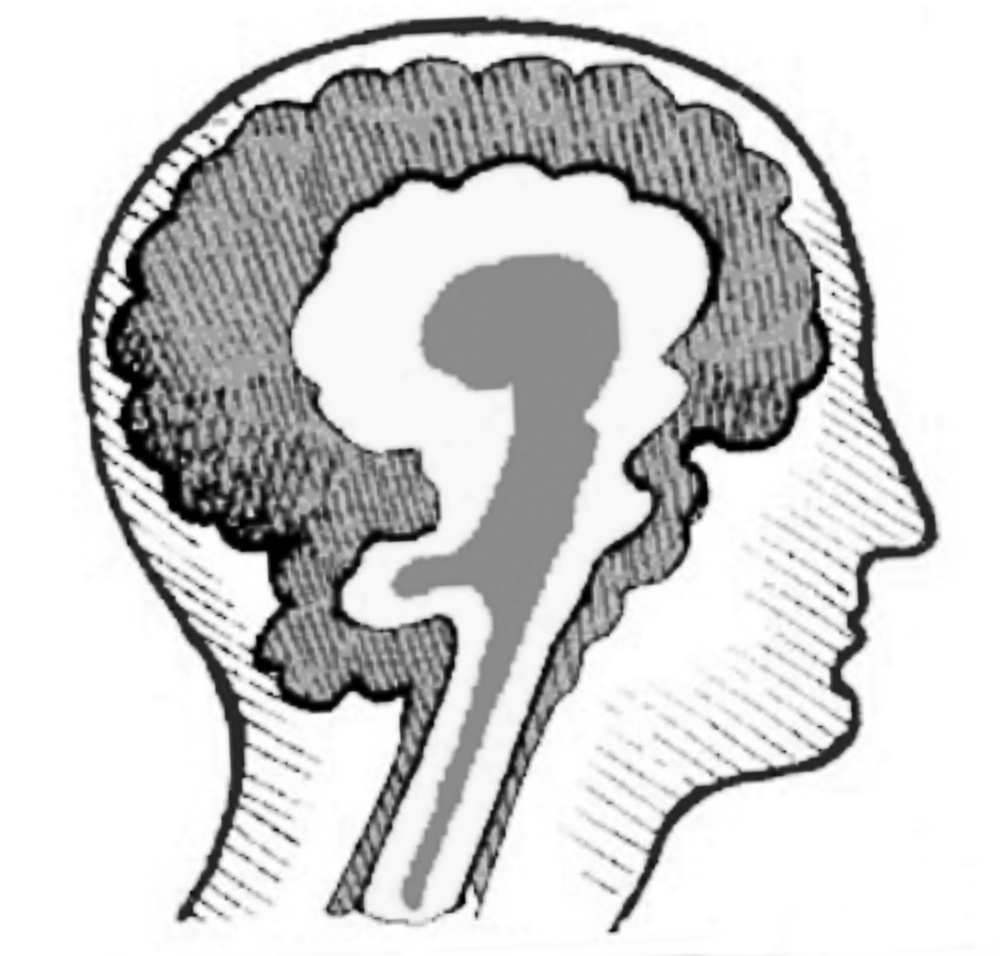
It’ll be ten years in October since Iain McGilchrist published The Master and His Emissary, his magisterial study of the division of the brain into left and right hemispheres and the impact of this division on Western civilisation. I began reading it in 2013 and have finished it in time for the tenth anniversary. Although McGilchrist writes well and lucidly, and although I devour books, I found this one a challenging read. I needed to take pauses from reading it to let its argument sink in. This isn’t just a reflection of my cognitive abilities. McGilchrist writes in ways that draw on both left- and right-hemisphere orientations. My struggle perhaps exemplifies his thesis that we have become inured to left-dominant ways of comprehending.

The outcome of 25 years’ polymathic scholarship, The Master and His Emissary cites 2,500 sources of neuroscience, provides a potted history of Western culture and philosophy from the Greeks to the present day, and displays refined critical appreciation of art, literature and music through the ages. Despite its challenging nature, it is widely cited in coaching and leadership circles, though often erroneously by those who take it to be a confirmation of pop psychology constructs of the left and right “brains” as having different functions: left for language, right for creativity, etc. Read More »

A Holocaust story and its relevance today

By Martin Vogel

Ostrava Nesselroth passage

I’ve been reading the story of how a liberal, prosperous community succumbs to nationalism and xenophobia. In relatively short order, it descends into violence and murder as democracy and the rule of law collapse. Ultimately, it is transformed from a progressive centre of enterprise and culture into a backwater. Its Jewish community is wiped out.

This is the story of Ostrava in the Czech Republic and the rise and fall of its Jewish community. It’s also the story of my father and scores like him who managed to escape the fate of the overwhelming majority of Ostrava Jews and establish lives for themselves elsewhere.

Ostrava and Its Jews by David Lawson, Libuše Salomonovičová and Hana Šústková is a labour of love that pieces together a picture of the community from archival records alongside the testimony of survivors. It represents in microcosm, a rich and detailed portrait of European Jewish life and its relationship with wider society before the Holocaust swept it all aside. Read More »

Exploring voice

By Martin Vogel

One of the most stirring encounters that I experienced this year was a one-hour lesson with Nadine George on discovering your voice. Nadine has been teaching voice for thirty years to actors, directors and other creative types. According to her website:

“Having spent eight years researching the voice at the University of Birmingham Drama Department, Nadine has developed her own voice technique. She now works closely with many international theatre companies and drama schools all over Europe. She has been teaching at the Royal Conservatoire Scotland for the past 20 years, where her work is now the chosen technique taught by the Centre for Voice In Performance.”

What was I doing there? A good question. I wasn’t entirely sure myself. I was sent to Nadine by my wife who had previously trained with Nadine, and who had an instinct that I’d find the lesson rewarding.

Her method is in a lineage that descends from Alfred Wolfsohn via Roy Hart. These were not names that meant much to me before this year. Suffice to say this is not an entirely performance-based tradition of voice work. Wolfsohn suffered shell shock during the First World War and used vocalising as a form of self-treatment after other therapies failed to help. While Nadine does not claim to be a therapist, she recognises that her work has therapeutic impacts.

Read More »

Grounds for optimism

By Martin Vogel

Not everything about chaos is miserable. We may be living through an epoch-defining collapse of the socio-economic settlement we have known for four decades. A reckoning with free-market, shareholder value capitalism is long overdue and it is happening in more disruptive ways than was needed. Things may look disturbing and confusing. But, as David Brooks reminds, out of chaos comes hope:

“There have been many moments in our history when old ideas and old arrangements stopped working and people chopped them up. Those transition moments were bumpy, and it was easy to lose hope, but then people figured it out. Never underestimate the power of human ingenuity.”

He doesn’t mean the kind of blind-faith, glib, muddling-through, bulldog-spirit, groundless hope that keeps churning out the same answers to new problems. He’s not British. He’s talking about the application of imagination to the invention of new paradigms; meeting a new reality with new strategies.

Read More »

Tracking down Conquest’s law on organisations

By Martin Vogel

The more it is cited, the more frustrated I become about “Robert Conquest’s Third Law of Politics” which is said to state:

The simplest way to explain the behaviour of any bureaucratic organisation is to assume that it is controlled by a cabal of its enemies.

The aphorism strikes me as so profound and relevant that I have often tried to verify its attribution. Conquest was a renowned historian of the Soviet Union, so his opinions on the politics of organisations carry considerable credibility.

Read More »

Beyond codes of ethics to ethical maturity

By Martin Vogel

A recent article by Kara Swisher in the New York Times appeared under the headline Who Will Teach Silicon Valley to Be Ethical? Tech companies have been attracting a fair amount of criticism this year over their grasp of ethics. But they’re not alone in finding this area a minefield. The shareholder value view of firms, which has it that their sole purpose is to make a profit, still shapes leadership thinking in most organisations. This infects even those – like the BBC or NHS – that aren’t ostensibly profit focussed but where stripping out cost often crowds out other considerations. Where a reductionist view of purpose prevails, it’s not surprising that questions of ethics may receive scant consideration.

Kara Swisher considers various solutions including companies appointing chief ethics officers, putting in place official systems of ethics or (radical idea) chief executives stepping up to the plate to provide more leadership. She quotes an unnamed ethical consultant who complains that appointing custodians of ethics would be no more than window dressing because “we haven’t even defined ethics yet”.

Running through all of this is an assumption that ethics can be defined to delineate universal principles that clearly determine ethical or unethical behaviour in all eventualities. Coaching has been pursuing this track for some years. Every professional association of coaches has a code of ethics that its members commit to follow. And yet coaches, who are privy to ethical dilemmas more than most in business, must know that ethical choices are highly contingent on the contexts in which they arise. This is the essence of the well-known trolley problem: it’s obviously wrong to kill someone; but what if doing so saves the lives of five others? Read More »

Nick Cave as coach

By Martin Vogel

Nick Cave has initiated an interesting project answering questions sent in from his fans. The questions are searching. The meditations Nick Cave composes in reply are works of artistry in their own right.

Last year, I wrote about the transcendent experience of the Nick Cave and the Bad Seeds concerts that followed the death of his son. The first of his epistles addresses this very theme. He describes how immersion in work and – in so doing – recovering a sense of wonder helped him find community and accept his grief:

“I kind of realised that work was the key to get back to my life, but I also realised that I was not alone in my grief and that many of you were, in one way or another, suffering your own sorrows, your own griefs. I felt this in our live performances. I felt very acutely that a sense of suffering was the connective tissue that held us all together.”

Read More »

Blackkklansman’s bleak conclusion offers a glimmer of hope in dark times

By Martin Vogel

Can compromised organisations be turned into a force for good in society, and can individuals exert positive impacts in organisations whose dark side overshadows their light? These questions are put by Spike Lee’s compelling film Blackkklansman.

A dramatisation of the story of Ron Stallworth, a black Colorado police officer who infiltrated the Ku Klux Klan, the film zeros in on the intersection between the two organisations, the Colorado Police Department and the Klan, in the late 1970s

Both are responding in their way to the liberalising forces that have swept through America in the preceding years. The police are encouraging the recruitment of ethic minorities. The Klan are donning suits and attempting to sanitise their rhetoric, in order to take their hateful message mainstream. There are elements within both organisations which resent the liberal turn. Beyond the police, a third organisational player, the network of black power activists, poses awkward questions about the rationale for liberalising. Stallworth strikes up a relationship with the leader of the local activists. She categorically dismisses the idea that a racist police force can be reformed from within.

Read More »

The betrayal of purpose: reflections inspired by The Lehman Trilogy

By Martin Vogel

Ann Treneman’s review in The Times of The Lehman Trilogy at the National Theatre concludes: “It ends badly in 2008, of course, but you knew that.” When I read the review, I took this to be a flippant comment. Having seen the play, I realise that her observation is more salient than I grasped. Stefano Massini’s saga runs for nearly three and a half hours in Sam Mendes’ production and only the opening and closing seconds deal directly with the collapse of Lehman Brothers in 2008. The playwright’s interest is in the preceding century and a half as he interweaves the related threads of the evolution over three generations of the Lehman family from immigrant arrivals to scions of the establishment, the transformation of the company they founded as a shop in Alabama into a dynamo of American capitalism, and the shifting sands of the Lehman family’s relationship to their Jewish heritage. It’s a tale of our times, told from the past.

Read More »

Engage a coach to save humanity from itself

By Martin Vogel

Humans are a clever species. Look at the world we’ve constructed. The very name homo sapiens describes us as wise. But somehow we’ve come to live in a way that is inimical to our nature and destructive of our wellbeing. The organisations in which we work are part of the problem. They are incapable of maintaining bonds of trust with their employees, and obstruct our efforts to sustain our closest relationships.

This is the thesis of A General Theory of Love by Thomas Lewis, Fari Amini and Richard Lannon which attempts to explain the science behind our fundamental need for human connection. Written by three professors of psychiatry, it was published in 2000. In my layman’s reading, its scientific authority has been overtaken by more recent neuroscience. But its date of publication is significant. At the start of a new century, the book aimed to debunk the mythology – whether psychodynamic or behaviourist – which shaped our understanding of emotions through the 20th Century. Insofar as these mythologies remain influential today, A General Theory of Love remains a relevant read. Indeed it seems prescient in its cultural criticism of how Western societies have developed so as to deny our physiological need for attachment, and the social maladies that thereby arise.

Read More »

Abstract nouns are rarely the solution in organisations. But they could be.

By Martin Vogel

Some years ago, I was happy to make the acquaintance of Valerie Iles, a leadership consultant whose domain is healthcare. Like me, she brings an interest in mindfulness. But she has a great ability to draw on a diverse range of other ideas. This year, she held a seminar to hand over her body of thinking. I was already running with it. But, in the months since, I’ve enjoyed re-reading some of her articles.

One that stands out is Valerie’s admonishment against reaching for abstract nouns. This is not the usual tirade against meaningless management coinages but a philosophical challenge to how leaders conceive their strategies.

Read More »

18th Century insight on 21st Century complexity

By Martin Vogel

Who, these days, speaks for conservatism, the philosophical orientation that is cautious of change? We have an answer in the small band of Tory rebels, led by Dominic Grieve, who have won for Parliament a right to decide on the final Brexit deal. But the very fact of their struggle against their own party shows that cautious conservatism is not much in vogue.

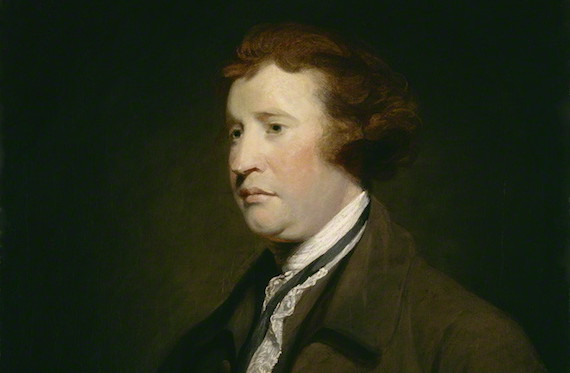
My question is prompted by reading Jesse Norman’s 2013 biography of Edmund Burke, one of the founding thinkers of conservatism. Jesse Norman is a Conservative MP and current government minister. But I imagine he might be out of sorts with his party since the philosophy he describes is not much reflected in current Conservative practice. His book demonstrates, though, that even if Burke is out of fashion with the Tories, he still has much to say to contemporary Britain.

Read More »

Nick Cave: the transcendent power of music

By Martin Vogel

bad seeds

The most memorable and moving cultural event I experienced this year was seeing Nick Cave and the Bad Seeds perform at the London Arena in September. In fact, I could say that in any year I see the band in concert. But this year was especially poignant.

Rock music has acquired roughly the position in our culture that jazz had when I was growing up: the breakthrough art form of an earlier generation, kept on life support by an ageing cohort of afficionados. Nick Cave has been in the business a long time and manages to observe the boundaries of the form while keeping it fresh and innovative. He surrounds himself with musicians of the highest calibre and inventiveness and produces music that spans the spectrum from hard-edged, dark, aggression to the most heart-wrenching and romantic ballads. Nick Cave himself is a consumate performer: he strides the stage with visceral energy and has an electric relationship with his audience.

Read More »

Remembering Cindy Cooper

By Martin Vogel

London’s community of mindfulness practitioners lost a guiding light this year with the death in March of Cindy Cooper. Cindy was my teacher and sometime supervisor for about ten years. During that time, I frequently reflected on my good fortune to have encountered her. She combined the integrity and wisdom evident among the best practitioners in her field, with a warmth which made people feel they had a deep connection with her. In this, she embodied the value we gain from working with a teacher and learning in groups. She helped generate a depth of understanding that could never arise simply by practising alone. Read More »

Effort more than talent is the key to achievement

By Martin Vogel

growth bw

In conventional thinking, the people who get on in life are those who are brainy or talented. But this apparent truth was overturned by the Stanford University psychologist, Carol Dweck. Through many years of research, she found that being labelled as talented could quickly become an obstacle to achievement. It turns out that effort is much more important than talent.

This simple but important finding is presented in Carol Dweck’s book Mindset. The key insight it contains is that people learn and develop best when they adopt a “growth mindset” – open to learning as a challenge, relishing setbacks as an opportunity to learn – and flounder when they adopt a “fixed mindset” – defensive of their identity, frightened to take risks in case they fail. The fixed mindset values innate talent over cultivating potential.

Read More »

Jasper Johns shows us what mastery means

By Martin Vogel

flag

I was somewhat nonplussed by the Royal Academy’s Jasper Johns exhibition, which ends this weekend. His renowned work is undoubtedly pleasing. Partly this a function of his portrayal of the familiar – flags, numbers, targets – which he renders unfamiliar through multiple repetitions and subtle variations. But more, it’s to do with how his repetition strips out meaning and defies interpretation. So you’re drawn into his artistry: the texture of his paintings of the flags, the attractive form of his numbers.

Read More »