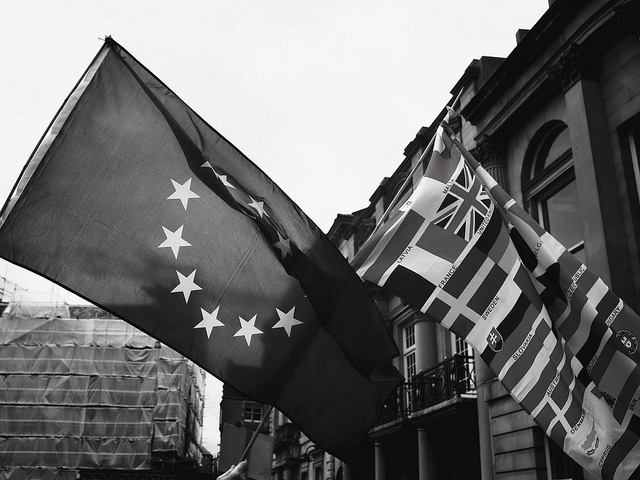
Britain’s duff leadership culture

By Martin Vogel

The challenge of bringing fresh and adaptive leadership in a complex and volatile world is a global problem. But an insightful analysis by The Economist highlights distinctly British dimensions:

“Britain’s leadership crisis is rooted in the evolution of the old establishment into a new political class. This evolution has been widely hailed as a triumph of meritocracy over privilege, and professionalism over amateurism. In fact, the new political class has preserved many of the failures of the old establishment. It is introverted and self-regarding, sending its members straight from university to jobs in the Westminster village, where they marry others of their kind. It relies on bluff rather than expertise, selecting those trained in blaggers’ subjects like PPE and slippery professions like public relations and journalism (Mr Cameron worked in PR before going into politics, whereas Mr Gove and Mr Johnson, along with his brother, another Tory MP, were hacks).
“At the same time, the political class has abandoned one of the virtues of the old establishment. The old ruling class preserved a degree of gentlemanly self-restraint. Senior politicians left office to cultivate their gardens and open village fetes. The new political class, by contrast, is devoid of self-restraint, precisely because it thinks it owes its position to personal merit rather than the luck of birth. Thus meritocracy morphs into crony capitalism. Tony Blair has amassed a fortune since leaving office and George Osborne, Mr Cameron’s former chancellor of the exchequer, is following eagerly in his footsteps.”

The attitude described here infects leadership well beyond the sphere of politics. The Financial Times has described the rewards extracted by the top brass of the Crossrail project – where private sector executives have used a governance structure designed to limit political meddling to extract handsome rewards, despite failing to deliver the project this year as promised:

“The deal gave Crossrail’s bosses great freedom so long as they lived within their budget. They took full advantage, paying themselves handsomely. When (departing chief executive) Mr Wolstenholme left this year, he received £765,689, including a £160,000 bonus, and £97,000 for ‘loss of employment’, despite numerous signs that the project was unravelling. The previous year, he banked £950,000, including a £481,460 bonus.”

Duff leadership is a problem not just because it has adverse impacts on the issues it is trying to manage. The self-aggrandisement of the chumocracy combined with its ineptitude undermines people’s belief in change and thus their motivation to engage. Perhaps this accounts for the strange inertia as the country heads towards the possibility of a car-crash Brexit. We need a revolution of distributed leadership. Looking to the elite to empower activists is a waste of time. People of initiative need to come together in self-organising common cause to brush aside the narcissists whose reign has failed.

Image courtesy Miguel Bruna.

Feedback without tears

By Martin Vogel

How to give feedback is an issue that comes up with increasing frequency in my coaching work. It reflects, I suspect, a normative advocacy of feedback cultures in organisations. This arouses considerable anxiety among people who feel themselves under pressure to provide feedback left, right and centre. They often hold a belief that, if only they could get the recipe right, they could learn how to transmit feedback and move on.

There are some well-meaning intentions behind feedback culture. In particular, it draws on Carol Dweck’s idea of a growth mindset – whereby people welcome corrective feedback as a platform for their development. But the espousal of feedback can also be oppressive because the linear and mechanistic assumptions around “delivering feedback” ignore the complex feelings it can arouse.

While models of providing feedback have their place, the problem with the “recipe” view of feedback is that it ignores how the “delivery” of feedback will be received by the other party. People are not automatons and the difficulty for people providing feedback is that they can really have no idea in advance how it will land. Simply understanding this can relieve some of the stress for those anticipating getting the feedback process wrong.

Read More »

Spielberg’s The Post offers a masterclass in public leadership

By Martin Vogel

Katharine Graham and Ben Bradlee celebrate the court’s decision in 1971 to allow publication of the Pentagon Papers.

Steven Spielberg’s film The Post combines three themes close to my heart: leadership, journalism and power – with an interesting gender dimension overlaying all three.

The film portrays the days in 1971 when the Washington Post faced a dilemma whether to publish leaked material, the Pentagon Papers, showing how successive American presidents had deceived the public about the country’s purpose and prospects in Vietnam. The scoop already belonged to the New York Times. But an opportunity to catch up arose for the Post when Nixon’s government obtained an injunction against the Times, and the Post obtained the material independently.

There have been criticisms that it is perverse of the film-makers to focus on the role of the Post in the the Pentagon Papers affair, when the Times was the bigger player and took the earlier risk. However, that is to misconstrue the drama in which the Pentagon Papers affair is merely the MacGuffin on which hangs a tale of press freedom and gender politics. It is precisely because the Post was the lesser player that it merits attention. It’s the story of how a faltering business, guided by a woman in a male-dominated world, steps into the big league and transforms itself into a pillar of democracy. The whole episode serves as a dress rehearsal for Watergate, when the Post made the running in holding Nixon to account and ultimately brought down his presidency.

Read More »

Failure of leadership at Oxfam

By Martin Vogel

Haiti was devastated by an earthquake in January 2010.

Oxfam’s sex exploitation scandal (£) is a case study in how easily leaders can trash the reputation of their organisation when, through wilful blindness, they convince themselves that they are acting to protect it.

In a series of articles, The Times has revealed how Oxfam betrayed its purpose to help the vulnerable in Haiti, in the aftermath of the 2010 earthquake. It was a time when the country was devastated, and political authority had all but broken down. Senior aid workers in Haiti were able to seize the opportunity to organise the sexual exploitation of young women – including underage girls – whose desperation in the disaster presumably secured their compliance. There were said to be orgies and the exploitation of underage girls.

On Friday, Oxfam’s chief executive, Mark Goldring, nauseatingly missed the point when he spoke of “the few” who had not upheld “Oxfam’s or society’s values”. Only, it seems that the few had acted consistently with Oxfam’s values which have been revealed to be duplicitous and self-serving.

Read More »

The politics of being apolitical

By Martin Vogel

Some years ago, I attended a meeting on whether executive coaching could help make society better. I mentioned a Marxist critique of the crisis in capitalism that I had recently read. Before I even managed to share any insights that I’d found relevant, one of my associates brushed aside my contribution – asserting something along the lines that we didn’t want the Stasi in the UK (a sentiment with which I naturally concur). He seemed to want to restrict the conversation to the role of business in promoting environmental sustainability. The episode defined for me a sensibility in working life that holds to faux-apoliticism as a badge of professionalism. In this view of the world, there’s a safe agenda of social change, which allows a degree of corporate virtue signalling around our shared interest in planetary survival, but forbids the potentially more divisive discussion of wealth and power and the role of organisations in sustaining them.

This distinction is increasingly hard to sustain. The backlash against a capitalism that consigns whole communities to the backwaters is recognised as a factor in both Brexit and the election of Donald Trump. This year, the Grenfell Tower fire gave us a grotesque demonstration of where apolitical collusion with the apparently natural workings of the economy can lead. Not just the circumstances that led to the fire but the local authority’s inability to respond to the disaster revealed a hollowed out state, in which an over-financialised approach to management overwhelms the ability of organisations to meet basic human needs.

Read More »

Networked populism: the defining leadership style of our era

By Martin Vogel

New model leaders?
New model leaders?

If, as I wondered in my earlier post, eco-leader is not the defining leadership discourse of our age, then what is?

If you look at the actually existing leadership narratives that are currently to the fore, you might label the dominant discourse networked-populist rather than eco-leader.

Trump and Farage are its most eloquent symbols. Both worked outside established structures, with seemingly outlandish agendas which, against the odds, they brought to fruition using networks of influence. (Jeremy Corbyn shows similar characteristics – though, in his case, the mastery of networks that brought him to prominence seemed to be his backers’ rather than his own.)

Read More »

The oblique path to a better way

By Martin Vogel

scapegoat

This is the third of a three-part series on the consequences of Brexit for leaders. Part 2 discussed the challenge of self-leadership to preserve ones values and imagine a better future.

In imagining a future that is better than demagoguery and despotism, we need to be patient with ourselves. The Brexiteers and the Trumpistas offer beguilingly simple plans. Our reticence is founded on the realisation that things are more complex. It is not a sign of ignorance but wisdom that the way out of this mess is not immediately apparent. We will reach the higher ground through persistent but adaptive intent – or, as John Kay would have it, by taking the path of obliquity:

“In obliquity, there are no predictable connections between intentions and outcomes. Oblique problem solvers do not evaluate all available alternatives: they make successive choices from a narrow range of options. Effective decision makers are distinguished not so much by the superior extent of their knowledge as by their recognition of its limitations. Problem solving is iterative and adaptive, rather than direct.”

Read More »

Navigating dark times

By Martin Vogel

This is the second of a three-part series on the consequences of Brexit for leaders. Part 1 explored the anxiety that political upheaval can evoke.

I am not in denial about Brexit. I am an enthusiast for the intent of the European Union, to work together to overcome nationalism and avoid war, but not for its sclerotic inability to reform itself. I accept that, for now, the Government is obliged to try to make Brexit happen. I could see some opportunity in this if Britain and its European partners were able to enter into negotiations fully engaged in understanding what the Brexit vote has to say to both sides.

But I am alarmed that leaders in public office are conniving with the populist mood to shut down collaborative enquiry as to what Brexit could be. Instead of bringing the nation together in common endeavour, the Prime Minister aligns with those who shout down any expression of scepticism and who inflame fears that the referendum result might be subverted.

I have no illusions about the shortcomings of the status quo ante. It’s long been our contention here at Vogel Wakefield that the socio-economic settlement of the past three or four decades has broken down and we are in the midst of an inter-regnum. The existing order suffered a collapse of trust after the financial collapse. Not just the banks but organisations of all descriptions and across sectors were revealed to be dysfunctional and self-serving. The system as a whole was seen to have been reconfigured around the interests of crony capitalism.

Read More »

Leading mindfully is a radical challenge to corporate orthodoxy

By Martin Vogel

meditating

Book review: Leading Mindfully by Amanda Sinclair

I sometimes wonder whether we have reached peak mindfulness in the corporate world. So widely discussed – apparently embraced by banks, Google, the US Army – yet so hard to integrate into organisational culture. Leading Mindfully by Amanda Sinclair at first looks like a contribution to the bandwagon. But it is, in fact, a profoundly subversive exposition of the philosophy of leadership. It takes us to places that aren’t routinely part of the discourse of management theory: the role of the senses, the pursuit of happiness, the erotic dimension of leadership. In its evocative depiction of what leading with integrity looks like, it highlights the malpractice inherent in leadership as we know it in most organisational contexts. Reading it before and after the Brexit referendum, I also found in the book insights on how Britain finds its way through the chaos and uncertainty that lies ahead.

Read More »

How to lead in chaos

By Martin Vogel

york against brexit
York against Brexit rally.

Two weeks on and we’d better get used to the sense of bewilderment and drift. Unless the Conservative Party revises its plans, there’ll be no political leadership in this country till September. The vacuum in opposition politics could well outlast Labour’s leadership contest. Even once we have functioning political parties, the work will only just be beginning. Unraveling the implications of the Brexit vote will last years. Building new strategies, negotiating new trade dispensations, embedding new institutional arrangements, tackling social justice: these projects will last many years. Uncertainty – more than that, unknowability – is the environment in which all organisations now operate.

For those working in organisations, an urgent question is how to lead in this chaos. There’s a lot to play for. Those who can shake off despondency and find their ground, without succumbing to false certainty, can play an important role in shaping a positive outcome. As I said in my previous post, this is a time for distributed leadership: for individuals to step up to influence their colleagues. But what does this mean in practice?

Read More »

Who will lead us from this chaos?

By Martin Vogel

YourCountryNeedsYou

My blog post last week, on the social fracturing that led to Brexit, has resonated with many readers. On every day since it was published, the piece has attracted more traffic to the site than we would normally see in a week. It speaks, I think, not just to the anxiety about what the vote has revealed about our nation but also to another anxiety about the contribution to that state of affairs made by the organisations of which we are part.

Read More »

Cut ego down to size in leadership

By Martin Vogel

audrelorde
How can we presume to lead until we understand from where we’ve come?

Book review: Leadership for the Disillusioned by Amanda Sinclair

Amanda Sinclair published Leadership for the Disillusioned in 2007, shortly before the financial crisis that has done more than anything in my lifetime to undermine public trust in corporate leadership. It’s telling that the most resonant example she cites of leadership that chips away at our illusions is the collapse in 2001 of the energy company, Enron. The most resonant corporate scandal of its time, the Enron affair could nonetheless be explained away at the time as an isolated if grand case of fraud that didn’t call into question the contemporary view of corporate leadership as a largely benign practice that broadly benefits society. Since the banking crash, our social system has become more widely perceived as governed by an ideology of corporate self-interest that nearly brought society to its knees and continues to serve the enrichment of a tiny minority. Throw in (to name a few UK examples) the phone hacking scandal, the Mid-Staffs Hospital scandal and the Jimmy Savile scandal and, if there were grounds for disillusion in 2007, there is widespread acceptance now that leadership as traditionally construed faces a crisis of legitimacy.

Sinclair’s book brings home the extent to which corporate thinking shapes how we view leadership. We’re culturally attuned to a managerialist model that construes leadership as invested in figures of formal authority at the apex of hierarchies. Leaders are action-oriented and ego-driven, their self-regard pumped up by status or absurdly inflated remuneration. The trend towards authenticity in leadership is of a piece with such ego-massaging, encouraging managers to identify themselves with their work role and self-actualise by bending others to their agenda.

Read More »

Tim Cook: public leadership in action

By Martin Vogel

Tim Cook
Tim Cook: public leader

Apple’s showdown with the Obama administration over the latter’s demand that it decrypt the phone of one of the San Bernadine terrorists is a test case in public leadership. The dispute counter-poses the social goods of national security and citizen privacy. The FBI wants the former to trump the latter. Apple is arguing for the two to be held in a more considered balance. What’s interesting from a public leadership perspective is that Apple is taking a considerable risk; it’s by no means clear that things will play out in its favour. This is no mere PR stunt.

Read More »

Trust is not a message, it’s an outcome: the lesson for leaders from a defector from PR

By Martin Vogel

Trust
Trust is an outcome.

In Trust Me, PR is Dead, Robert Phillips has ostensibly written a book on the bankruptcy of public relations. It’s more interesting, though, as an insider’s guide to the bankruptcy of much corporate leadership – and, more importantly, a cogent call to arms for leadership that can inspire trust. I say “call to arms” since this is not a manual for leaders of the kind that sells at airport bookstands. It’s more a citizens’ manifesto – stirring us from neoliberal slumber so that we may realise our distributed leadership and haul conventional corporate leaders into the service of a fairer form of capitalism. It’s a foretaste of how leadership must surely evolve to meet the challenges of our more transparent, networked society and the expectations of the Millennial generation who will soon inherit the workforce.

Read More »

The Co-op, revolution and public leadership

By Martin Vogel

99 per centThe tragic mistake that the Co-op keeps making is to try to accommodate itself to the era of unrestrained, crony capitalism just as we need it to prove that its 19th Century mutual values are a plausible alternative to corporate excess.

Euan Sutherland – who resigned this week after the leak of his £3.5m pay package – demonstrated not only a poor fit with the Co-op’s mutual ethos, but a complete lack of the leadership values that will turn round public disaffection with business.

It may have been lame of Sutherland to declare the Co-op “ungovernable” before he’d even attempted to reform it, but this was consistent with an executive whose leadership style had demonstrated – as Will Hutton put it – no understanding of his organisation’s core challenge:

“That challenge is to marry Co-op values with a new and better functioning business model. What is astounding is that it occurred to nobody, not the executives themselves, that by being offered and accepting sums this large the management were trashing the very values they were on a mission to rebuild.”

Read More »

Life affirmation courtesy of Camden Council

By Martin Vogel

My son is in there somewhere.

I’ve experienced quite a number of concerts over the years at the Royal Albert Hall. But the one I had the privilege to attend on Monday night ranks possibly as the best. Let me declare an interest, I was the parent of one of the performers. But the same goes for nearly all the 3,500 other members of the audience.

For this was the Camden Music Festival, a bi-annual event which brings together schoolchildren aged between six and eighteen from across the London Borough of Camden in an extraordinary spectacle of collaborative music-making. It wasn’t simply parental pride that made this a heart warming event. It was an ambitious, entertaining and impressive performance of undeniable quality. And it exemplifies important characteristics of the value a local authority can deliver to its community even in a time of austerity.

Read More »

Focus ruthlessly to deliver your purpose

By Martin Vogel

Obsessive about focus

Few organisations know how to focus on their core purpose. The technology company, Apple, is one. Its chief executive, Steve Jobs, is famously obsessive about focus. Apple infuriates as many people as it delights by stripping away that which it considers inessential. But it is now worth more than a number of its close competitors combined. “People think focus means saying yes to the thing you’ve got to focus on,” said Jobs in 2008. “But that’s not what it means at all. It means saying no to the hundred other good ideas that there are. You have to pick carefully.”

How many arts organisations would see their purpose in these terms? My guess is that focus would be an underrated virtue in many. This may be the case for two reasons: either the organisation is not very clear about its purpose and therefore finds it hard to know what should be the object of its focus, or the leadership has clarity about the corporate purpose, but does not know how to align the organisation’s activities behind the mission.

Read More »

Welcome to London

By Martin Vogel

London
Home to the reputationally challenged.

There’s some interesting coverage today of the reputational fallout of Britain’s relationship with Libya.

Philip Stephens, in the FT, examines London’s status as a place where dictators can launder their image.  He portrays a city where it is just so much a part of the everyday culture of business to deal with unsavoury regimes that the risks are normalised.

Britain, he says, has become a “coin-operated laundry for the reputationally challenged.” He’s referring not only to the PR agencies which cast dictators in a more benign light, but the investment advisors, hedge funds and private banks that help them recycle ill-gotten money into more legitimate vehicles.

Read More »

The LSE and Gaddafi

By Martin Vogel

Colonel Gaddafi, erstwhile friend of the LSE

Sir Howard Davies, Director of the LSE, defending the LSE’s acceptance of a £1.5 million donation from Saif Gaddafi makes for interesting listening.

Today, it is uncontroversial to point out that a leading university of the social sciences might be compromised by accepting money from the family of a pernicious dictator. Saif Gaddafi’s bellicose statement last week in support of his father’s regime in Libya has seen to that. But when the decision was taken – only seven weeks ago – the calculation must have looked very different.

Read More »

Health care and the dignity of humans

By Martin Vogel

hands_002-thumb1

The Health Service Ombudsman’s report on how the NHS is failing to treat elderly people with care, dignity and respect begs the question of how a service whose raison d’être is to look after people can so dehumanise them.

The report highlights the cases of ten people who suffered grievous neglect. Many of them were fit, active and healthy before treatment but all but one died during or soon after the events they experienced in the care of the NHS, and in circumstances which caused distress and anger to the patients and their families.

Read More »