Heinz’s mother, Ethel, was one of thirteen children. We know of three branches of the family that survived the war. We do not know the fates of all the relatives who did not. Some died in circumstances unconnected to the Holocaust. But Heinz established that these family members were killed as a direct consequence of it.
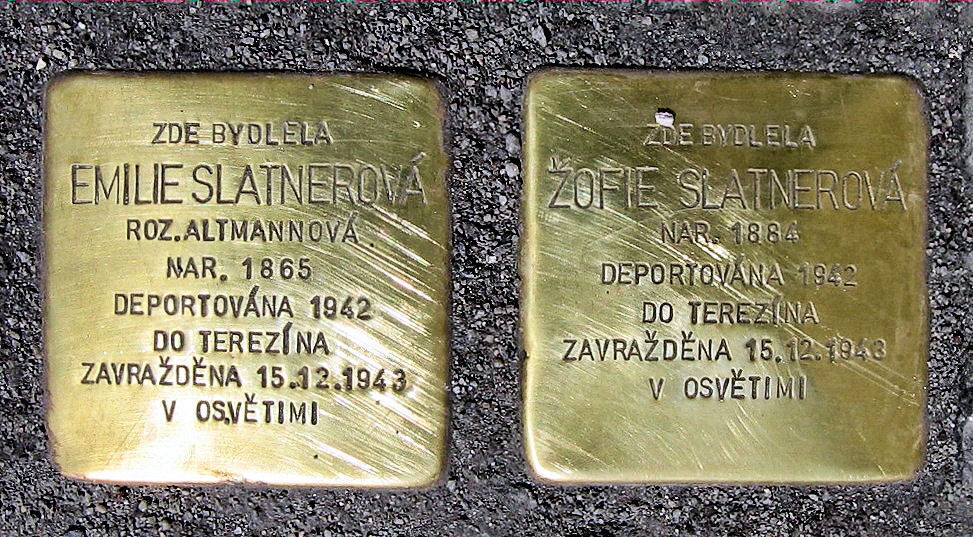
- Emilie Slatnerová – Emilie, Heinz’s grandmother, murdered at Auschwitz, aged 77
- Žofie Slatnerová – Sofie, Heinz’s aunt, murdered at Auschwitz, aged 58
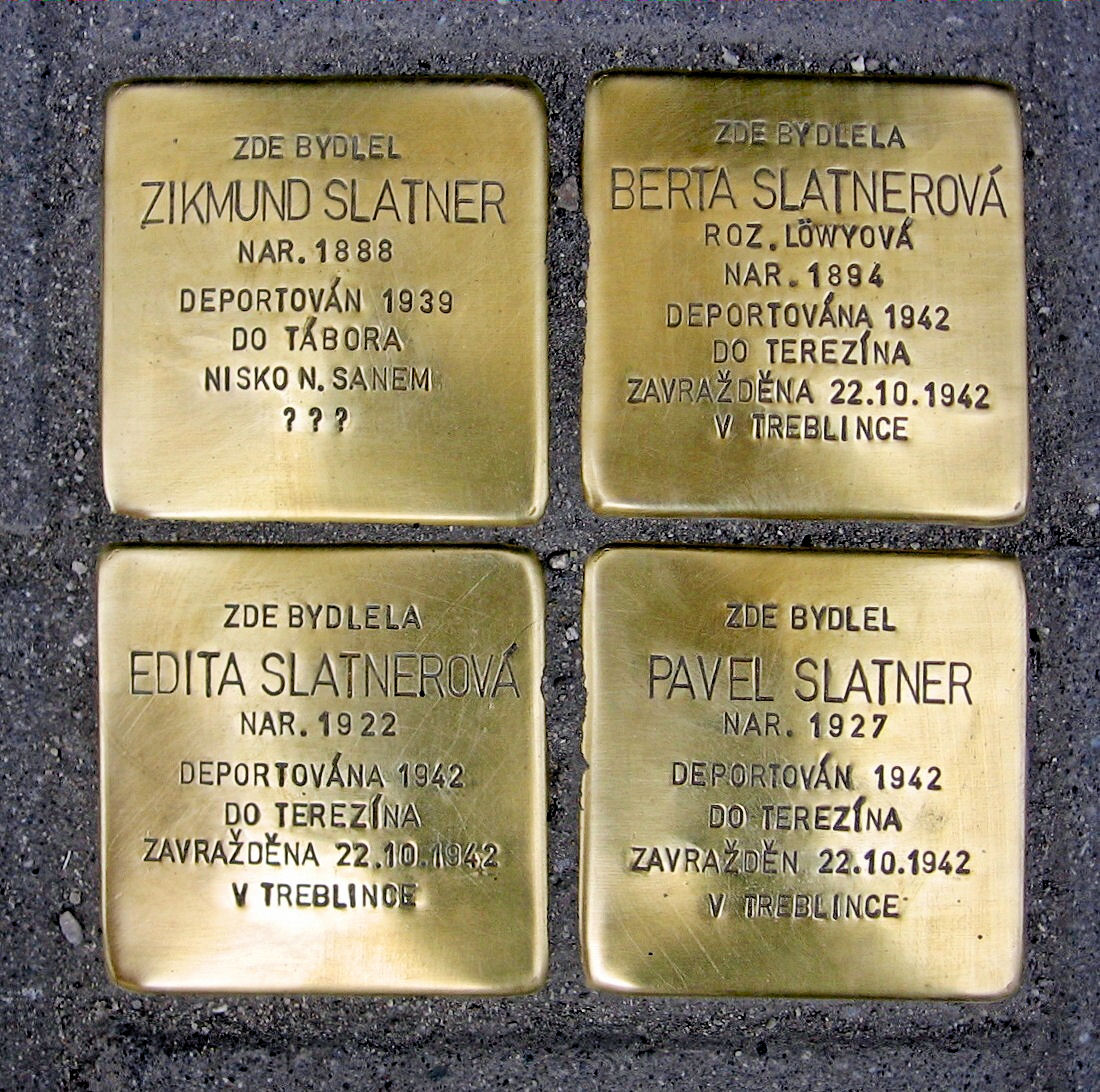
- Zikmund Slatner – Sigo, Heinz’s uncle, died after arrest and deportation to Nisko by the SS, aged 51
- Berta Slatnerová – Bertl, wife of Sigo and Heinz’s aunt, murdered at Treblinka, aged 48
- Edita Slatnerová – Edith, daughter of Sigo and Bertl and Heinz’s cousin, murdered at Treblinka, aged 19
- Pavel Slatner – Pauli, son of Sigo and Bertl and Heinz’s cousin, murdered at Treblinka, aged 15
- Kurt Slatner – Heinz’s cousin, murdered at Auschwitz, aged 21
These Stolpersteine were laid in their memories on the pavements outside their former homes in Ostrava.
In 2005, Heinz was pleased to have a letter published in The Guardian, of which he had been a reader since its days as The Manchester Guardian. He was writing in response to an article by Michael Howard, a former Home Secretary and, at the time, leader of the Conservative Party. In response to the 7/7 terrorist attacks of 2005, Howard had written this:
Most people in this country want to share a strong sense of British identity while recognising that that is not incompatible with a continuing attachment to other traditions. I believe I can speak with some authority on this. I am the child of immigrant parents. Until the day he died, my father was fiercely proud of being British, and my mother still is. They never thought their Britishness was inconsistent with their Jewishness. They would have recognised the difference between integration, which they supported, and assimilation, which they did not.
This was Heinz’s reply:
Never did I think that, as a life-long socialist, the day would come when I would agree wholeheartedly with Michael Howard. I came to Britain with my parents as an asylum seeker before the second world war and we were proud to call ourselves British once citizenship was conferred on us. But I have always rejected, without any feelings of disloyalty, the Tebbit cricket test, which clearly conflicts with Howard’s recognition of the difference between integration and assimilation.
More needs to be done in educating people – particularly the young. Teaching citizenship in school is a move in the right direction, but it is interesting to note that this was taught as a regular subject in primary schools in pre-war Czechoslovakia.
Heinz Vogel
Weybridge, Surrey
The Kingston Ostrava Project yielded a book, Ostrava and Its Jews by David Lawson, Libuše Salomonovičová and Hana Šústková. You can read Martin’s review of it: A Holocaust story and its relevance today.
Next: Escape from Ostrava | Memoirs homepage
 Vogel Vault