All of human life is here: the wide canvas of executive coaching

Mate

By Martin Vogel

Book review: Are You Listening? Stories from a Coaching Life, by Jenny Rogers. 2021, Penguin.

Are You Listening? by Jenny Rogers is a collection of stories from her 30 years as a coaching professional. It occupies a similar place in relation to coaching as do, to psychotherapy, Stephen Grosz’s The Examined Life or Irvin Yalom’s Love’s Executioner.

Given that Rogers is a doyenne of the profession, you might expect this book to be a catalogue of triumphant interventions. There are successes, but it’s more nuanced than that. She shares the compromises and failings that are inevitable companions on a coaching journey.

Read More »

The etymology of unknowing

The word “unknowing” does not generally have positive connotations. It is defined by the Oxford English Dictionary (OED) as an adjective (though also used as a barely distinguishable present participle) meaning:

Not knowing; not possessing knowledge or understanding; ignorant; ill-informed; naive.

The sense in which I’m using it is almost the opposite of this. I’m talking about a letting go of the knowing that paradoxically makes us unaware and unwitting – that is to say, the knowing in which we reside most of the time. The words “unaware” and “unwitting” that I used in that last sentence to describe “knowing” are taken from Chambers’ definition of “unknowing”. What we’re dealing with is not a binary between ignorance and knowledge but an ebbing and flowing between knowing and unknowing, the boundaries between them hard to discern.

Read More »

Navigating trauma in coaching

By Martin Vogel

The practice of coaching deals with more darkness than is often acknowledged. From my earliest days as a coach, I have encountered people who are navigating significant difficulty in life. Trauma is a subject not easily broached in coaching. Clients and coaches often assume this is the terrain of therapy and are fearful of going there.

But trauma is widely prevalent. For many of us, our traumas may well be be reactivated by some of the questions currently playing out in society – the climate crisis, coronavirus, Brexit, to name a few. Coaches and clients alike are affected by these developments and their learned adaptations to trauma may well influence not just how they respond to things from day to day but also how the coaching relationship plays out. The question is not whether to consider trauma in coaching but how.

Read More »

Leading from the right: understanding the divided brain

By Martin Vogel

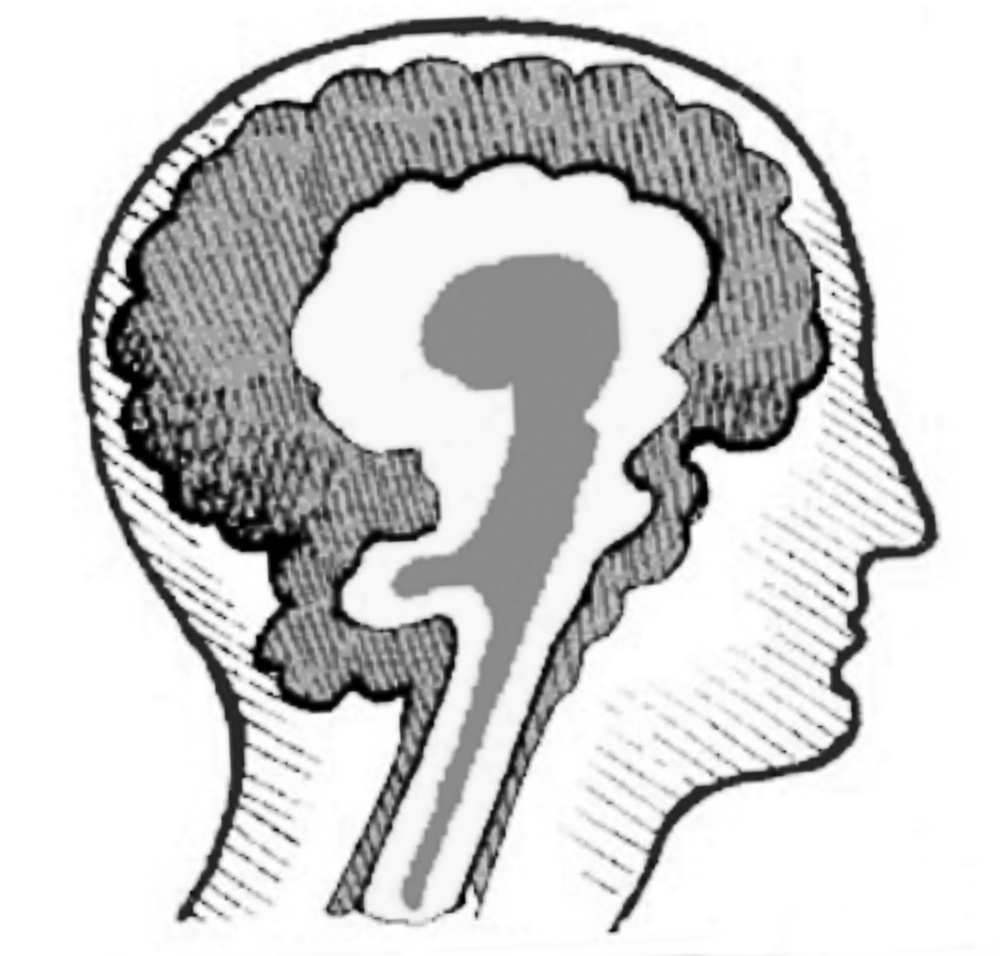
It’ll be ten years in October since Iain McGilchrist published The Master and His Emissary, his magisterial study of the division of the brain into left and right hemispheres and the impact of this division on Western civilisation. I began reading it in 2013 and have finished it in time for the tenth anniversary. Although McGilchrist writes well and lucidly, and although I devour books, I found this one a challenging read. I needed to take pauses from reading it to let its argument sink in. This isn’t just a reflection of my cognitive abilities. McGilchrist writes in ways that draw on both left- and right-hemisphere orientations. My struggle perhaps exemplifies his thesis that we have become inured to left-dominant ways of comprehending.

The outcome of 25 years’ polymathic scholarship, The Master and His Emissary cites 2,500 sources of neuroscience, provides a potted history of Western culture and philosophy from the Greeks to the present day, and displays refined critical appreciation of art, literature and music through the ages. Despite its challenging nature, it is widely cited in coaching and leadership circles, though often erroneously by those who take it to be a confirmation of pop psychology constructs of the left and right “brains” as having different functions: left for language, right for creativity, etc. Read More »

A Holocaust story and its relevance today

By Martin Vogel

Ostrava Nesselroth passage

I’ve been reading the story of how a liberal, prosperous community succumbs to nationalism and xenophobia. In relatively short order, it descends into violence and murder as democracy and the rule of law collapse. Ultimately, it is transformed from a progressive centre of enterprise and culture into a backwater. Its Jewish community is wiped out.

This is the story of Ostrava in the Czech Republic and the rise and fall of its Jewish community. It’s also the story of my father and scores like him who managed to escape the fate of the overwhelming majority of Ostrava Jews and establish lives for themselves elsewhere.

Ostrava and Its Jews by David Lawson, Libuše Salomonovičová and Hana Šústková is a labour of love that pieces together a picture of the community from archival records alongside the testimony of survivors. It represents in microcosm, a rich and detailed portrait of European Jewish life and its relationship with wider society before the Holocaust swept it all aside. Read More »

From toolkits to relationships: getting real about what happens in coaching

By Martin Vogel

The practice of coaching has many antecedents. But one that most eased its way into the corporate world was the analogy between sports coaching and leadership development. Corporations are susceptible to narratives of being world class and winning. So learning from methodologies fine-tuned to get the best out of athletes can be appealing to the corporate leader’s world view. This, for a long while, created an emphasis in the development of coaches on the acquisition of skills and techniques. Coaches would turn up with their “toolkits” and fine tune their clients’ performance in the pursuit of specified goals.

The Theory and Practice of Relational Coaching by Simon Cavicchia and Maria Gilbert proposes a different perspective. It views coaching as a dialogue of discovery between coach and client, one which calls on the practitioner to cultivate awareness and empathic attunement more than it demands technical accomplishment. It’s an approach which is grounded in the insight that all of our experience is socially constructed. There is no fixed thing called an organisation which provides a predictable environment for our working lives. It is enacted every day by its participants and shaped by the different world views that each of them brings by virtue of their biography.

Read More »

The serious business of playing the Fool

By Martin Vogel

fool

It’s a shame that Hetty Einzig’s The Future of Coaching is so-called. Its concerns spread much wider than its title implies. It’s a radical and thoughtful book which holds before us the chaotic nuttiness of the world as it is now and asks what kind of leadership should coaching call forth.

Hetty Einzig takes it as axiomatic that the big challenges we humans face demand committed and creative interventions by leaders. Never mind present concerns such as Brexit or Trump, Hetty reminds us that the broader context is that of a trajectory to environmental catastrophe. She has no truck with the notion that coaches should be neutral facilitators of whatever goals their corporate clients might pursue. Nor does she believe leaders should collude with such ideas. Coaches and leaders alike are citizens in wider society as well as servants of the organisations that employ them. It is the legitimate task of all of us to try to influence organisations to play a constructive role in addressing society’s problems.

Read More »

Engage a coach to save humanity from itself

By Martin Vogel

Humans are a clever species. Look at the world we’ve constructed. The very name homo sapiens describes us as wise. But somehow we’ve come to live in a way that is inimical to our nature and destructive of our wellbeing. The organisations in which we work are part of the problem. They are incapable of maintaining bonds of trust with their employees, and obstruct our efforts to sustain our closest relationships.

This is the thesis of A General Theory of Love by Thomas Lewis, Fari Amini and Richard Lannon which attempts to explain the science behind our fundamental need for human connection. Written by three professors of psychiatry, it was published in 2000. In my layman’s reading, its scientific authority has been overtaken by more recent neuroscience. But its date of publication is significant. At the start of a new century, the book aimed to debunk the mythology – whether psychodynamic or behaviourist – which shaped our understanding of emotions through the 20th Century. Insofar as these mythologies remain influential today, A General Theory of Love remains a relevant read. Indeed it seems prescient in its cultural criticism of how Western societies have developed so as to deny our physiological need for attachment, and the social maladies that thereby arise.

Read More »

Going deep in conversation with insight dialogue

By Martin Vogel

If I’m working with a group that is highly committed to improving the quality of relationship between them, I might reach for Insight Dialogue.

This is actually a meditation practice developed by Gregory Kramer, a meditation that is conducted in relationship with someone else. Its essence is that it interrupts the normal routine of conversation with deliberate pauses and reflections, so that we might connect with the perception that we hold that might otherwise lie just beneath conscious awareness.

Read More »

Dancing with nonviolent communication to change the conversation in organisations

By Martin Vogel

One of the methodolgies we use to change the habits of conversation in organisations is nonviolent communication (NVC). This is a clunky name for a practice, developed by Marshal Rosenberg. It is deceptively simple but also profound in the insights it generates about what’s going on when people talk to each other.

Marshal Rosenberg’s key insight is that often in communication, people are seeking – consciously or unconsciously – to satisfy needs. It’s the frustration of these needs that can cause relationships to become mired in conflict. The route to understanding needs is to notice the feelings that are at play in a situation. So Marshal Rosenberg proposed a four-fold grammar for communicating in a way that could help people bring empathic attention to these factors.

Read More »

Conversation matters more than structure in organisations

By Martin Vogel

A lot of our work in organisations focusses on getting people to show up differently in conversations. This is because it’s through conversations that organisations exist. People often think of organisations as structures which have a solidity beyond the people who comprise them. There’s some truth in this construct. The BBC existed long before I joined it and seems to be managing to survive quite adequately even though it’s a decade since I left.

But it’s also true that organisations are enacted into being by their members. The day-to-day interactions people have with each other in organisations are much more material to how things get done than the structures, strategies, documents and plans that people imagine to be their work.

Read More »

18th Century insight on 21st Century complexity

By Martin Vogel

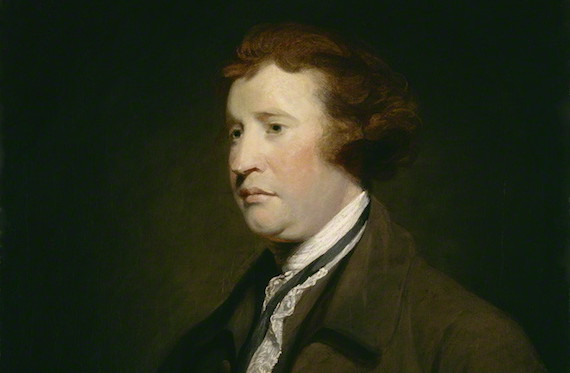
Who, these days, speaks for conservatism, the philosophical orientation that is cautious of change? We have an answer in the small band of Tory rebels, led by Dominic Grieve, who have won for Parliament a right to decide on the final Brexit deal. But the very fact of their struggle against their own party shows that cautious conservatism is not much in vogue.

My question is prompted by reading Jesse Norman’s 2013 biography of Edmund Burke, one of the founding thinkers of conservatism. Jesse Norman is a Conservative MP and current government minister. But I imagine he might be out of sorts with his party since the philosophy he describes is not much reflected in current Conservative practice. His book demonstrates, though, that even if Burke is out of fashion with the Tories, he still has much to say to contemporary Britain.

Read More »

Effort more than talent is the key to achievement

By Martin Vogel

growth bw

In conventional thinking, the people who get on in life are those who are brainy or talented. But this apparent truth was overturned by the Stanford University psychologist, Carol Dweck. Through many years of research, she found that being labelled as talented could quickly become an obstacle to achievement. It turns out that effort is much more important than talent.

This simple but important finding is presented in Carol Dweck’s book Mindset. The key insight it contains is that people learn and develop best when they adopt a “growth mindset” – open to learning as a challenge, relishing setbacks as an opportunity to learn – and flounder when they adopt a “fixed mindset” – defensive of their identity, frightened to take risks in case they fail. The fixed mindset values innate talent over cultivating potential.

Read More »

England: the nation with a special place in Europe

By Martin Vogel

The English and Their History by Robert Tombs is a monumental book covering the story of England from the 7th Century to the present day. Published in 2014, it’s a pertinent insight into our national identity. While the whole of the UK is leaving the EU, it is English nationalism that is a driving force behind it.

Tombs shows that an English nation was established well before 1066 using the language of old English which was suppressed by the Normans but revived in the fourteenth century. A long history of conflict with Scotland overhangs much of the story prior to the Acts of Union. The union is sometimes portrayed in the nationalist perspective as something close to England’s annexation of Scotland. But the union also meant England was subsumed into Britain. Scotland retained a national identity, England less so. And Tombs’ history becomes more blurry after union: it’s hard to pick out England’s story from that of the broader UK.

Read More »

Deep work is the key to doing anything useful in the knowledge economy

By Martin Vogel

The premise of Cal Newport’s Deep Work is that deep work is what creates value in the knowledge economy but our culture encourages people towards distraction. Therefore opportunities exist for those who can prioritise depth. The book outlines strategies for doing so.

Newport defines deep work as:

“Professional activities performed in a state of distraction-free concentration that push your cognitive capabilities to their limit. These efforts create new value, improve your skill, and are hard to replicate.”

Its antithesis, shallow work, is:

“Noncognitively demanding, logistical-style tasks, often performed while distracted. These efforts tend not to create much new value in the world and are easy to replicate.”

If the thought of a life of concentration sounds exhausting, the good news is that it is not necessary – in fact, would be counter-producive – to try to spend all one’s working time in deep work. Newport says the aim should be to minimise the shallow and get the most out of the time this frees up by committing three to four hours a day to deep work. A certain amount of idleness is necessary to make sure the time spent in deep work is productive and creative.

Read More »

On being the best you can be given the circumstances

By Martin Vogel

Here’s a passage from The Compassionate Mind by Paul Gilbert:

“When I was younger and training to become a therapist, trying to help people who were very distressed, I used to say to my supervisor that my patients would be so much better off having somebody with far more experience than I had. To some extent, that was clearly true. However, my supervisor, who was a wise and gentle older lady, pointed out that this was the essence of life. We can live life in the ‘if only’ lane or make the best of it and appreciate where we are right now. So the question for me was not ‘How can I have 20 years’ experience on Day 1?’ because that wasn’t possible. Everyone has to walk exactly the same road as I was walking, from being inexperienced to experienced. There is no other way. Rather the question she wanted me to ask myself was ‘How can I be the best young, inexperienced therapist I can be, given my limitations?’ Because that was all there was for these individuals – there was no one else. It was a harsh lesson in some ways but it helped me confront the reality of my limitations: I could only be what I could be.”

One of the best things I’ve done this year is to help convene a group of coaches who share an interest in mindfulness. I needed to take to the group a reading that we could reflect on together and alighted on this passage. For some years, it has informed my thinking not just about who I am as a practitioner but who my clients might think they are as leaders.

Read More »

The cultural influences that shape how we lead (and follow)

By Martin Vogel

messiah therapist
Messiah and therapist.

Leadership is often viewed as a static or neutral concept – perhaps rooted in the traits of a particularly capable individual, or determined by the situation in which leadership is required. In fact, how we lead is profoundly influenced by our culture and it changes over time. The best evidence for this that I know comes in Simon Western’s Leadership: A Critical Text – a survey of the concept and practice leadership from the early 20th Century on.

Simon identifies four discourses of leadership that have been influential over the period: controller, therapist, messiah and eco-leader.

Read More »

Survival is insufficient: lessons for leadership from Station Eleven

By Martin Vogel

survival

Station Eleven, a novel by Emily St. John Mandel, depicts the collapse of modern civilisation when a flu pandemic sweeps across the world and (twenty years later) the dystopian society that is established by small clusters of survivors. I read it on the recommendation of the Financial Times’ business books podcast – although I refrained from listening to the episode until I’d completed the book. I enjoy it when novels appear on lists of business books, something that happens too infrequently. In truth, insofar as fiction provides insight into the human condition, almost any novel is more rewarding of a leader’s time than a business book, most of which are mediocre. But I can see why Station Eleven caught the FT’s attention.

The novel portrays how utterly dependent we are on organisations and the technology we manage, and how fragile is the fabric they weave. The virus that initiates the story originates in the Republic of Georgia but spreads rapidly in two respects: those infected develop symptoms within hours and are dead within two days; and, in an interconnected world, it is transmitted around the globe before most people are even aware that this disease in a distant land threatens their country. In Toronto, where the novel is initially set, chaos breaks out in the first 24 hours as hospitals are overwhelmed, parents fail to return home to their children and the mobile phone networks become congested. Within a few days, the familiar presenters on the television news networks disappear, to be replaced by whoever is still able to staff the office. Within a fortnight, the networks are off air. In short order, the electricity grid collapses as the staff needed to operate it die off; with it goes the internet, eliminating at a stroke the world’s knowledge. Motor transport becomes impossible and, before long, the surviving population settles in whatever locations they had reached when the plague took hold (for one group, a provincial airport to which their plane had been diverted) or to which they can travel on foot.

Read More »

Leading mindfully is a radical challenge to corporate orthodoxy

By Martin Vogel

meditating

Book review: Leading Mindfully by Amanda Sinclair

I sometimes wonder whether we have reached peak mindfulness in the corporate world. So widely discussed – apparently embraced by banks, Google, the US Army – yet so hard to integrate into organisational culture. Leading Mindfully by Amanda Sinclair at first looks like a contribution to the bandwagon. But it is, in fact, a profoundly subversive exposition of the philosophy of leadership. It takes us to places that aren’t routinely part of the discourse of management theory: the role of the senses, the pursuit of happiness, the erotic dimension of leadership. In its evocative depiction of what leading with integrity looks like, it highlights the malpractice inherent in leadership as we know it in most organisational contexts. Reading it before and after the Brexit referendum, I also found in the book insights on how Britain finds its way through the chaos and uncertainty that lies ahead.

Read More »