Undeveloping Britain

By Martin Vogel

Back in January 2019, Matt Bishop and Tony Payne at Sheffield University’s Political Economy Research Institute (SPERI) posed the question of whether Britain might be the world’s first example of an undeveloping state. By this they meant that the characteristics that sustained the UK’s development over four hundred years as a pioneer of capitalism and industrialisation may have turned into pathologies that hold it back in the modern global political economy:

“Britain could again be first, albeit in a league table not of its choice! It could be the first of the ‘early developers’ to be forced to grapple with the implications of sustained ‘undevelopment’. This is defined here straightforwardly as the dismantling, rather than the building, of a viable, functioning political economy that satisfactorily serves its people.”

The Covid-19 pandemic has brought this thesis visibly to life. Britons have spent 2020 discovering that the securities they have for decades taken for granted are in fact very fragile. I won’t rehearse the catalogue of incompetence that has characterised the British Government’s approach to the coronavirus. But, lest it becomes too normalised, I commend keeping to hand the excellent Sunday Times investigations whose titles say it all: 38 days when Britain sleepwalked into disaster and 22 days of delay and dither on coronavirus that cost thousands of British lives.


Read More »

Check your privilege

One thing that worries me about our attachment to knowing is that our knowing is outpaced by its impacts.

The systemic complexity of our world seems to be slipping beyond the wit of Homo sapiens to manage. This was evident in the financial crash of 2007, when it was revealed that those in charge of the banks had no understanding of the complex derivatives for which they were responsible. Google and Facebook have no real means to manage the uses of their networks by bad actors. In fact, their incentive to keep enabling malevolent uses of their networks pushes Google and Facebook themselves into the category of bad actors. And in Brexit, the UK Government is managing a process the consequences of which it seems unable to understand, still less contain. We shall see.

Read More »

First post

I’m fed up with knowing. There’s too much certainty in our world. I’m not thinking here of the knowing of experts. I respect expertise. I’m thinking of the knowing that solidifies too readily into identity. The knowing on which polarisation feeds.

I’m susceptible to it myself. Over the past years, as the Government pursued an extreme version of Brexit with no effort to secure losers’ consent, I turned from grudgingly accepting Brexit to opposing it. And the more the left proved incapable of addressing its antisemitism, the more I detached from my lifelong affiliation with Labour.

But, broadly speaking, I prefer to wear my certainties lightly.

Read More »

I, Tonya shows the role of power in achievements

By Martin Vogel

triple axel

Before Christmas, I wrote a blog post with the title Effort more than talent is the key to achievement. True enough. But how could I have forgotten to mention another critical determinant: power?

Craig Gillespie’s film I, Tonya – starring Margot Robbie as the American figure skater, Tonya Harding – shows us how power, or the lack of it, can frustrate even the most promising blend of effort and talent.

Tonya Harding had both in spades. She was famously the first American woman to achieve the phenomenally difficult triple axel jump in competition (and only the second in the world). Her skating career came to an end after she was implicated in an attack on her fellow competitor Nancy Kerrigan. But, as portrayed in the film, this incident arose out of a wider nexus of class and gender relations that had held her back from the outset.

Read More »

Your work between coaching sessions

How to work with a coach, part 8

By Martin Vogel

The work you do between coaching sessions is as important as the work you do when you’re with your coach.

Coaching can be conceived as a staging post for the stuff, in the world beyond the sessions, that the client wants to work on. It’s a safe place to try out different ways of being. Coach and client reflect together on what the client brings and might formulate ideas for action. There may be an opportunity to rehearse in the session. But it’s not like learning a musical instrument, where the pupil practises in private before performing publicly on the stage. For the most part, the client practises on stage as they put the ideas into practice directly in their everyday life.

Read More »

Conversation matters more than structure in organisations

By Martin Vogel

A lot of our work in organisations focusses on getting people to show up differently in conversations. This is because it’s through conversations that organisations exist. People often think of organisations as structures which have a solidity beyond the people who comprise them. There’s some truth in this construct. The BBC existed long before I joined it and seems to be managing to survive quite adequately even though it’s a decade since I left.

But it’s also true that organisations are enacted into being by their members. The day-to-day interactions people have with each other in organisations are much more material to how things get done than the structures, strategies, documents and plans that people imagine to be their work.

Read More »

18th Century insight on 21st Century complexity

By Martin Vogel

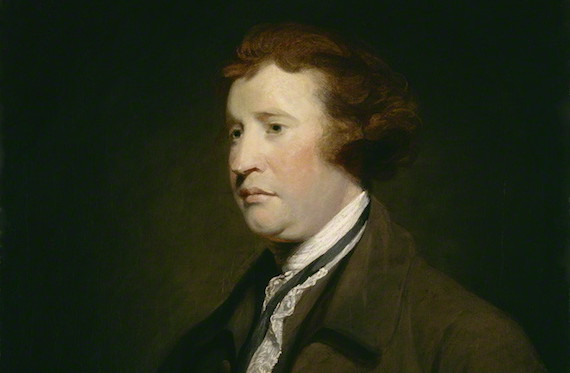
Who, these days, speaks for conservatism, the philosophical orientation that is cautious of change? We have an answer in the small band of Tory rebels, led by Dominic Grieve, who have won for Parliament a right to decide on the final Brexit deal. But the very fact of their struggle against their own party shows that cautious conservatism is not much in vogue.

My question is prompted by reading Jesse Norman’s 2013 biography of Edmund Burke, one of the founding thinkers of conservatism. Jesse Norman is a Conservative MP and current government minister. But I imagine he might be out of sorts with his party since the philosophy he describes is not much reflected in current Conservative practice. His book demonstrates, though, that even if Burke is out of fashion with the Tories, he still has much to say to contemporary Britain.

Read More »

Brexit complexity

By Martin Vogel

uk ireland eu

Brexit is shaping up to be the object lesson par excellence in how not to lead in complexity. First this week we have seen the Government’s negotiating strategy (if one can call it that) for getting to Phase 2 of the Brexit talks blown to pieces by its negligence of the Irish border issue. Then the Brexit Secretary, David Davis, admitted that the Government had made no assessment of the impact of Brexit on the various sectors of the economy, despite having previously insisted on several occasions that such assessments were in hand. So the Government is navigating what is the biggest peacetime challenge that the UK has faced in generations, not just with no real understanding of what its impact will be but no attempt to understand. It’s almost as if the truth would be too frightening for ministers to know.

Read More »

How to lead in chaos

By Martin Vogel

york against brexit
York against Brexit rally.

Two weeks on and we’d better get used to the sense of bewilderment and drift. Unless the Conservative Party revises its plans, there’ll be no political leadership in this country till September. The vacuum in opposition politics could well outlast Labour’s leadership contest. Even once we have functioning political parties, the work will only just be beginning. Unraveling the implications of the Brexit vote will last years. Building new strategies, negotiating new trade dispensations, embedding new institutional arrangements, tackling social justice: these projects will last many years. Uncertainty – more than that, unknowability – is the environment in which all organisations now operate.

For those working in organisations, an urgent question is how to lead in this chaos. There’s a lot to play for. Those who can shake off despondency and find their ground, without succumbing to false certainty, can play an important role in shaping a positive outcome. As I said in my previous post, this is a time for distributed leadership: for individuals to step up to influence their colleagues. But what does this mean in practice?

Read More »

Who will lead us from this chaos?

By Martin Vogel

YourCountryNeedsYou

My blog post last week, on the social fracturing that led to Brexit, has resonated with many readers. On every day since it was published, the piece has attracted more traffic to the site than we would normally see in a week. It speaks, I think, not just to the anxiety about what the vote has revealed about our nation but also to another anxiety about the contribution to that state of affairs made by the organisations of which we are part.

Read More »

Leading in complexity

By Martin Vogel

busy street

I’m not a great one for introducing theoretical models in my work with clients, however much my practice may be informed by theory. One that I frequently reference, though, is the leader’s framework for decision making devised by David Snowden and Mary Boone. This is the clearest and most usable articulation I know of what it means to lead in complex situations.

Snowden and Boone argue that leaders often come unstuck because they misconstrue the nature of the scenario they are dealing with. Typically, often without realising it, they are informed by an ideology of management that likens organisations to machines. So they fall in with expectations that most problems can be subject to linear solutions of command and control. Unfortunately, they are likely to be putting unreasonable pressure on themselves and, ultimately, setting themselves up for failure.

Read More »

Reconnecting universities to their public purposes

By Martin Vogel

obu

This is the final post in our series looking at how our counter-consultancy approach meets the needs of higher education institutions. Here we explore how interdisciplinarity and external collaboration can revitalise the public value of universities.

Interdisciplinarity and external partnerships provide a foundation for universities to renew their public value. This is because they grow out of the genuine and distinct strengths of a particular institution and point to how it can make a unique contribution to addressing society’s challenges. But this contribution can be realised only if there is clarity about the institution’s public purposes: the generic ones it shares with other higher education establishments and the distinct one that arise out of its own particular circumstances.

Read More »

The emergent route to fostering interdisciplinary collaboration in higher education

By Martin Vogel

networking

This is the third in our series looking at how our counter-consultancy approach meets the needs of higher education institutions. Here we explore the complex nature of university cultures and how we use conversation and reflection to mobilise distributed leadership.

Interdisciplinarity can address a university’s need for funds and a distinctive marketing proposition but also the individual academic’s need for compelling research opportunities. If each university has unique research strengths, these can be synthesised into interdisciplinary ventures which pursue approaches to research excellence that can’t be replicated easily elsewhere. This creates compelling reasons for funds, students and academics to gravitate to particular institutions. It counters a view of higher education as a largely undifferentiated, instrumental business with one which construes it as comprising diverse institutions each with intrinsic value and distinctive contributions to make to the world’s knowledge.

Read More »

Interdisciplinarity and external partnerships: components of revenue generation and public value in higher education

By Martin Vogel

library

Over recent years, we have developed a focus on supporting academics and managers in universities who are trying to foster greater interdisciplinary working and greater engagement with external partners. This series of blog posts reviews our learning in this area and explores how our counter-consultancy approach is especially suited to resolving challenges that higher education institutions encounter in pursuing interdisciplinary objectives.

Interdisciplinarity and external partnerships are distinct but closely related areas for universities. While disciplines represent communities of practice that transcend the boundaries of any one university, the idea of disciplines also serves as an institutional heuristic that facilitates internal ways of organising. But in their pursuit of research outcomes that deliver tangible value to society, universities are finding that questions that range across disciplinary distinctions are increasingly salient. This is largely driven by the complexity and pace of change of the modern world. Governments and other funders of research are searching for solutions to big global challenges that are best approached through joined-up interdisciplinary enquiries. Funding is increasingly focussed around themes such as demographic change and wellbeing, food security or climate change. External partners too, caught up in this complexity, are bringing research questions that range across disciplinary distinctions.

Read More »

Trust is not a message, it’s an outcome: the lesson for leaders from a defector from PR

By Martin Vogel

Trust
Trust is an outcome.

In Trust Me, PR is Dead, Robert Phillips has ostensibly written a book on the bankruptcy of public relations. It’s more interesting, though, as an insider’s guide to the bankruptcy of much corporate leadership – and, more importantly, a cogent call to arms for leadership that can inspire trust. I say “call to arms” since this is not a manual for leaders of the kind that sells at airport bookstands. It’s more a citizens’ manifesto – stirring us from neoliberal slumber so that we may realise our distributed leadership and haul conventional corporate leaders into the service of a fairer form of capitalism. It’s a foretaste of how leadership must surely evolve to meet the challenges of our more transparent, networked society and the expectations of the Millennial generation who will soon inherit the workforce.

Read More »

How all organisations tend to the dysfunctional in their own way

By Martin Vogel

Taylorism: not without its ethical claims.

Book review: A Very Short, Fairly Interesting and Reasonably Cheap Book about Studying Organizations by Chris Grey.

A Very Short, Fairly Interesting and Reasonably Cheap Book about Studying Organizations by Chris Grey took me back to my roots in sociology. It was a welcome, if disconcerting, journey which made me question whether, even from my critical perspective, I’m too complicit with the orthodoxy of our age.

The book deconstructs the managerialist consensus that construes organisations as being somehow apart from society, and amenable to direction in whatever way managers consider to be “efficient”. Efficiency, in this worldview, turns out to be the right of senior managers/shareholders to optimise the running of the organisation in their own interest. It does not lack an ethical claim. Taylorism, for example, freed factory workers from the tyranny of the gang leader and offered a fair day’s pay for a fair day’s work. But it led to a perverted extreme by which, to quote one of Grey’s contemporary examples, it can seem rational and legitimate to require machine operators to urinate on the spot in their clothes on the grounds that allowing lavatory breaks is too costly.

Read More »

How should executive coaches respond when the role of business in society is contested?

By Martin Vogel

Indignant, in any language.

I’m looking forward to the APECS symposium on the future for executive coaching on 18th June. As part of a group working on the social and business context for coaching, I’ve submitted a discussion paper. I found it a useful opportunity to pull together the themes I’ve been developing at this blog over the past few years. I’ve been receiving a number of requests to access the paper even ahead of the symposium, so I’m posting it here with the following caveat: my thinking on this is a work in progress rather than my last word. Feedback, critical or otherwise, most welcome.

Anglo-Saxon capitalism is experiencing a shift in the socio-economic paradigm by which we organise ourselves. In the period after the Second World War, a consensus was established around social democracy, with its emphasis on welfare, corporatism and mitigating inequality. As this became dysfunctional, it was replaced by a consensus around free markets, managerialism and shareholder value which, itself, is now being called into question by systemic failure. What replaces it will be contested. It could be a more benign form of capitalism in which organisations accept responsibility for greater stewardship of the public realm or it could be something much closer to fascism or something else again. What role, if any, should coaches play in helping executives both to recognise the shift and to play a role in shaping a constructive outcome?

Read More »

From Valoro to Vogel Wakefield


Vogel and Wakefield
Vogel and Wakefield, looking up

From today, Valoro becomes Vogel Wakefield, the counter-consultancy. We see this as more than a change of name. We’ve been in business for nearly three years now and we have a much better appreciation than when we started of how we add value for our clients.

When we founded the business, we were spent some considerable time defining our company and our distinctive approach. In retrospect, this was more useful to us as partners than it was to customers. It helped us clarify the common ground that enabled us to work together. But all our clients wanted to know was who we were.

In fact, one executive, demonstrating refreshing plain-speaking, told us the Valoro thing wasn’t making much sense. “You’re Mark and Martin, aren’t you?” he said.

Read More »

The limits of leadership

By Martin Vogel

Mandela: too exceptional to be a leadership role model?

It may seem perverse in the week that we have commemorated the impact on the world of one man, Nelson Mandela, but I feel the need to cast a sceptical look at our obsession with leadership.

We live in an age which has made a fetish of leaders. As you squeeze into a rush hour Tube train, consider that probably 50 per cent of the people packed around you consider themselves to be on some kind of leadership mission at work. The other half are most likely being harangued by their organisations to step up more forcefully to the leadership plate.

Like the self-help books that offer the promise that you can achieve whatever you dream, the idea of leadership holds out the possibility that there’s no problem in organisations that can’t be resolved by a visionary and driven individual. Yet we’re regaled routinely with stories of mediocrity, organisational failure and leadership shortcomings. Ours is a tired post-industrial culture, in which the complexity of organisations and the myopia of short-term perspectives conspire to frustrate the realisation of visionary outcomes. The veneration of Mandela is testimony to the fact that, as a leadership role model, he was exceptional.

Read More »

Co-operative values: missing in action

By Martin Vogel

Spinning in their graves? The Rochdale Pioneers, founders of the Co-operative Movement

Last week, I ended a 30-year customer relationship with the Co-operative Bank. The move was precipitated initially by financial caution as a gaping hole was revealed in the bank’s balance sheet but cemented by dismay at the catalogue of mismanagement revealed in recent weeks.

While I feel a litte sad as a customer, I’m also discomforted professionally as the collapse of the Co-op Bank raises questions about my advocacy of values-driven leadership. I believe the problems of the self-styled “ethical bank” stem not from an excessively values-driven approach but from a disconnection from its values. But – and here’s the sting – the complacency generated by its intent as an ethical business may have played a role in the bank’s undoing.

Read More »