Unknowing: an orientation for coaching and leading

By Martin Vogel

One doesn’t need to work long as a coach to encounter clients who bridle against the profession’s non-directivity ethos and demand answers. “I want tips, not coaching,” one said to me recently. “What’s making you say that?” I replied – impolitely deflecting the request.

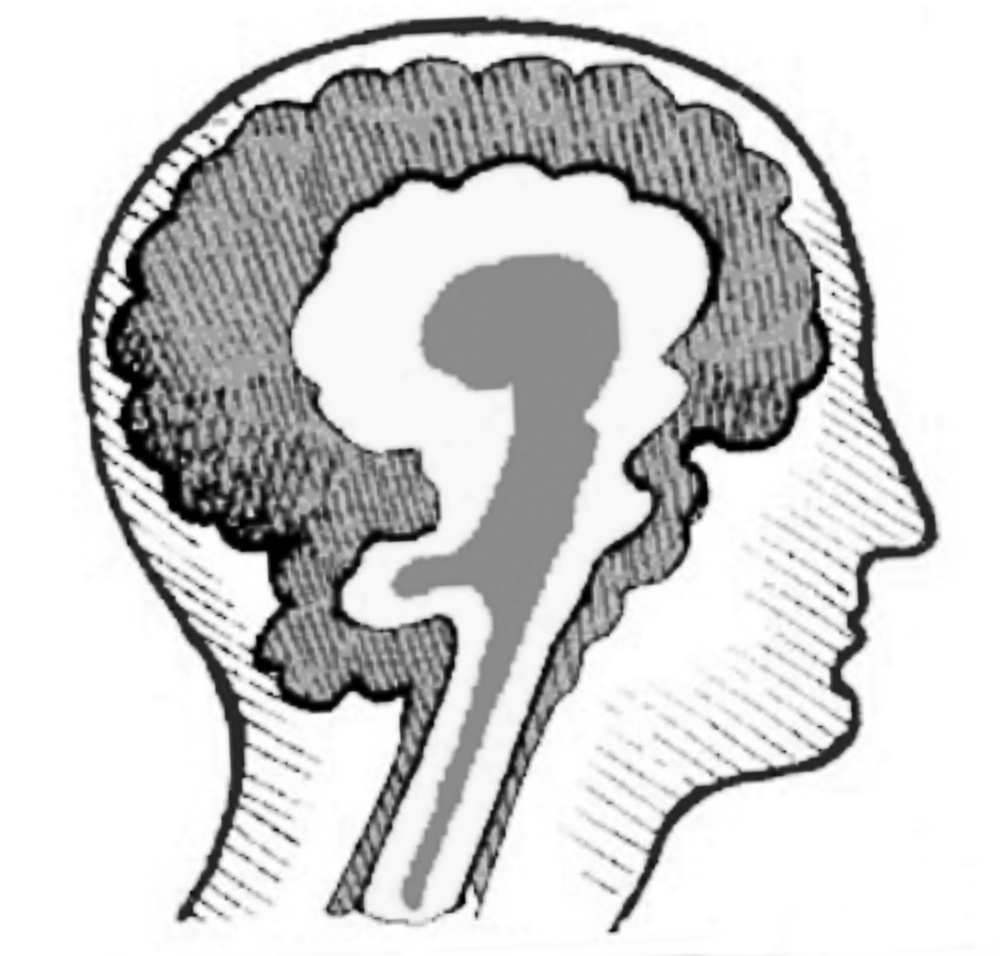
In fairness, this encounter arose at a time when I was particularly unlikely to comply. Through the pandemic, I’ve been musing on what I call my unknowing project. I’ve become convinced that we cherish knowing too much – or rather, the feeling of knowing. We live in an era of intersecting complex challenges – globalisation, environmental crisis, social and racial inequities, nationalism. Covid, sometimes referred to as a syndemic, cuts across all of these. Complex challenges are defined by the difficulty of designing a solution. Yet they characteristically call forth simplistic answers from people who are uncomfortable with this fact. Which is to say, most of us. Homo sapiens, the man who knows, prizes having answers. But we are, as Steven Sloman and Philip Fernbach have found, more ignorant than we allow.

Any client who comes into coaching feels, at some level, the pressure of the need to know. Coaching risks colluding with the fantasy of knowing in the face of complexity. Perhaps, instead, we can contextualise it. Both coach and client can try to approach the world with some humility about the limits of our knowledge.

Read More »

A restoration begins

By Martin Vogel

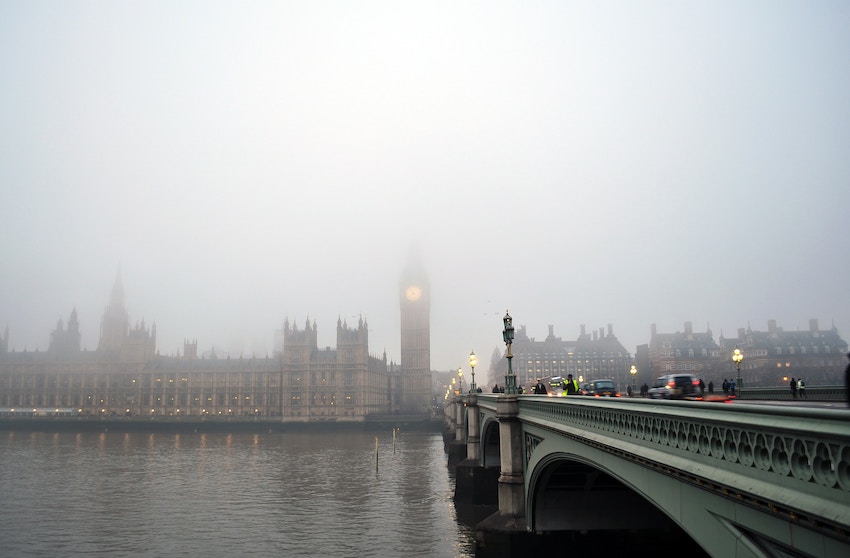
Sometimes, when you watch an event, it is only when you sleep on it that its significance lands. Last week, I watched with shock but not surprise as America’s Capitol was invaded by seditionists. Even as I watched, and despite the delay in police and security forces containing the uprising, the insurrection looked unlikely to succeed. But, the next morning, the deeper significance sunk in. This was an event that shouldn’t have happened in a mature democracy. Given the connivance of an uncomfortably large number of elected representatives in Congress, with a more competent seditionist than Donald Trump in office, the coup might have prevailed. America, and the cause of democracy around the world, was stained by the insurrection but also saved by an ethos that held when tested.

Yesterday, as Joe Biden took office, the rituals of inauguration seemed familiar but their significance was overwhelming. The words of the presidential oath carried unusual meaning as Biden, with evident decency and determination, promised to uphold the constitution. After dealing with the urgent crisis of Covid, this is his most important task. It’s not yet clear whether the mediation of differences in the United States can be contained within democratic norms. But everything about the inauguration signalled that an attempted restoration is under way.

Read More »

Coaching is political

By Martin Vogel

Coaching has been practised to support leadership for a few decades now. But the mismatch between leaders’ impact and the challenges we face as a society has never seemed greater.

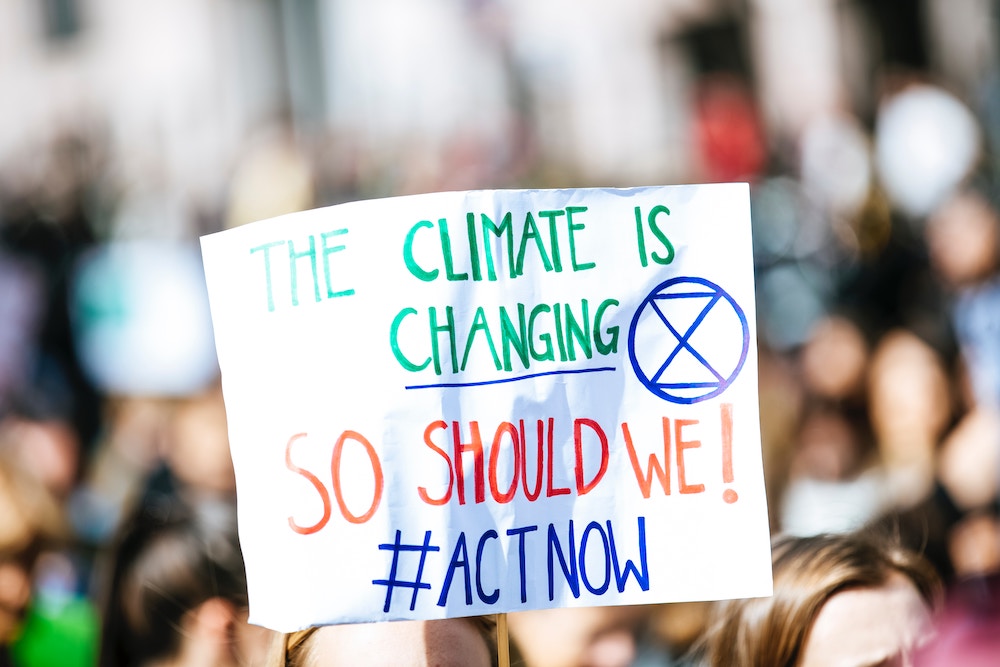
Look, for example, at the paralysis over how to manage climate change. Politicians and executives seem clueless, or unwilling to engage in strategies that can help bring about the radical changes required to mitigate predicted disaster scenarios. The question here is how the coaching profession can engage with the climate emergency – only one of the complex political issues that shape the context in which we encounter our clients. The mismatch between the scale of these tasks and the quality of leadership with which the world can tackle them is a call for coaches to critically review our impact and responsibilities.Read More »

Creative coaching creates creative leadership

By Martin Vogel

In the knowledge economy, creativity is at a premium. But the same economy encourages lifestyles and working routines that crowd out creative impulses. This isn’t just bad for productivity, it’s bad for wellbeing. This presents a two-fold challenge for coaches: how to stay fresh and creative in how we practice; and, how to support our clients to nurture creativity in their likely busy lives.

It’s something of a paradox that modern life wrings us out. Digital technology, information abundance, the range of choices in how we use our leisure, opportunities for travel – these all offer rich stimulation to our senses and lower the barriers of entry to the means of creativity. But filling our minds with information and our leisure time with activity brings it own stresses, maxing out our capacity simply to process experience. The journalist, Oliver Burkeman, has written recently of how keeping up with the news has transformed from being a contained and relaxing ritual (reading a newspaper, watching the TV bulletin) to a civic duty that (thanks to inexorability of social media feeds) no longer has boundaries. The lost boundaries are not simply temporal they are boundaries of decency and decorum. Browsing the news today exposes us to abuse, hyperbole and dark thoughts about the state of the world – inducing in many a constant state of panic and insecurity. Hardly ideal circumstances for creativity.

Read More »

Britain’s shame: projections and substance regarding Boris Johnson

By Martin Vogel

On Tuesday afternoon, a friend in Boston emailed to acknowledge that my country was now officially more embarrassing than his. This had been a bone of contention between us: him cringing at how Trump was eviscerating the reputation of the United States; me pointing to Brexit. But the elevation of Alexander Boris de Pfeffel Johnson to Prime Minister of the UK had tipped the scales in our favour. Thus was my attempted sabbatical from political engagement brought to an unwelcome end.

On Wednesday, I had a disturbed night. I kept waking to the anxious residues of Johnson’s first day in office, as I absorbed the seizure of government by a clique of “nepotists, chancers, fools, flunkeys, flatterers, hypocrites, braggarts and whiners“ – as Nick Cohen put it, with uncharacteristic understatement.

Read More »

Exploring voice

By Martin Vogel

One of the most stirring encounters that I experienced this year was a one-hour lesson with Nadine George on discovering your voice. Nadine has been teaching voice for thirty years to actors, directors and other creative types. According to her website:

“Having spent eight years researching the voice at the University of Birmingham Drama Department, Nadine has developed her own voice technique. She now works closely with many international theatre companies and drama schools all over Europe. She has been teaching at the Royal Conservatoire Scotland for the past 20 years, where her work is now the chosen technique taught by the Centre for Voice In Performance.”

What was I doing there? A good question. I wasn’t entirely sure myself. I was sent to Nadine by my wife who had previously trained with Nadine, and who had an instinct that I’d find the lesson rewarding.

Her method is in a lineage that descends from Alfred Wolfsohn via Roy Hart. These were not names that meant much to me before this year. Suffice to say this is not an entirely performance-based tradition of voice work. Wolfsohn suffered shell shock during the First World War and used vocalising as a form of self-treatment after other therapies failed to help. While Nadine does not claim to be a therapist, she recognises that her work has therapeutic impacts.

Read More »

On getting it wrong

By Martin Vogel

At its edges, the world of coaching is influenced by memes that originate in new age thinking. This isn’t entirely to be deprecated. Coaching’s porousness to diverse influences helps make it adaptive and less susceptible to the orthodoxy that eventually stifles professions. But occasionally an idea threatens to break through that needs to be stamped on if we are to maintain rigorous foundations for our work.

One such that I have encountered this year is the comforting notion that “you can’t get it wrong”. I think this translates as: “Don’t worry about messing up – there’s no single right way to do something, so just go ahead and imagine that the way you are doing it will meet the exigencies of the situation.”

I have come across this in relation to the practice of mindfulness and with respect to how to practice as a coach or supervisor. Before long, this kind of thinking will be infecting organisations and letting leaders off the hook for all sorts of things. The idea has a beguiling appeal and sounds like it’s in the same terrain as constructs that are helpful to dealing with a complex world. But, in fact, it’s opposed to them. Read More »

Grounds for optimism

By Martin Vogel

Not everything about chaos is miserable. We may be living through an epoch-defining collapse of the socio-economic settlement we have known for four decades. A reckoning with free-market, shareholder value capitalism is long overdue and it is happening in more disruptive ways than was needed. Things may look disturbing and confusing. But, as David Brooks reminds, out of chaos comes hope:

“There have been many moments in our history when old ideas and old arrangements stopped working and people chopped them up. Those transition moments were bumpy, and it was easy to lose hope, but then people figured it out. Never underestimate the power of human ingenuity.”

He doesn’t mean the kind of blind-faith, glib, muddling-through, bulldog-spirit, groundless hope that keeps churning out the same answers to new problems. He’s not British. He’s talking about the application of imagination to the invention of new paradigms; meeting a new reality with new strategies.

Read More »

Britain’s duff leadership culture

By Martin Vogel

The challenge of bringing fresh and adaptive leadership in a complex and volatile world is a global problem. But an insightful analysis by The Economist highlights distinctly British dimensions:

“Britain’s leadership crisis is rooted in the evolution of the old establishment into a new political class. This evolution has been widely hailed as a triumph of meritocracy over privilege, and professionalism over amateurism. In fact, the new political class has preserved many of the failures of the old establishment. It is introverted and self-regarding, sending its members straight from university to jobs in the Westminster village, where they marry others of their kind. It relies on bluff rather than expertise, selecting those trained in blaggers’ subjects like PPE and slippery professions like public relations and journalism (Mr Cameron worked in PR before going into politics, whereas Mr Gove and Mr Johnson, along with his brother, another Tory MP, were hacks).
“At the same time, the political class has abandoned one of the virtues of the old establishment. The old ruling class preserved a degree of gentlemanly self-restraint. Senior politicians left office to cultivate their gardens and open village fetes. The new political class, by contrast, is devoid of self-restraint, precisely because it thinks it owes its position to personal merit rather than the luck of birth. Thus meritocracy morphs into crony capitalism. Tony Blair has amassed a fortune since leaving office and George Osborne, Mr Cameron’s former chancellor of the exchequer, is following eagerly in his footsteps.”

The attitude described here infects leadership well beyond the sphere of politics. The Financial Times has described the rewards extracted by the top brass of the Crossrail project – where private sector executives have used a governance structure designed to limit political meddling to extract handsome rewards, despite failing to deliver the project this year as promised:

“The deal gave Crossrail’s bosses great freedom so long as they lived within their budget. They took full advantage, paying themselves handsomely. When (departing chief executive) Mr Wolstenholme left this year, he received £765,689, including a £160,000 bonus, and £97,000 for ‘loss of employment’, despite numerous signs that the project was unravelling. The previous year, he banked £950,000, including a £481,460 bonus.”

Duff leadership is a problem not just because it has adverse impacts on the issues it is trying to manage. The self-aggrandisement of the chumocracy combined with its ineptitude undermines people’s belief in change and thus their motivation to engage. Perhaps this accounts for the strange inertia as the country heads towards the possibility of a car-crash Brexit. We need a revolution of distributed leadership. Looking to the elite to empower activists is a waste of time. People of initiative need to come together in self-organising common cause to brush aside the narcissists whose reign has failed.

Image courtesy Miguel Bruna.

The leaders we create

By Martin Vogel

It’s a cliché of politics to say that we get the leaders we deserve. If that’s true, it begs the question: what have we done to deserve the myopic and divisive leadership that has taken us to the precipice of chaos? A clutch of articles looking at Britain from the outside provide some answers. The Economist considers how Britain’s European allies are looking on with bemusement at its collective nervous breakdown. For them, it’s not just that they are losing a close partner but also grieving the loss of an idea of what Britain represents. No longer sensible and reliable but a country revealed to be as chaotic and headstrong as any other:

“The biggest worry is not that the world’s view of Britain is changing. It is that this darker view of Britain is more realistic than the previous one. The Brexit vote could almost have been designed to reveal long-festering problems with the country: an elite educational system that puts too much emphasis on confidence and bluff and not enough on expertise; a political system that selects its leaders from a self-involved Oxbridge clique; a London-focused society that habitually ignores the worries of the vast mass of British people; and a Conservative Party that promotes so many pompous mediocrities. The reason Brexit is doing so much damage is not just that it is a mistake. It is a reckoning.”


Read More »

A moderate proposal

By Martin Vogel

Matthew Parris is worried that the UK is heading for a no-deal Brexit because the moderate majority in Parliament doesn’t know how to face down the Brexit extremists (£). A former MP himself, he thinks it imperative that scared centrists among the Conservatives and Labour find a way to break ranks with tribal party loyalties to make common cause. He has a proposal that would both break the stalemate and allow Theresa May to relinquish her loathed deal with good grace:

“Don’t whip the vote. Declare this decision to be so important, so epoch-making, that only a free vote by MPs could honestly legitimise it. The public will like the sound of this, and there’s a chance Labour might be embarrassed into lifting their whip too. The government is still likely to lose but the defeat then would be far from a ‘confidence’ issue. For May, the can is kicked a little further down the road, which seems anyway to be as far as she wants to lift her eyes.”

The appeal of this proposal is not only that it might create new momentum in the Brexit process but also that it could create a new dynamic in the wider political culture:

“When Remainer Tories walk through the voting lobbies alongside Labour MPs they’ll see opponents who have become co-campaigners, kindred spirits, perhaps even friends. Who can say what might result, but I think that in purely human terms, something might shift within that ghastly Victorian prison they call Westminster. As MPs shuffle past the tellers together, momentarily unattached from party, and in a flurry of shared glances, something might be born.”

I think this is the most likely way that we will eventually overcome polarised politics. For all the talk of a new party, the hunger for new ideas, and the waiting for a political saviour, the most plausible impetus for change will be when people of shared values link hands across traditional divides and begin exploring the possibilities that emerge.

Image courtesy Sandra Ahn Mode.

The serious business of playing the Fool

By Martin Vogel

fool

It’s a shame that Hetty Einzig’s The Future of Coaching is so-called. Its concerns spread much wider than its title implies. It’s a radical and thoughtful book which holds before us the chaotic nuttiness of the world as it is now and asks what kind of leadership should coaching call forth.

Hetty Einzig takes it as axiomatic that the big challenges we humans face demand committed and creative interventions by leaders. Never mind present concerns such as Brexit or Trump, Hetty reminds us that the broader context is that of a trajectory to environmental catastrophe. She has no truck with the notion that coaches should be neutral facilitators of whatever goals their corporate clients might pursue. Nor does she believe leaders should collude with such ideas. Coaches and leaders alike are citizens in wider society as well as servants of the organisations that employ them. It is the legitimate task of all of us to try to influence organisations to play a constructive role in addressing society’s problems.

Read More »

Looking for senior leaders or coaches who want a fresh approach to their development

By Martin Vogel

Are you a coach or a leader who needs a reflective space to think creatively about how you work with others? If so, we may be able to help each other. I’ve just started a one-year diploma and I’m offering discounted access to leadership or coaching supervision to people willing to be practice clients.

This is an opportunity to experience a rich and creative space for developing yourself. Your part of the bargain is to show up in a spirit of experimentation and to be prepared to give me feedback on your experience. I’m looking to try out new approaches, in particular to facilitate ways of reflecting that get beyond the constraints of language and cognitive thinking. So there might be, for instance, drawing, imaginative work, mindfulness or reflecting while walking outside. There’ll also be observation in the moment on how our work unfolds and what this might say about your work with other people. You’ll need an appetite to learn in ways that are possibly unfamiliar. The point, as I see it, is to take you beyond the habitual routines of your working life so that you can access aspects of yourself that might sometimes be bracketed out of how you normally approach your work.

I’m taking my diploma with the Coaching Supervision Academy, the top international provider of supervision training. As part of my assessment, I need to work with a number of practice clients over the coming nine months. Although I’ll be trying some new methods and approaches, I’m an experienced professional. I’m an APECS-accredited executive coach who has been practising for 12 years and already provides supervision. For more on my background, please check out my coaching profile and testimonials.

Supervision can be thought of as supporting people who support other people. It grew up as a discipline to help professionals such as psychotherapists, teachers and social workers. Many coaches work with a supervisor to get quality assurance of their work. (I always recommend to prospective coachees that they only work with a coach who is supervised). Applied to leaders, supervision offers a thinking partner who can engage dispassionately with your challenges and help you find new perspectives. Good supervision should help you maintain your energy, or regain it when depleted, and make you feel someone has your back even as you are challenged to think afresh. It’s a connection of heart and intuition as much as of the mind; one that might leave you stirred, but not shaken.

If this sounds like it might interest you, let’s talk. I can offer five one-hour sessions between now and next summer. I’m looking for a mixture of senior executives, coaches and perhaps one small group. I’m open to working both by videoconference and – for those within reach of London – face to face.

If you’re paying your own way, the cost would be £50 (GBP) per hour. If your company is paying, the cost is £100 (GBP) per hour. In addition, VAT is chargeable for those in the EU. There may be some occasional ad hoc additional cost, such as venue hire when a private room is needed for face-to-face work. But, given the aforementioned spirit of experimentation, it may not always be necessary to use a private venue – for instance, if we choose to meet and walk. If you are familiar with costs in the executive coaching market, you will appreciate that this is very good deal.

To find out more, please email supervision@vogelwakefield.com or message me via LinkedIn.

Image courtesy Stewart Baird.

Engage a coach to save humanity from itself

By Martin Vogel

Humans are a clever species. Look at the world we’ve constructed. The very name homo sapiens describes us as wise. But somehow we’ve come to live in a way that is inimical to our nature and destructive of our wellbeing. The organisations in which we work are part of the problem. They are incapable of maintaining bonds of trust with their employees, and obstruct our efforts to sustain our closest relationships.

This is the thesis of A General Theory of Love by Thomas Lewis, Fari Amini and Richard Lannon which attempts to explain the science behind our fundamental need for human connection. Written by three professors of psychiatry, it was published in 2000. In my layman’s reading, its scientific authority has been overtaken by more recent neuroscience. But its date of publication is significant. At the start of a new century, the book aimed to debunk the mythology – whether psychodynamic or behaviourist – which shaped our understanding of emotions through the 20th Century. Insofar as these mythologies remain influential today, A General Theory of Love remains a relevant read. Indeed it seems prescient in its cultural criticism of how Western societies have developed so as to deny our physiological need for attachment, and the social maladies that thereby arise.

Read More »

Your work between coaching sessions

How to work with a coach, part 8

By Martin Vogel

The work you do between coaching sessions is as important as the work you do when you’re with your coach.

Coaching can be conceived as a staging post for the stuff, in the world beyond the sessions, that the client wants to work on. It’s a safe place to try out different ways of being. Coach and client reflect together on what the client brings and might formulate ideas for action. There may be an opportunity to rehearse in the session. But it’s not like learning a musical instrument, where the pupil practises in private before performing publicly on the stage. For the most part, the client practises on stage as they put the ideas into practice directly in their everyday life.

Read More »

Abstract nouns are rarely the solution in organisations. But they could be.

By Martin Vogel

Some years ago, I was happy to make the acquaintance of Valerie Iles, a leadership consultant whose domain is healthcare. Like me, she brings an interest in mindfulness. But she has a great ability to draw on a diverse range of other ideas. This year, she held a seminar to hand over her body of thinking. I was already running with it. But, in the months since, I’ve enjoyed re-reading some of her articles.

One that stands out is Valerie’s admonishment against reaching for abstract nouns. This is not the usual tirade against meaningless management coinages but a philosophical challenge to how leaders conceive their strategies.

Read More »

18th Century insight on 21st Century complexity

By Martin Vogel

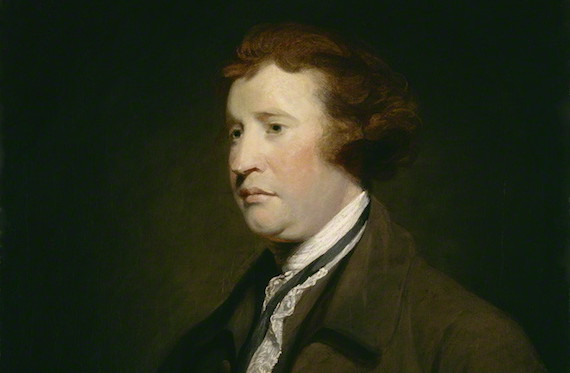
Who, these days, speaks for conservatism, the philosophical orientation that is cautious of change? We have an answer in the small band of Tory rebels, led by Dominic Grieve, who have won for Parliament a right to decide on the final Brexit deal. But the very fact of their struggle against their own party shows that cautious conservatism is not much in vogue.

My question is prompted by reading Jesse Norman’s 2013 biography of Edmund Burke, one of the founding thinkers of conservatism. Jesse Norman is a Conservative MP and current government minister. But I imagine he might be out of sorts with his party since the philosophy he describes is not much reflected in current Conservative practice. His book demonstrates, though, that even if Burke is out of fashion with the Tories, he still has much to say to contemporary Britain.

Read More »

Who will lead democratic renewal from the left?

By Martin Vogel

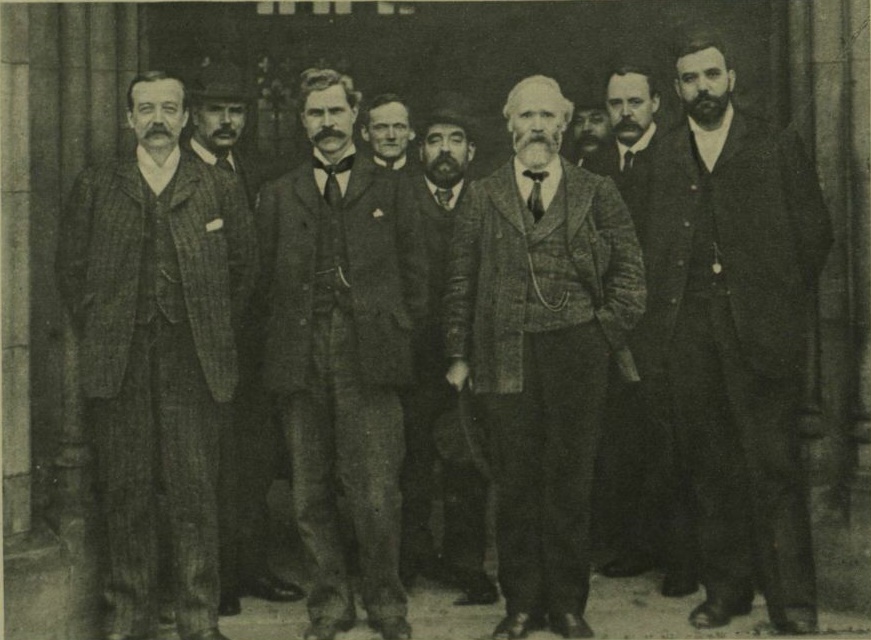
Labour was founded as a party when its first MPs were elected in 1906.

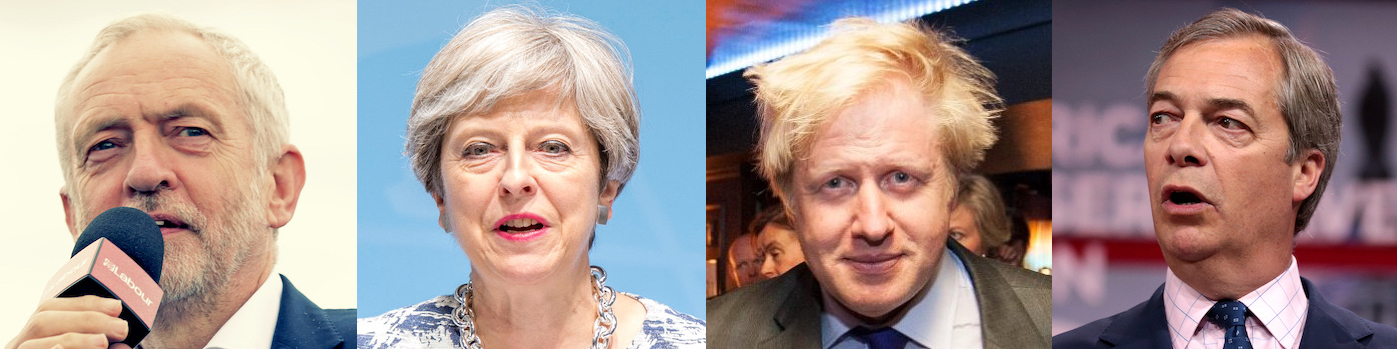
Opposition politics in the UK are in a sorry state. The Labour Party is in the grip of a far-left cult which is not much interested in parliamentary democracy. Since the General Election, those in the Labour Party who don’t favour Jeremy Corbyn’s leadership have gone quiet – perhaps buying into the myth that by not losing the election as disastrously as everyone expected, he somehow won it instead. Because the moderates expressed their lack of confidence in Corbyn on the grounds of his unelectability, they are now shouted down by those who crow about Corbyn’s apparent popularity. What has been lacking is a principled critique of what he stands for.

Read More »

Brexit complexity

By Martin Vogel

uk ireland eu

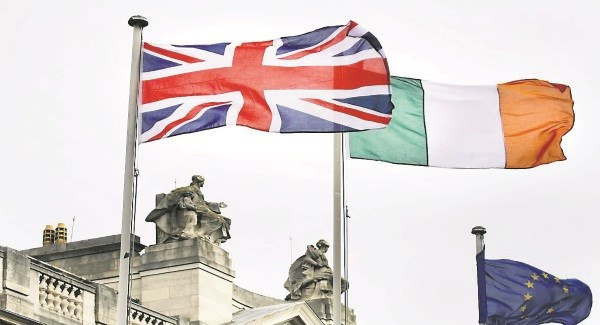
Brexit is shaping up to be the object lesson par excellence in how not to lead in complexity. First this week we have seen the Government’s negotiating strategy (if one can call it that) for getting to Phase 2 of the Brexit talks blown to pieces by its negligence of the Irish border issue. Then the Brexit Secretary, David Davis, admitted that the Government had made no assessment of the impact of Brexit on the various sectors of the economy, despite having previously insisted on several occasions that such assessments were in hand. So the Government is navigating what is the biggest peacetime challenge that the UK has faced in generations, not just with no real understanding of what its impact will be but no attempt to understand. It’s almost as if the truth would be too frightening for ministers to know.

Read More »