The insurgency of decency

By Martin Vogel

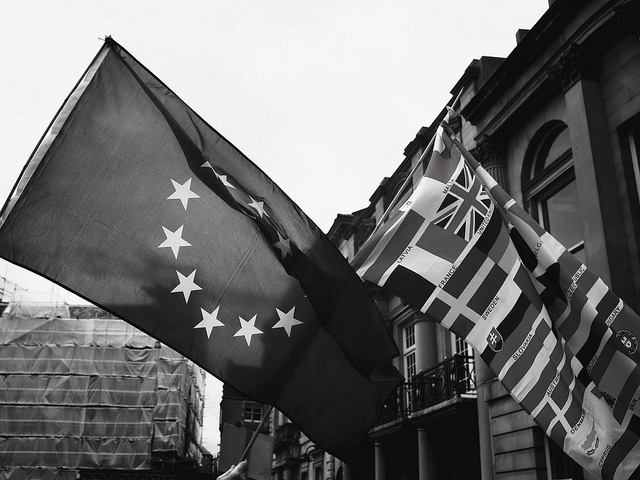
The march for a people’s vote on Brexit was a heartwarming occasion with 100,000 radical moderates quietly expressing their outrage with characteristic British understatement, self-deprecation and civility. Unlike the demonstrations of my younger years, there wasn’t a Trotskyist in sight to subvert the decency of protestors to their own ends. For a brief, glorious summer afternoon, it was possible to believe that Britain could find a way through the chaos it has brought upon itself and heal its wounds. People speculated whether the movement would be sufficient to bring about a change in course. I suspect not, at least not in the time left before Brexit is effected as a matter of law.

But in any case, there can be no going back to the world before 23 June 2016. Britain is already changed by the referendum, divided against itself and with the disinvestment plans of major employers at an advanced stage. More pertinently, there are other players in this drama. The EU shows every sign of wanting to cauterise its Brexit wound so that it can turn its attention to more pressing concerns. And the wider outlook for democracy and international solidarity has never looked so precarious in my lifetime. The Brexit referendum result, it turns out, was by no means an outlier but a precursor of a nationalistic and populist impulse which has swept through Western countries. Were we to decide against glorious isolation after all, and advocate once again for the rules-based order, it’s by no means clear that the world would want to listen.

Read More »

Spielberg’s The Post offers a masterclass in public leadership

By Martin Vogel

Katharine Graham and Ben Bradlee celebrate the court’s decision in 1971 to allow publication of the Pentagon Papers.

Steven Spielberg’s film The Post combines three themes close to my heart: leadership, journalism and power – with an interesting gender dimension overlaying all three.

The film portrays the days in 1971 when the Washington Post faced a dilemma whether to publish leaked material, the Pentagon Papers, showing how successive American presidents had deceived the public about the country’s purpose and prospects in Vietnam. The scoop already belonged to the New York Times. But an opportunity to catch up arose for the Post when Nixon’s government obtained an injunction against the Times, and the Post obtained the material independently.

There have been criticisms that it is perverse of the film-makers to focus on the role of the Post in the the Pentagon Papers affair, when the Times was the bigger player and took the earlier risk. However, that is to misconstrue the drama in which the Pentagon Papers affair is merely the MacGuffin on which hangs a tale of press freedom and gender politics. It is precisely because the Post was the lesser player that it merits attention. It’s the story of how a faltering business, guided by a woman in a male-dominated world, steps into the big league and transforms itself into a pillar of democracy. The whole episode serves as a dress rehearsal for Watergate, when the Post made the running in holding Nixon to account and ultimately brought down his presidency.

Read More »

The politics of being apolitical

By Martin Vogel

Some years ago, I attended a meeting on whether executive coaching could help make society better. I mentioned a Marxist critique of the crisis in capitalism that I had recently read. Before I even managed to share any insights that I’d found relevant, one of my associates brushed aside my contribution – asserting something along the lines that we didn’t want the Stasi in the UK (a sentiment with which I naturally concur). He seemed to want to restrict the conversation to the role of business in promoting environmental sustainability. The episode defined for me a sensibility in working life that holds to faux-apoliticism as a badge of professionalism. In this view of the world, there’s a safe agenda of social change, which allows a degree of corporate virtue signalling around our shared interest in planetary survival, but forbids the potentially more divisive discussion of wealth and power and the role of organisations in sustaining them.

This distinction is increasingly hard to sustain. The backlash against a capitalism that consigns whole communities to the backwaters is recognised as a factor in both Brexit and the election of Donald Trump. This year, the Grenfell Tower fire gave us a grotesque demonstration of where apolitical collusion with the apparently natural workings of the economy can lead. Not just the circumstances that led to the fire but the local authority’s inability to respond to the disaster revealed a hollowed out state, in which an over-financialised approach to management overwhelms the ability of organisations to meet basic human needs.

Read More »

Leading is about creating a shared sense of home

By Martin Vogel

Why do I write so much about politics? Because there’s an inescapable link between our political situation and the way organisations are led. It’s a moot point whether organisations align with the prevailing political discourse or whether politics is shaped by the interests of organisations. At the moment, it’s politics that’s making the running. There’s a broad consensus across the political spectrum that, whatever path Britain takes in relation to Brexit, it needs to become more inclusive. There’s not much agreement (nor even much in the way of ideas) about how this is to be achieved. But I fear many organisations don’t yet grasp the demands it will place on them to overcome the alienation and social fracturing that blight large parts of the country.

Read More »

Brexit complexity

By Martin Vogel

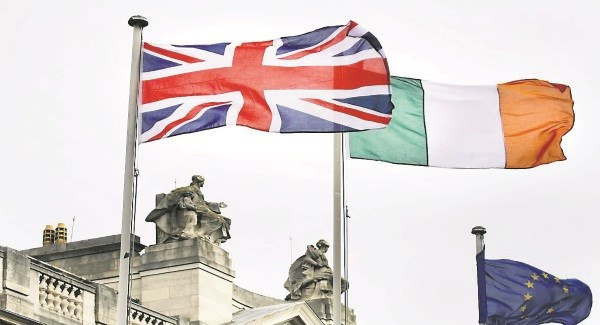
uk ireland eu

Brexit is shaping up to be the object lesson par excellence in how not to lead in complexity. First this week we have seen the Government’s negotiating strategy (if one can call it that) for getting to Phase 2 of the Brexit talks blown to pieces by its negligence of the Irish border issue. Then the Brexit Secretary, David Davis, admitted that the Government had made no assessment of the impact of Brexit on the various sectors of the economy, despite having previously insisted on several occasions that such assessments were in hand. So the Government is navigating what is the biggest peacetime challenge that the UK has faced in generations, not just with no real understanding of what its impact will be but no attempt to understand. It’s almost as if the truth would be too frightening for ministers to know.

Read More »

The modest antidote to fanaticism

By Martin Vogel

The New York Times columnist, David Brooks, wrote a series of columns this year on the subject of moderation. He was responding to the increasing prevalence of fanaticism in the United States, which stretches from Trump’s “conspiracy mongering” to the neo-Nazis. We have our own problems with fanaticism in the UK, ranging from the hard-line Brexiteers who will have no compromise with reality to the misogynistic and anti-semitic left.

The problem with fanaticism is that it provokes righteous anger in those who oppose it. So a perfect storm of rage encompasses civic life. The last sentence of my previous paragraph might even have contributed to it.

Read More »

Universities and public value

By Martin Vogel

test card
BBC Test Card image.

Higher education’s status as a not-for-profit public service operating in a globally competitive market is unusual. There are not many comparable institutions – and this can make HE’s travails, as it contemplates regulatory change, seem like a lonely struggle. But HE is not alone. An analogous institution is the BBC. There are affinities in terms of cultural role, independence and longevity. But the most striking is the exposure to competition while pursuing public purposes. This creates a tendency towards managerialism and instrumentalism that can be counter-productive. To keep this tendency in check, and retain public support, the BBC turned to the concept of public value. Universities are now exploring the same avenue, as they try to regain public connection, revealed by the Brexit vote to be threadbare. Read More »

Leading mindfully is a radical challenge to corporate orthodoxy

By Martin Vogel

meditating

Book review: Leading Mindfully by Amanda Sinclair

I sometimes wonder whether we have reached peak mindfulness in the corporate world. So widely discussed – apparently embraced by banks, Google, the US Army – yet so hard to integrate into organisational culture. Leading Mindfully by Amanda Sinclair at first looks like a contribution to the bandwagon. But it is, in fact, a profoundly subversive exposition of the philosophy of leadership. It takes us to places that aren’t routinely part of the discourse of management theory: the role of the senses, the pursuit of happiness, the erotic dimension of leadership. In its evocative depiction of what leading with integrity looks like, it highlights the malpractice inherent in leadership as we know it in most organisational contexts. Reading it before and after the Brexit referendum, I also found in the book insights on how Britain finds its way through the chaos and uncertainty that lies ahead.

Read More »

How to lead in chaos

By Martin Vogel

york against brexit
York against Brexit rally.

Two weeks on and we’d better get used to the sense of bewilderment and drift. Unless the Conservative Party revises its plans, there’ll be no political leadership in this country till September. The vacuum in opposition politics could well outlast Labour’s leadership contest. Even once we have functioning political parties, the work will only just be beginning. Unraveling the implications of the Brexit vote will last years. Building new strategies, negotiating new trade dispensations, embedding new institutional arrangements, tackling social justice: these projects will last many years. Uncertainty – more than that, unknowability – is the environment in which all organisations now operate.

For those working in organisations, an urgent question is how to lead in this chaos. There’s a lot to play for. Those who can shake off despondency and find their ground, without succumbing to false certainty, can play an important role in shaping a positive outcome. As I said in my previous post, this is a time for distributed leadership: for individuals to step up to influence their colleagues. But what does this mean in practice?

Read More »

Who will lead us from this chaos?

By Martin Vogel

YourCountryNeedsYou

My blog post last week, on the social fracturing that led to Brexit, has resonated with many readers. On every day since it was published, the piece has attracted more traffic to the site than we would normally see in a week. It speaks, I think, not just to the anxiety about what the vote has revealed about our nation but also to another anxiety about the contribution to that state of affairs made by the organisations of which we are part.

Read More »

Cut ego down to size in leadership

By Martin Vogel

audrelorde
How can we presume to lead until we understand from where we’ve come?

Book review: Leadership for the Disillusioned by Amanda Sinclair

Amanda Sinclair published Leadership for the Disillusioned in 2007, shortly before the financial crisis that has done more than anything in my lifetime to undermine public trust in corporate leadership. It’s telling that the most resonant example she cites of leadership that chips away at our illusions is the collapse in 2001 of the energy company, Enron. The most resonant corporate scandal of its time, the Enron affair could nonetheless be explained away at the time as an isolated if grand case of fraud that didn’t call into question the contemporary view of corporate leadership as a largely benign practice that broadly benefits society. Since the banking crash, our social system has become more widely perceived as governed by an ideology of corporate self-interest that nearly brought society to its knees and continues to serve the enrichment of a tiny minority. Throw in (to name a few UK examples) the phone hacking scandal, the Mid-Staffs Hospital scandal and the Jimmy Savile scandal and, if there were grounds for disillusion in 2007, there is widespread acceptance now that leadership as traditionally construed faces a crisis of legitimacy.

Sinclair’s book brings home the extent to which corporate thinking shapes how we view leadership. We’re culturally attuned to a managerialist model that construes leadership as invested in figures of formal authority at the apex of hierarchies. Leaders are action-oriented and ego-driven, their self-regard pumped up by status or absurdly inflated remuneration. The trend towards authenticity in leadership is of a piece with such ego-massaging, encouraging managers to identify themselves with their work role and self-actualise by bending others to their agenda.

Read More »

Tim Cook: public leadership in action

By Martin Vogel

Tim Cook
Tim Cook: public leader

Apple’s showdown with the Obama administration over the latter’s demand that it decrypt the phone of one of the San Bernadine terrorists is a test case in public leadership. The dispute counter-poses the social goods of national security and citizen privacy. The FBI wants the former to trump the latter. Apple is arguing for the two to be held in a more considered balance. What’s interesting from a public leadership perspective is that Apple is taking a considerable risk; it’s by no means clear that things will play out in its favour. This is no mere PR stunt.

Read More »

Trust is not a message, it’s an outcome: the lesson for leaders from a defector from PR

By Martin Vogel

Trust
Trust is an outcome.

In Trust Me, PR is Dead, Robert Phillips has ostensibly written a book on the bankruptcy of public relations. It’s more interesting, though, as an insider’s guide to the bankruptcy of much corporate leadership – and, more importantly, a cogent call to arms for leadership that can inspire trust. I say “call to arms” since this is not a manual for leaders of the kind that sells at airport bookstands. It’s more a citizens’ manifesto – stirring us from neoliberal slumber so that we may realise our distributed leadership and haul conventional corporate leaders into the service of a fairer form of capitalism. It’s a foretaste of how leadership must surely evolve to meet the challenges of our more transparent, networked society and the expectations of the Millennial generation who will soon inherit the workforce.

Read More »

Corporations as a force for good? Could do better.

By Martin Vogel

Supplying a force for good?

“Corporations as a force for good” was the optimistic title of a talk given by the London Business School academic, Lynda Gratton, at the Royal Society of Arts today. Her thesis was more a paean to than a critique of corporations. On the evidence she presented, I found her optimism a little premature. Corporations can be great conduits for the creativity and fulfilment of employees and the fulfilment of societal needs at massive scale. But they are vessels for trapping employees in alienating conditions, exploiting their consumers and society at large and they often ask too few questions about their supply chains. “Could do better” would be a more appropriate assessment of the current contribution of corporations.

Read More »

The Co-op, revolution and public leadership

By Martin Vogel

99 per centThe tragic mistake that the Co-op keeps making is to try to accommodate itself to the era of unrestrained, crony capitalism just as we need it to prove that its 19th Century mutual values are a plausible alternative to corporate excess.

Euan Sutherland – who resigned this week after the leak of his £3.5m pay package – demonstrated not only a poor fit with the Co-op’s mutual ethos, but a complete lack of the leadership values that will turn round public disaffection with business.

It may have been lame of Sutherland to declare the Co-op “ungovernable” before he’d even attempted to reform it, but this was consistent with an executive whose leadership style had demonstrated – as Will Hutton put it – no understanding of his organisation’s core challenge:

“That challenge is to marry Co-op values with a new and better functioning business model. What is astounding is that it occurred to nobody, not the executives themselves, that by being offered and accepting sums this large the management were trashing the very values they were on a mission to rebuild.”

Read More »

Mind the gap: how to focus on your purpose in the arts

By Martin Vogel

gallery
Empty gallery.

A theatre won funding to improve its engagement with disadvantaged groups. It approached the challenge as the chance to spread the word about its work. But it discovered that to get the target groups through the doors, the work would need to change. What the theatre was doing from day to day turned out to be irrelevant to a section of the community it was meant to serve. This is an example of the gap that can occur between the way an organisation behaves compared to its avowed mission, one that provides the sense of purpose from a shared understanding among everyone who works in a company.

Read More »