Grounds for optimism

By Martin Vogel

Not everything about chaos is miserable. We may be living through an epoch-defining collapse of the socio-economic settlement we have known for four decades. A reckoning with free-market, shareholder value capitalism is long overdue and it is happening in more disruptive ways than was needed. Things may look disturbing and confusing. But, as David Brooks reminds, out of chaos comes hope:

“There have been many moments in our history when old ideas and old arrangements stopped working and people chopped them up. Those transition moments were bumpy, and it was easy to lose hope, but then people figured it out. Never underestimate the power of human ingenuity.”

He doesn’t mean the kind of blind-faith, glib, muddling-through, bulldog-spirit, groundless hope that keeps churning out the same answers to new problems. He’s not British. He’s talking about the application of imagination to the invention of new paradigms; meeting a new reality with new strategies.

Read More »

Universities and public value

By Martin Vogel

test card
BBC Test Card image.

Higher education’s status as a not-for-profit public service operating in a globally competitive market is unusual. There are not many comparable institutions – and this can make HE’s travails, as it contemplates regulatory change, seem like a lonely struggle. But HE is not alone. An analogous institution is the BBC. There are affinities in terms of cultural role, independence and longevity. But the most striking is the exposure to competition while pursuing public purposes. This creates a tendency towards managerialism and instrumentalism that can be counter-productive. To keep this tendency in check, and retain public support, the BBC turned to the concept of public value. Universities are now exploring the same avenue, as they try to regain public connection, revealed by the Brexit vote to be threadbare. Read More »

Higher education round-up

art and tech

Here’s a round-up of our series on higher education. People were asking us, “What’s it like to work with you?” So we wrote this series to provide an answer. In the posts below, we explore what we’ve learned from working in the sector and what our counter-consultancy approach has to offer universities and those who work in them:

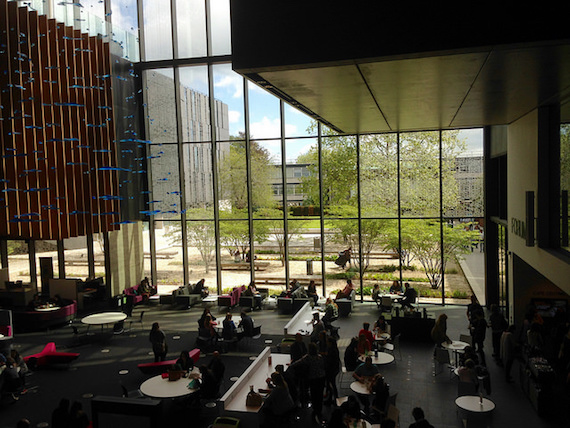
Image courtesy University of Salford.

Reconnecting universities to their public purposes

By Martin Vogel

obu

This is the final post in our series looking at how our counter-consultancy approach meets the needs of higher education institutions. Here we explore how interdisciplinarity and external collaboration can revitalise the public value of universities.

Interdisciplinarity and external partnerships provide a foundation for universities to renew their public value. This is because they grow out of the genuine and distinct strengths of a particular institution and point to how it can make a unique contribution to addressing society’s challenges. But this contribution can be realised only if there is clarity about the institution’s public purposes: the generic ones it shares with other higher education establishments and the distinct one that arise out of its own particular circumstances.

Read More »

Trust is not a message, it’s an outcome: the lesson for leaders from a defector from PR

By Martin Vogel

Trust
Trust is an outcome.

In Trust Me, PR is Dead, Robert Phillips has ostensibly written a book on the bankruptcy of public relations. It’s more interesting, though, as an insider’s guide to the bankruptcy of much corporate leadership – and, more importantly, a cogent call to arms for leadership that can inspire trust. I say “call to arms” since this is not a manual for leaders of the kind that sells at airport bookstands. It’s more a citizens’ manifesto – stirring us from neoliberal slumber so that we may realise our distributed leadership and haul conventional corporate leaders into the service of a fairer form of capitalism. It’s a foretaste of how leadership must surely evolve to meet the challenges of our more transparent, networked society and the expectations of the Millennial generation who will soon inherit the workforce.

Read More »

After the General Election, the forthcoming politics of organisation

By Martin Vogel

strike
Politics of organisation: hopefully, not like this, this time round.

Earlier this year, I attended a talk at the RSA by Frederic Laloux, author of Reinventing Organizations. Laloux was every bit as inspiring as I had hoped after reading his book. But what has stayed with me also was a throwaway comment by Matthew Taylor, chairman of the RSA and former advisor to Tony Blair when he was Prime Minister. Reflecting on the paucity of organisational life, Matthew observed that we need a politics of organisation. Yes, I thought, this is exactly what we need and, at last, people are beginning to get it.

The politics of organisation was, of course, one of many absences in the General Election campaign. One of the successes of three decades of neo-liberalism is that what happens inside organisations has been ruled out of court for politicians. But at the same time, organisations – particularly private corporations – have become increasingly central to how our society is, well, organised. Most of us work in large organisations to earn our living and, with the hollowing out of the state, depend on them for the delivery of our public services. And what is left of life is increasingly mediated by the likes of banks that are too big to fail, food retailers whose chains extend from the convenience shop to the out-of-town megastore, and global internet businesses such as Google, Amazon and Facebook. How we experience them as employees and consumers and how they impact on society in general are among the most significant influences on our lives.

Read More »

A fresh perspective on contemporary capitalism

By Martin Vogel

Karl Marx at Highgate Cemetery.

Book review: Seventeen Contradictions and the End of Capitalism, by David Harvey.

When I mentioned to people that I was reading a compelling Marxist take on the crisis in capitalism, I was not greeted with the warm curiosity that normally follows the mention of an interesting new book. In fact, most people looked at me as if I had ventured beyond the pale. Stalinism has much to answer for: not least, the blight it has put on open-minded critique of the conditions that prevail in liberal democratic capitalism.

I find this puzzling. Like many, I was sheep-dipped in Marxist analysis at university. Though I flirted with radical left wing politics as a student, having grown up with Czech heritage, I was all too aware of the failures and tyranny of life under what was termed “actually existing Communism”. Long before the European revolutions of 1989, I made my peace with the market economy. But I have retained a lifelong appreciation of the value of critique.

Seventeen Contradictions and the End of Capitalism by David Harvey exemplifies the insight that Marxist critique can still generate. A geographer by background, Harvey appropriates Marxist thinking and makes it his own, bringing a freshness that cuts through the common sense that our marketised, financialised society is the natural order of things.

Read More »

Mindfulness plus narrative awareness equals critique

By Martin Vogel

mindful revolution
Time for a mindful revolution?

This is the third and final part in my series on being and doing in coaching. In Part 1, I explained how I draw on mindfulness and narrative awareness in my work. In Part 2, I discussed the symbiotic link between being and doing, and the challenge to bring more of a sense of being to our doing.

Regular readers of this blog will be familiar with the critique of organisations that we have developed here: the idea that organisations could be less toxic places to work and could play a more positive role in addressing society’s problems. I don’t want to rehearse those arguments again but instead look at how they come out of the approach to coaching that I have been describing in this series. If coaching is, as I maintain, a way of facilitating unfamiliarity, it follows that it is potentially disruptive of the received wisdom in organisations – the things that are so taken for granted that it’s otherwise almost impossible to question them. By putting a premium on connecting with our embodied wisdom, our gut instincts and nagging doubts, it creates space to acknowledge the ways in which the things organisations ask of us might make us uneasy.

Where does received wisdom come from? Narrative theory tells us that it is shaped by the dominant culture of the age. In our age, the common sense is defined by neoliberalism: the idea that the market is the natural way to do things and, if we live with the consequences of the market, this will be better for everyone in the long run. More than that – and more pertinent to this conversation – it’s a common sense characterised by hyper-rationality in which the insights that comes from emotion, values and embodied wisdom count for little.

Read More »

Being and doing are not mutually exclusive

By Martin Vogel

Day's work
A day’s work is never done

This is the second in a series of posts based on a talk I gave on being versus doing in coaching. Part one of the series looked at the influences of narrative and mindfulness on how I work as a coach. This post explores the tension between being and doing.

Being versus doing is an increasingly important question for our culture. We live in an era when time is at a premium. Time is money and we’re all under pressure to give as much as we can in the time when we contract our labour to others.

This doesn’t always equate to greater efficiency. In the years since our rubbish collections were contracted out to private management, there has been a clear shift in focus from quality of service to minimising inputs (both time and people). The bin men’s job was never pleasant but now they have to do it as if competing in a macabre version of It’s a Knockout. The rubbish gets collected, but much is strewn all over the place and the bins are left lying in random places – so neighbourhoods are left, in some respects, in a worse mess than before the bin men arrive.

Because this pressure on time can lead to a poor quality of working life, we come to put much more emphasis on our getting the most from our personal lives. So even away from work we don’t escape the pressure to get things done. Films to catch, rooms to decorate, walks to be done in inspiring places – not to mention routine essentials like laundry, shopping and cooking. We really need times of stillness and quiet: opportunities to calm the agitation and connect with ourselves and how we’re feeling about what’s going on.

Read More »

The paradigm shift in action

By Martin Vogel

buurtzorg
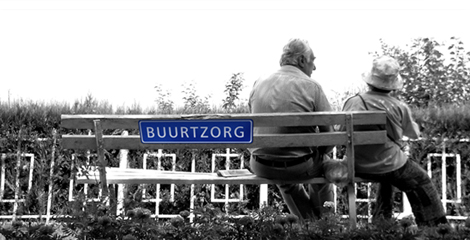
Buurtzorg, a higher level of consciousness in organisational form

Book review: Reinventing Organizations by Frederic Laloux.

In the years since the financial crisis, we’ve honed a conviction here at Vogel Wakefield that the way most businesses and organisations are run is bust. Public distrust has been engendered not just by the financial crash but scandals in sectors as diverse as the health service, the media, supermarkets, the police and Parliament. Such is the depth of distrust that we envisage society eventually breaking decisively with the economic settlement of the past three decades. What the shape of the new consensus will be, who can tell? But the future surely entails profound changes for the way organisations are run. The public wants businesses to exercise greater stewardship of community assets and to operate in a more socially-oriented way.

If this vision sounds nebulous and, frankly, utopian, the exciting thing about Frederic Laloux’s book, Reinventing Organizations, is the detailed portrayal it presents of successful companies that are making real today the model of tomorrow. His view of the forces of change is broader than ours. Where we envisage this as a paradigm shift in contemporary capitalism, akin to that from social democracy to neo-liberalism thirty years ago, Laloux sees a fundamental shift in human development, the kind of shift that occurs as human consciousness develops. In this, he draws on the work of Piaget, Robert Kegan and, especially, Ken Wilber.

Read More »

Corporations as a force for good? Could do better.

By Martin Vogel

Supplying a force for good?

“Corporations as a force for good” was the optimistic title of a talk given by the London Business School academic, Lynda Gratton, at the Royal Society of Arts today. Her thesis was more a paean to than a critique of corporations. On the evidence she presented, I found her optimism a little premature. Corporations can be great conduits for the creativity and fulfilment of employees and the fulfilment of societal needs at massive scale. But they are vessels for trapping employees in alienating conditions, exploiting their consumers and society at large and they often ask too few questions about their supply chains. “Could do better” would be a more appropriate assessment of the current contribution of corporations.

Read More »

How should executive coaches respond when the role of business in society is contested?

By Martin Vogel

Indignant, in any language.

I’m looking forward to the APECS symposium on the future for executive coaching on 18th June. As part of a group working on the social and business context for coaching, I’ve submitted a discussion paper. I found it a useful opportunity to pull together the themes I’ve been developing at this blog over the past few years. I’ve been receiving a number of requests to access the paper even ahead of the symposium, so I’m posting it here with the following caveat: my thinking on this is a work in progress rather than my last word. Feedback, critical or otherwise, most welcome.

Anglo-Saxon capitalism is experiencing a shift in the socio-economic paradigm by which we organise ourselves. In the period after the Second World War, a consensus was established around social democracy, with its emphasis on welfare, corporatism and mitigating inequality. As this became dysfunctional, it was replaced by a consensus around free markets, managerialism and shareholder value which, itself, is now being called into question by systemic failure. What replaces it will be contested. It could be a more benign form of capitalism in which organisations accept responsibility for greater stewardship of the public realm or it could be something much closer to fascism or something else again. What role, if any, should coaches play in helping executives both to recognise the shift and to play a role in shaping a constructive outcome?

Read More »

Miscellany: narcissism, storytelling and more

By Martin Vogel

Narcissus
Narcissus by Caravaggio

An unrelated assortment of pieces could each have prompted a blog post. But since it’s been a busy week, I’ll note them in passing.


Corporate purpose and organisational form

John Kay, apropos the Co-op debacle, provides a timely back to basics primer on who should be held to account and how when things go wrong in organisations:

“The public company has become the dominant form of business organisation because it seems to offer clear answers to these questions. Shareholders put up the money and control the executives. True, the reality often falls short. Shareholders are often diffuse and disengaged. The cost of bad business decisions may fall instead on employees, creditors and taxpayers. But, on balance, the corporate form works tolerably well.”

But that’s not the end of the argument because John Kay makes the good point that there are many hybrid organisations – such as privatised utilities, hospitals and universities – that need to develop distinctive frameworks of control because they combine trading and social purposes.

Read More »

For happiness and against toxicity

By Martin Vogel

good lifeAt Vogel Wakefield HQ yesterday we were undertaking our annual strategic review and pondering our deep motivation for building our own business. We reached a startling conclusion: we don’t surface in how we present ourselves to clients our real passion for what we do. Instead, we neuter it by smothering it in business-friendly language. Our passion is to challenge the things that are toxic in organisations: to inspire people both to align themselves in their working lives more closely with their positive values and to push organisations into making a more positive contribution to society.

It’s not that all corporations are toxic nor that they make no contribution. But we have worked in organisations long enough to have developed a deep aversion to the negatives caused by internal politics, short-term perspectives, spin and the like. We have reached a stage in life where we can do more to mitigate these negative impacts on others, and to preserve our own welfare, by holding ourselves outside the organisation and working with those within.

Read More »

Dysfunctional banking cultures: what they need is servant leadership

By Martin Vogel

How do you set right a corporate culture beset with “systematic dishonesty” – as Barclays has been described by its former chief executive, Martin Taylor?

The scandal at Barclays over its rigging of financial markets seems to represent a turning point which will require all banks to take a long, deep look at how the ways in which they operate may contradict the public interest. Were we not already in the worst financial crisis in living memory, the computer failure at RBS – which has prevented customers accessing their money and is still ongoing at Ulster Bank – would count as a monumental banking failure in its own right, evidence itself of the incompetence, negligence and greed that over many years has overwhelmed an ethos of stewardship at the major banks. On top of that, came news last week that the big four banks had committed serious failings in their mis-selling of interest rate hedges to small and medium-sized businesses

Small wonder that the Governor of the Bank of England has described the banks as “shoddy” and “deceitful”. Or that the Director-General of the Institute of Directors has said the banks “should feel deep shame for the damage they have done”.

Read More »

Renewing corporate culture one soul at a time

By Martin Vogel

Gary Hamel wants business to embrace timeless human values

Book review: What Matters Now: How to Win in a World of Relentless Change, Ferocious Competition, and Unstoppable Innovation by Gary Hamel.

What Matters Now by Gary Hamel is a critique by a renowned management thinker of the apparent collapse in moral values in big business that was revealed by the financial crisis. It’s a startling read because, while being a contribution to the airport news-stand canon of management literature, it uses language and imagery which is alien to the corporate world – precisely to question their absence. Hamel offers an impassioned call for a more compassionate and ethically-grounded capitalism which puts value rather than cost at the centre of its concerns.

Read More »

The value of culture lies in its capacity to enrich lives

By Martin Vogel

The National Gallery drew large crowds during the Second World War for recitals by Myra Hess

Organisations of all kinds face a new challenge: to demonstrate that they create value for society and not just for themselves.

A reckoning has been a long time coming after the financial collapse of 2008. But it’s arrival is unmistakable – not just in the mood music of the party leaders as they compete to compose the best tune on moral capitalism. It’s evident in the furore around the aborted bonus of the RBS chief executive, Stephen Hester, the broadly sympathetic hearing given to the Occupy protestors at St. Paul’s, and the public revulsion over the phone hacking scandal which brought about the Leveson Inquiry into the role of the press.

Read More »

The role of business schools in society

By Martin Vogel

business school
Business school lecture: a force for good or harm?

Book review: Confronting Managerialism: How the Business Elite and Their Schools Threw Our Lives Out of Balance by Robert R. Locke and J.-C. Spender

One of the striking characteristics of the debate about the economic crisis is the ease with which the epithet “anti-capitalist” is used to describe even the mildest critique of the status quo. Even David Cameron (a fleeting champion of “moral capitalism”) was at it last week, condemning as “anti-business” people who argue that the bosses of large corporations should restrain themselves from accepting obscene pay awards when the performance of their companies has been poor.

Read More »

Art in the time of austerity

By Martin Vogel

National Portrait Gallery

We’ve recently completed a project with the National Portrait Gallery, who engaged us to develop a draft social value model. We spoke to people at all levels of the National Portrait Gallery’s staff as well as external stakeholders such as corporate sponsors.

We found this a striking instance of the specifity of making a social value case. It’s tempting to think in generic terms about the social value of any given sector. But each institution is different. The National Portrait Gallery has unique characteristics which differentiate it from other galleries and museums. These are rooted in its founding purpose, which was to tell the story of Britain through portraits of men and women of achievement. Unusually for an art gallery, this means that the subject of the artworks is of greater importance than their artistic merit. Is the National Portrait Gallery, therefore, most similar to other galleries in their role as custodians of arts or to museums which curate artifacts of historic interest? To what extent should it stay true to its Victorian mission to tell a canonical story of Britain versus a contemporary, post-modern one to foster critique of hegemonic narratives and encourage a more inclusive portrayal of Britain?

The answer to these question are determined in part by the view one takes of the social value that the Gallery should deliver under different scenarios of how the economic crisis will play out.

Read More »

How social media support social value

By Martin Vogel

Eurostar: slow to board the social media bandwagon

Book review: Who Cares Wins: Why Good Business is Better Business by David Jones.

Who Cares Wins by David Jones is the latest contribution to an increasingly crowded publishing niche focussed on how business can do well by doing good.  Jones, who is chief executive of the advertising agency Havas, shares the view of us here at Vogel Wakefield that the rise of social media is an important driver of social responsibility in business. He points to a tweeter using the name @BPGlobalPR who outpaced the official BP Twitter account in the wake of the Deepwater Horizon spill.

Read More »